Comparing Fulfillment Quotes? The Line Items That Only Show Up in Month Two
A 3PL quote is priced by one team and invoiced by another. Knowing who writes which line tells you where the extras appear and what they cost to finance.
- Business
- Farah Siddiqui
- 997 words, 4 min

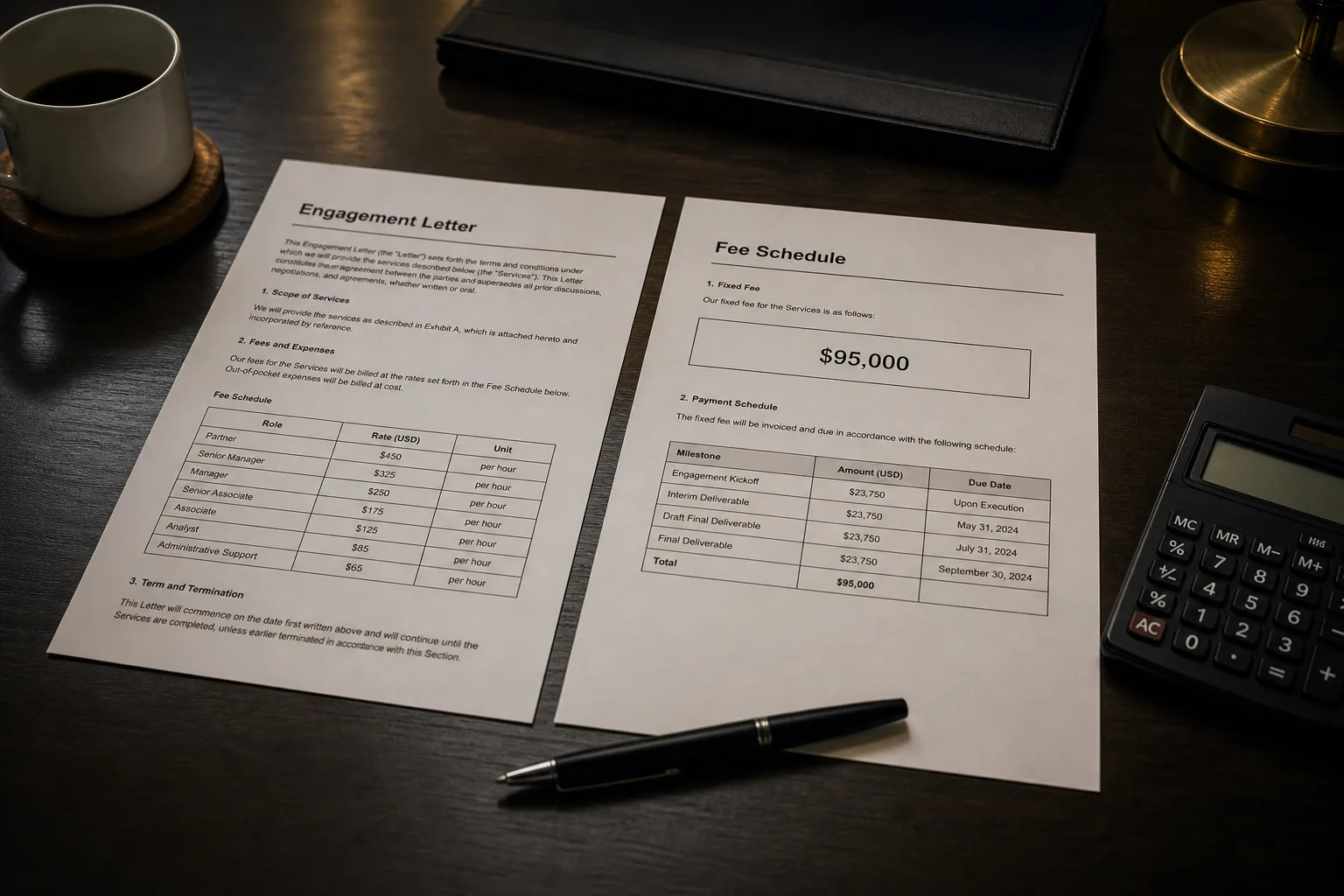
A fulfillment quote arrives looking like a price list and behaves like a credit agreement. The pick fee, the storage rate, the receiving charge: those are the numbers a prospective client reads, compares against a competitor's sheet, and uses to build a landed cost per order. What actually determines the invoice is a different set of documents, written by different people inside the provider, and most of them are not in the room during the sales call. Understanding which employee owns which number is the fastest way to work out where a quote will drift, and how much that drift will cost to carry.
The base rate is written by someone who will never see your account again
At a larger third-party logistics provider, the quote usually comes out of a solutions or pricing group that models your order profile against standard labor assumptions: a single-item order, a common carton, a pick path that behaves. That team is measured on winning accounts and on whether the modeled labor holds, not on your monthly bill. Once you sign, the account passes to an implementation manager, then to an account manager, and eventually to a billing analyst who applies the contract exactly as written. Three handoffs, three interpretations, and the only one that generates an invoice is the last.
This matters because the base pick-and-pack rate is the most stable line on the sheet and the least predictive of your total. It typically covers the first item in an order, a standard box or mailer, a packing slip, and a label. Everything past that first item carries an additional-unit charge, and everything past a plain carton carries something else. The gap between a quoted per-order rate and a realized per-order cost, on most accounts, is made up of items nobody hid. They were simply priced by a different department.
Where the extras appear, and who authorizes each one
Receiving is the first surprise for most new accounts. A quote may show a per-pallet receiving rate, which assumes your freight arrives palletized, labeled, and matching the advance shipment notice. Floor-loaded containers, mixed cartons, and missing barcodes convert that pallet rate into an hourly rate applied by a warehouse operations lead who is documenting exceptions in real time. Storage is the second. Providers bill by pallet, bin, shelf, or cubic foot, and the unit matters more than the rate, because slow-moving inventory in a pallet-billed facility pays for air. Long-term storage surcharges start where your turns stop.
Then come the categories that live outside the rate card entirely: kitting and assembly, returns processing, custom inserts, gift wrap, hazmat handling, retail compliance labeling, and special projects billed at an hourly rate with a minimum block. Add carrier surcharges, which the provider passes through with or without a markup, and account minimums, which bill you for volume you did not ship. Each of these has an internal owner. Knowing whether the account manager can waive a fee, or only the general manager can, tells you exactly how much of your quote is actually negotiable after signature.
Two quotes, one order profile, and the test that separates them
The comparison that works is not rate against rate. Take one real month of orders, with the actual item counts, actual box sizes, actual return rate, and actual inventory sitting still, and ask each provider to price that month end to end, including receiving the inbound shipments you actually sent. A smaller provider will often come back with a lower headline pick fee and a thinner set of ancillary charges, because it has fewer service lines to bill for. A larger provider will come back with more line items and, frequently, a lower total, because its carrier rates are negotiated at a volume you will never reach alone.
That trade repeats itself in the parts of the relationship that never appear on a rate card. Larger providers carry implementation teams, EDI and API specialists, and dedicated compliance staff who know what a big-box retailer's routing guide requires before a chargeback teaches you. They also carry contract structures that reflect that overhead: implementation fees, integration fees, and minimum terms. The Bureau of Labor Statistics tracks employment across the warehousing and storage sector, and the shape of that workforce is the shape of your bill. You are buying labor, supervision, and the systems that direct both.
The financing terms are the part people read last and pay for longest
Most fulfillment agreements bill weekly or biweekly in arrears, with payment due on short terms, often net 7 to net 15, and many require a security deposit equal to one or two billing cycles held for the life of the contract. That deposit is working capital you do not have, and if you are funding it on a credit line or a card, you are paying interest on money the provider is holding at zero. The same logic runs through implementation fees, which are cheaper paid once at signing than amortized into a slightly higher per-order rate across a three-year term.
Late payment is where the arithmetic turns sharply. Fulfillment contracts commonly include interest on past-due balances, and, more consequentially, a lien on the inventory in the building. A provider that stops releasing goods over an unpaid invoice has not breached anything; it has enforced a clause you agreed to. The practical protection is a billing cadence you can actually meet from receipts, an agreed dispute window for contested charges, and a named person in the provider's finance group you can reach before an invoice ages. Ask for that name during implementation, when the provider is still motivated to give it.
Read the quote as three documents at once: the rate card, the statement of work that defines what each rate assumes, and the payment terms that decide what a slow month costs you. Ask who inside the organization owns each of the three. The provider that answers precisely is usually the one whose invoice will match its quote.