One Reused Password, One Redirected Client Payment. What the Case Teaches About Judgment
A reconstructed account takeover at a small contracting firm shows why the old password rules failed, what replaced them, and who actually eats the loss.
- Innovation
- Farah Siddiqui
- 1,447 words, 6 min

The story most people carry around about account compromise involves guessing: someone somewhere runs a program against your login until it lands. The cases that actually move money are duller than that, and they usually start years before anyone notices, with a single password typed into two places, one of which was breached and dumped long ago. Reconstructing one of those cases teaches more than any rules sheet, partly because the rules themselves have changed, and partly because the money at stake almost never sits where the account holder assumed it did.
The case, reconstructed
A four-person remodeling firm ran everything through the owner's email: bids, change orders, lien waivers, and the invoices that told clients where to send draw payments. The password on that mailbox looked responsible by the standards it was created under, a capitalized word, a number, a symbol at the end, memorable enough to type twice a day. It was also the password on a hobby forum account from a decade earlier, and that forum had been breached and its credential list traded long before anyone at the firm heard about it.
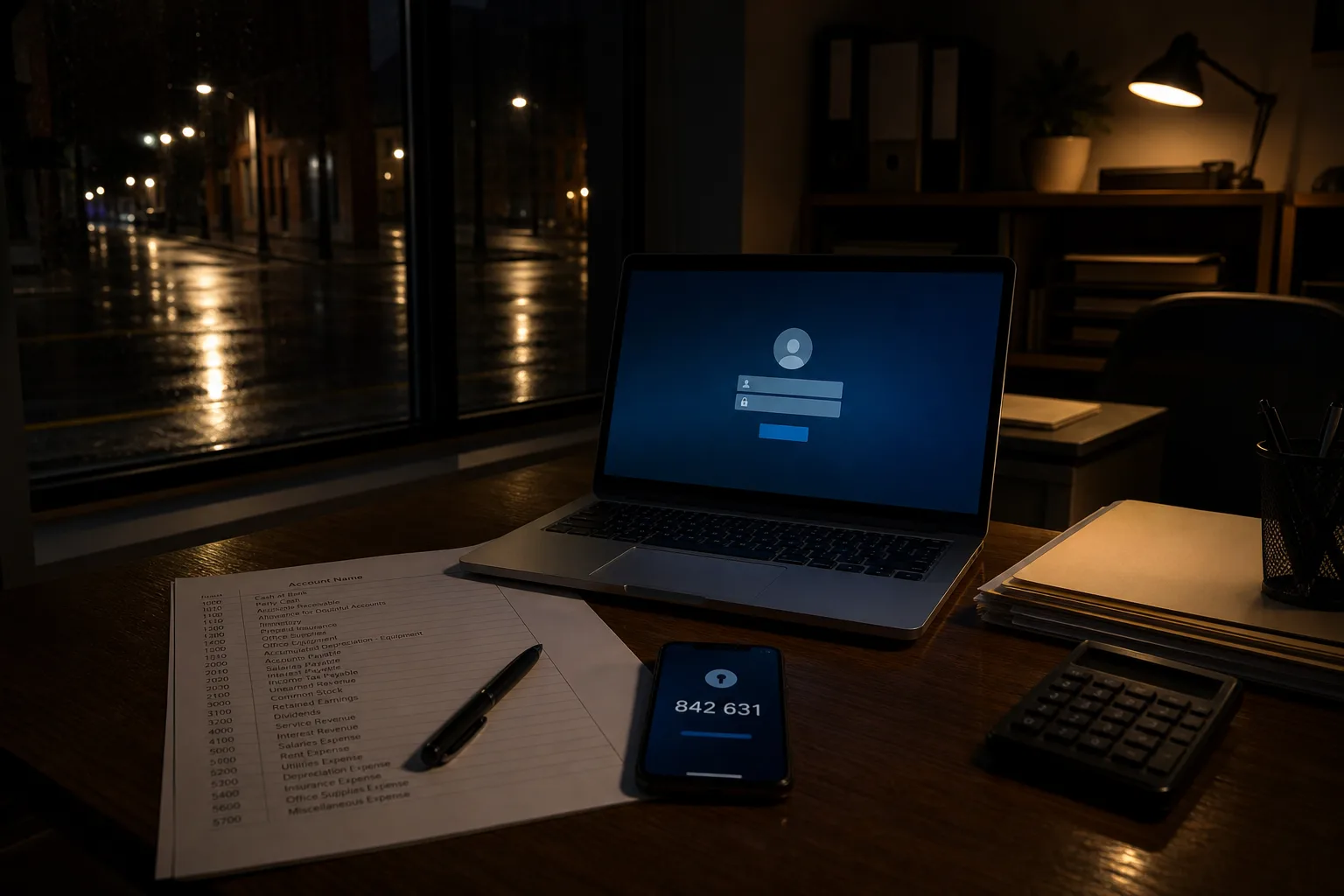
Nobody guessed anything. An operator took the old list, sprayed it against common mail providers, and got in on a match. Then, and this is the part people underestimate, they did nothing visible for several weeks. They read the thread with the largest active project, learned how the firm phrased its invoices, noticed which client approved payments by email, and waited for the schedule to reach a draw. A rule quietly filed incoming messages from that client into an unused folder, so replies never appeared in the inbox.
The message that finally went out came from the real account, in the owner's writing style, attaching a real invoice with new banking instructions and an apology about a change of institution. The client paid it. The firm found out nine days later when it called about a late draw, which is roughly the worst possible moment, because the window in which a bank can attempt to recall or freeze funds is measured in hours and days rather than weeks. The recovery work that followed was competent and eventually productive, but it began late.
Why the old advice produced exactly that password
The composition rules almost everyone was trained on, one uppercase, one digit, one symbol, changed every ninety days, came out of an era when the realistic attack was offline guessing against a stolen hash, and when the defense that made sense was raising the cost per guess. Those rules were formally withdrawn by the National Institute of Standards and Technology, the federal body responsible for the digital identity guidance that most American organizations copy into their own policies, and the stated reason matters more than the withdrawal. People met the rules by making small predictable edits, and by reusing the one string that satisfied every site.
That is what the firm's owner did, and it was a rational response to the instructions given. A password that must be unusual, memorable, and typed constantly is a password that gets recycled, because human memory does not scale to sixty accounts. The old rules optimized against guessing while quietly manufacturing the reuse that makes credential stuffing work, and stuffing is now the ordinary route into an ordinary mailbox. Understanding that trade is the beginning of judgment: the question stopped being how clever a password looks and became whether it exists anywhere else.
What changed recently, and why it changed
Three shifts have landed in the last few years, and each one follows from the attack moving away from guessing. Length now counts for more than character variety, because the entropy that matters comes from unpredictability rather than punctuation. Screening matters more than either, so serious services check a proposed password against corpora of known breached strings and refuse the ones already in circulation. And rotation on a calendar is out, replaced by rotation on evidence, meaning you change a credential when there is reason to believe it was exposed rather than because a quarter ended.
The larger change is passkeys, which are now shipping natively in the major operating systems, browsers, and password managers, and which are being accepted by banks, email providers, and payroll platforms at a pace that would have seemed unlikely three years ago. A passkey is bound to the site's domain, so it cannot be handed to a convincing imitation, and there is no shared secret sitting on a server to be stolen and resold. That is the actual advance. Second factors have a hierarchy too: a code texted to a phone is real protection against stuffing but weak against a caller who talks a carrier into a SIM transfer, an authenticator app is stronger, and a hardware key or a passkey resists the phishing page that harvests both the password and the code in the same minute.
Who eats the loss, which is where the arithmetic turns
Consumers and businesses live under different rules, and the difference decides how much a compromised mailbox is worth protecting. Unauthorized electronic transfers from a consumer account fall under Regulation E, which gives a household meaningful rights if it reports promptly, with the strongest position going to whoever calls within the first days. Commercial accounts do not work that way. They are governed largely by Article 4A of the Uniform Commercial Code and by the deposit agreement the business signed, and the analysis turns on whether the bank offered a commercially reasonable security procedure and whether the customer agreed to it.
In the case above there was a second wrinkle familiar to anyone who has watched a payment go astray: the client sent real money to a real account on instructions that genuinely came from the firm's genuine mailbox, so the dispute was not obviously a bank problem at all. It became a negotiation between two companies with a working relationship and a contract, resolved eventually through a combination of the crime report, the firm's insurance, and a payment plan on the balance. That resolution took the owner's attention for weeks, and the meter on a four-person firm runs whether or not the owner is on a roof.
Set that against what prevention costs, because the financing comparison is the whole point. A family password manager subscription is priced like a streaming service. Hardware security keys are bought once, two per person so there is a spare, at the cost of a decent power tool attachment. Passkeys are free where they are offered. None of that requires borrowing, none of it arrives as an unplanned draw on a line of credit at whatever the rate happens to be that month, and all of it is deductible as an ordinary business expense in the year you buy it. Paying later, here, means paying at the worst time, in the worst form, on someone else's schedule.
Building the judgment, rather than memorizing another rule
The useful habit is to sort accounts by what they control rather than by how sensitive they feel. Email sits at the top of that order, because it is the reset path for everything else, and the phone carrier account sits beside it for the same reason. Then come anything that moves money, anything that holds customer records you would have to notify people about, and the domain registrar, which quietly controls your email. Everything below that line can live on unique generated passwords in a manager and stop consuming attention entirely.
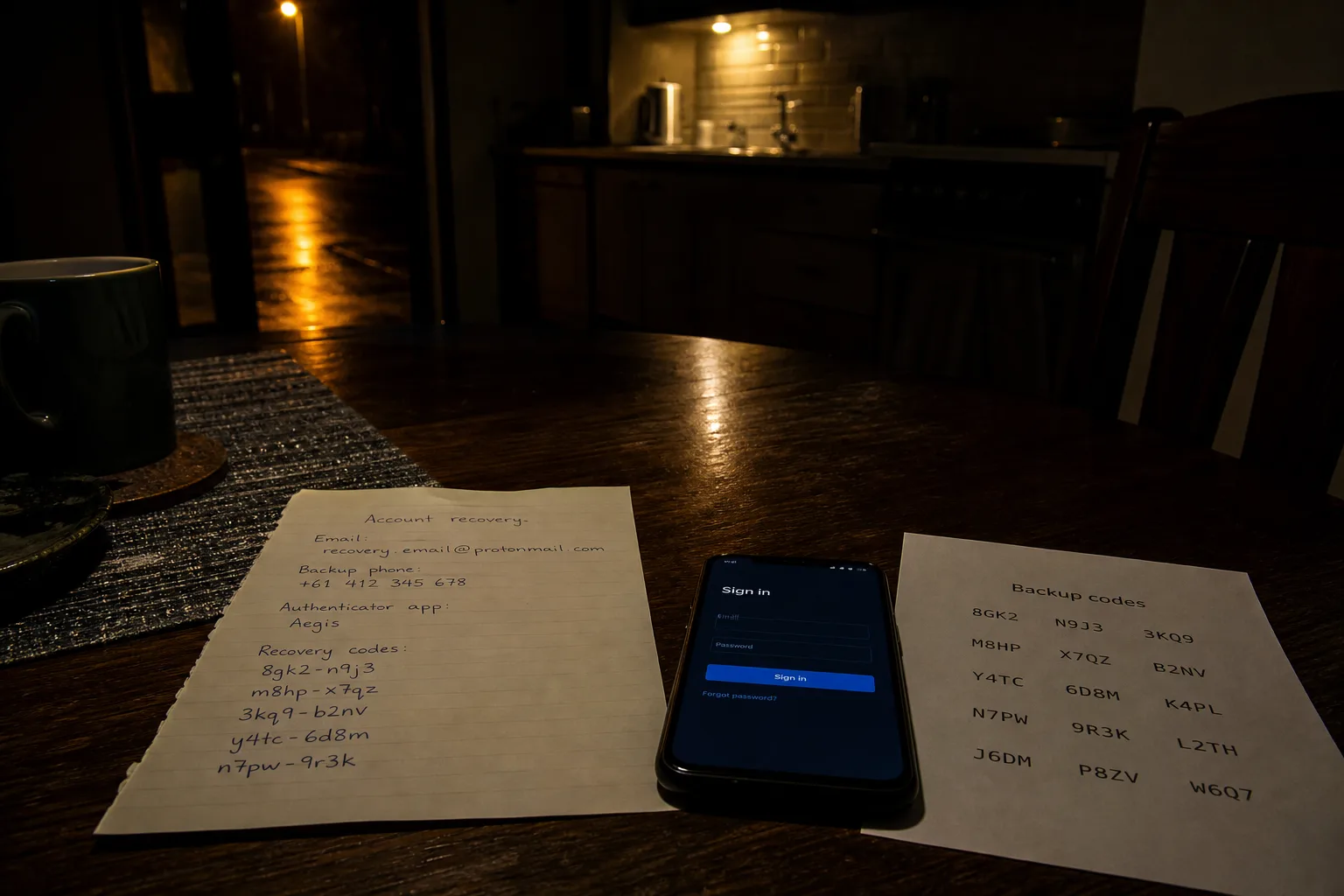
For each account in the top group, ask three things and write the answers down. What is the strongest factor this service actually supports today, given that the answer changes as passkey support rolls out. What happens if I lose my phone, which is the recovery path an attacker will also try, so the recovery codes need to be printed and stored somewhere physical. And who at my bank do I call, by direct line, inside the first hour. A firm that had those three answers on paper would have caught the folder rule sooner and made the recall call while it still worked.
Revisit the inventory when something changes rather than on a calendar: a breach notice, a new bank, a new employee with access to invoicing, or a service announcing passkey support. That last trigger is the one worth watching this year, because the list of institutions accepting them is still growing, and every account you move off a shared secret is one that cannot be stuffed, phished, or resold. The firm in this case now sends banking details only on signed letterhead confirmed by phone, and its clients, having been through it, ask for nothing less.