The Person Signing for Your Freight Decides Who Pays for the Damage
Packing quality matters, but the receiver's signature at the dock is what usually decides whether a damage claim survives, and most shippers never think about that person at all.
- Business
- Clement Boateng
- 1,073 words, 5 min
Most arguments about freight damage are held between two parties who were nowhere near the shipment when it broke. The shipper insists the pallet left the building square and shrink-wrapped, the carrier points to a clean delivery receipt, and the box in question sits in a corner of a warehouse with a crushed corner and no useful paperwork attached to it. The person who could have settled the whole thing in ninety seconds was standing at the dock door with a pen, and nobody had ever told them what the pen was for. That is the party in the transaction almost everyone overlooks.
The receiver is a legal actor, not a doorman
When goods move between businesses on a bill of lading, the signature at delivery is evidence about the condition of the freight at the moment custody changed hands. A clean signature says, in effect, that everything arrived in apparent good order. That statement is not impossible to walk back, but walking it back is expensive, slow, and often unsuccessful, because the carrier now has a document saying its part of the job went fine. The person holding the pen is frequently a warehouse associate three weeks into the role, a temp, or whoever happened to be near the door. Nobody briefed them, and the loss lands on someone who never met them.
A good receiving process treats that signature as a controlled step. It means counting pieces against the delivery receipt before signing, walking the pallet on all four sides, and writing what is actually visible: two cartons crushed, shrink wrap torn on the north face, pallet cracked, one carton short. Specific notations survive. The word damaged, written alone across a receipt, gives an adjuster almost nothing to work with, and a claim built on it tends to stall while people who were not there argue about what the word covered.
What separates a good pack from one that merely closed
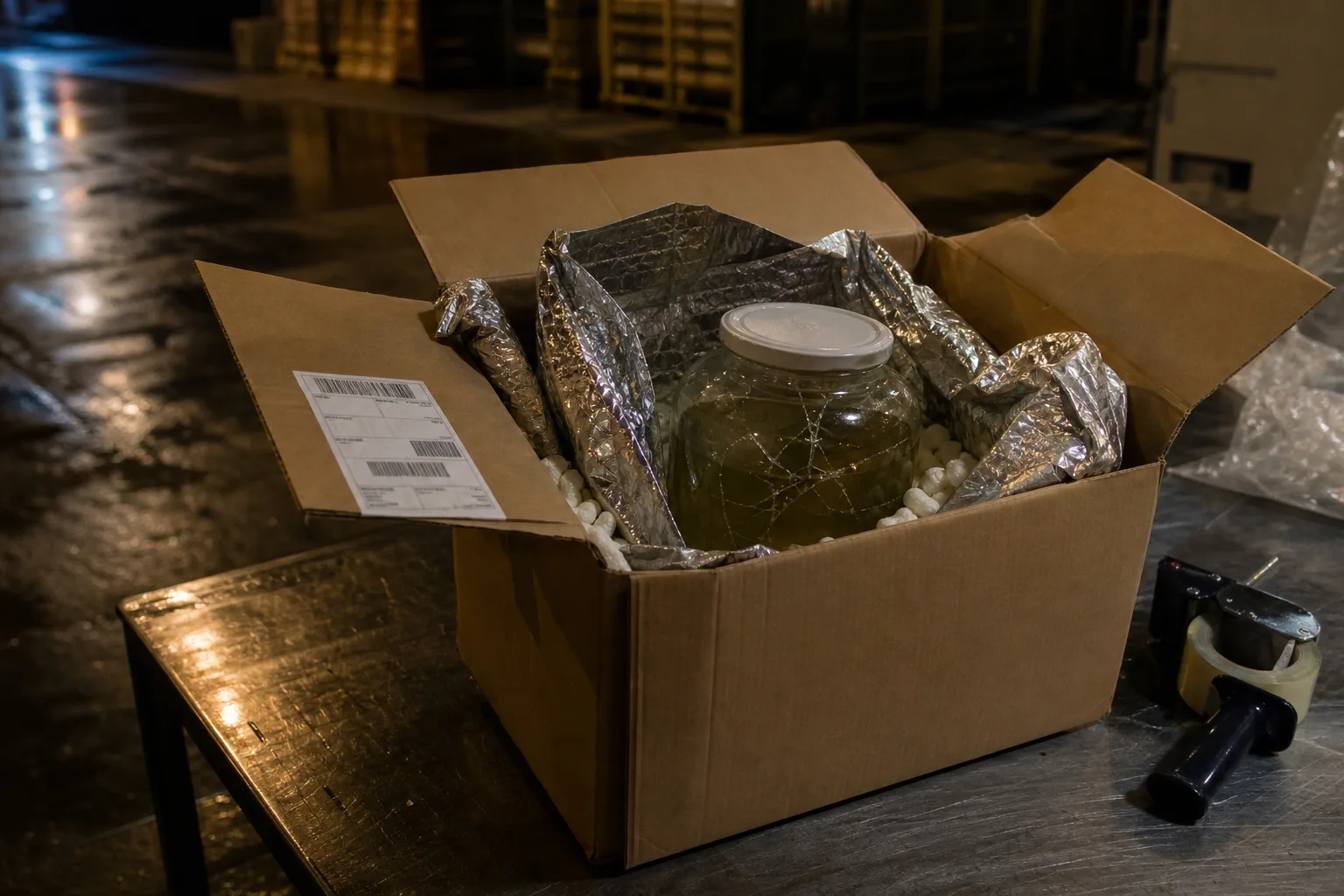
A barely adequate pack holds together in a still room and fails in a trailer, which is a different environment: constant vibration, stacking loads from above, rough handling at every cross-dock, and lateral force on every turn. The difference usually shows up in a small number of places. Product should not touch the outside of the carton anywhere, because the outside of the carton is what gets hit. Voids should be filled with something that does not compress into a flat wafer after six hours of road vibration. Weight should sit low and centered on the pallet, not stacked in a tower with the heavy item on top.
On the pallet itself, the tells are visible from across a warehouse. Cartons should sit inside the deck edges rather than overhang them, since an overhanging corner is the first thing a forklift finds. Corner boards and banding turn a stack of separate boxes into one unit that moves as a single object. Wrap should start under the pallet deck and tie the load to it, because a load that shifts independently of the pallet arrives leaning. None of this is exotic, and all of it is the difference between a claim and a delivery.
Concealed damage, and the clock nobody starts
The hardest claims are the ones where the outer carton looks fine and the contents do not. Carrier tariffs and bills of lading typically allow for concealed damage, but they allow for it inside a short window measured in days from delivery, and they expect the packaging to be retained. That means the original carton, the interior packaging, and the pallet, photographed in place before anything is thrown away. A receiving operation that breaks down cartons for recycling the same afternoon destroys the evidence that would have paid for the loss, cheerfully and with good intentions.
The filing deadlines that follow are also longer than people assume and shorter than they behave as if they are. Bills of lading for interstate motor freight commonly set a window of several months to file a written claim and a further period to bring suit. Those dates are printed and enforced. A good process opens a claim file at the dock, on the day, with photographs, the noted delivery receipt, and the packing list in one place, rather than reconstructing all of it six weeks later from memory and a supplier email.
Released value is not insurance, and most shippers learn that once
Carrier liability on a standard freight rate is usually limited by released value, a per-pound figure tied to the freight class, and that figure often bears no relationship to what the goods are worth. A pallet of light, expensive equipment can be worth many multiples of what the carrier is contractually exposed to. Shippers can declare a higher value and pay for it, or buy separate cargo coverage, and either choice is cheaper than discovering the limit after a forklift tine goes through a crate. Reading the released value line before the first shipment, not after the first loss, is the whole of the advice.
The injuries that actually happen at the dock
Since receiving is where the money is decided, it is worth being clear about what genuinely hurts people there, because it is not the dramatic scenario. It is the fall from the dock edge, four feet onto concrete, usually while walking backward. It is the trailer that moves while someone is inside it, which is why wheel chocks and restraints exist and why a good operation treats them as non-negotiable. It is the pallet jack that runs over a foot in a soft shoe, and it is the box cutter drawn toward the hand holding the wrap. The Occupational Safety and Health Administration oversees dock and powered industrial truck safety, and the sequence it points to is the same one that produces clean paperwork: stop the vehicle, secure it, then approach the load. Careful receiving and safe receiving turn out to be the same habit.
If you are the shipper, the cheapest thing available to you is fifteen minutes with whoever signs at the other end, or a one-page instruction traveling with the freight telling them to count, inspect, note specifically, photograph, and keep the packaging. That person is not incidental to the transaction. They are the last party who can still change the answer, and giving them the means to do it converts most of what would have been a disputed loss into a paid claim.