Signing a Scope of Work? The Lines That Decide Who Pays for the Surprise
A scope of work earns its keep in the ordinary weeks, not the dramatic ones. Here is what belongs on the page before anyone starts.
- Business
- Clement Boateng
- 989 words, 4 min
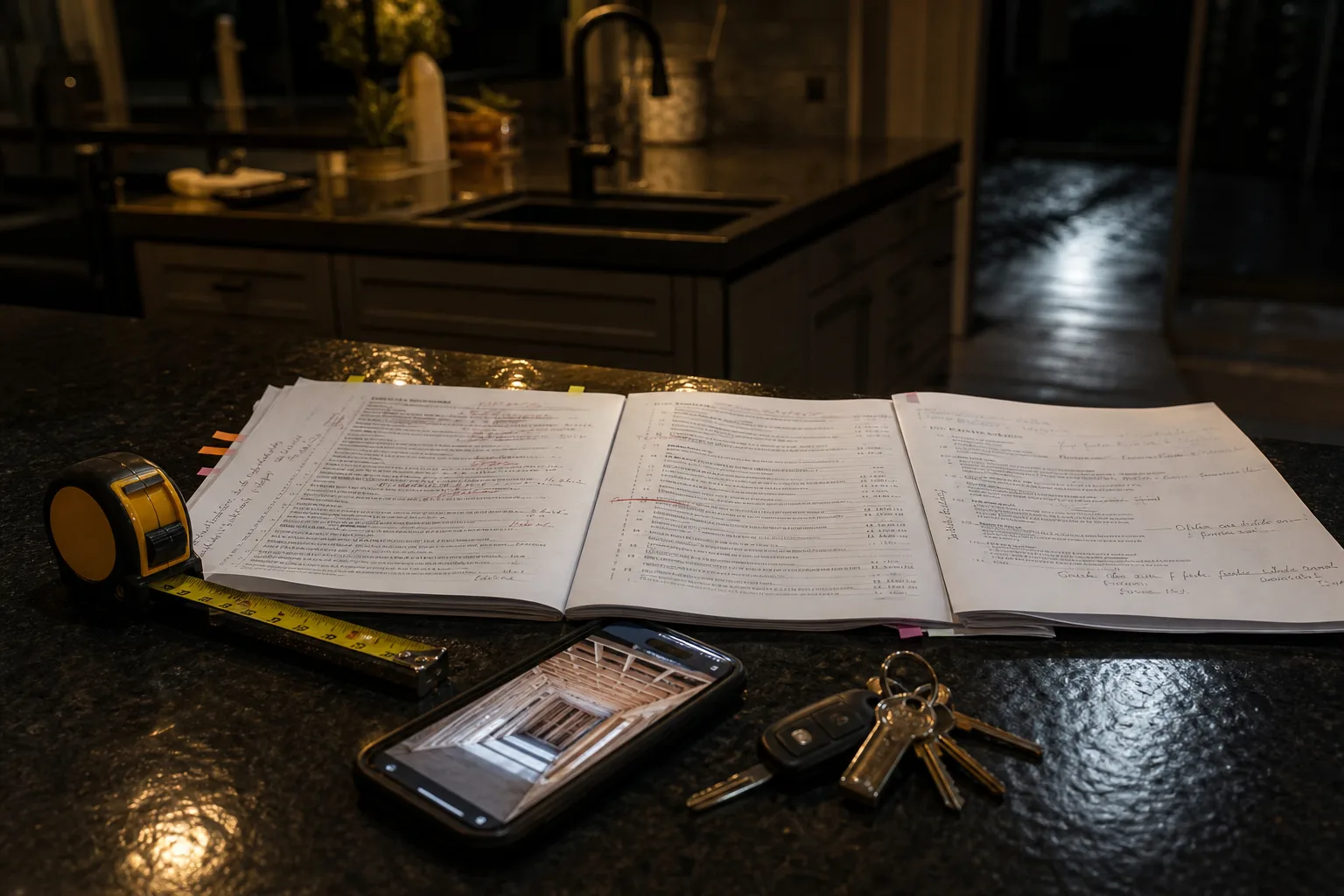
The scope of work is the document that gets skimmed on a phone in a driveway and then governs eleven weeks of somebody else's decisions in your building. Most disputes that end up in front of an attorney are not arguments about honesty; they are arguments about a sentence that could be read two ways, written quickly by a person who already knew what they meant. The fix is unglamorous. Before the first crew arrives, the page has to name quantities, locations, products, sequence, and the person who decides when something ambiguous comes up, because something ambiguous always comes up.
Nouns and numbers, not adjectives
A scope written in adjectives is a scope that will be argued about. "Repaint the affected area" and "repaint the north and east walls of the second floor hallway, two coats over primer, cut to the existing trim line" cost the same to write and behave very differently in week three. The test is whether a competent stranger could walk the site with the document and mark out the work without asking you a question. Quantities, room by room. Product names and model numbers where the choice matters. Where a number is genuinely unknown, say so and say what happens when it is discovered.
The same discipline applies to what is excluded. Scopes fail more often through silence than through error, because the omitted item does not announce itself until a crew is standing in front of it with the day already booked. Write down that the electrical panel is not being replaced, that furniture is being moved by you and not by them, that the disposal of the old material is included but the disposal of anything found behind the wall is priced separately. Exclusions are not distrust. They are the part of the document that keeps the price you agreed to attached to the work you imagined.
The week-to-week reality nobody writes down
The clauses that matter most on an ordinary Tuesday are the ones about access, hours, and housekeeping. Who has the key, and does it get returned each evening. What time is the earliest arrival, which matters more than people expect once a shared driveway or a sleeping infant is involved. Which bathroom the crew uses. Where the dumpster sits and who pulled the permit for it if it is in the street. Whether the water and power are staying on, and who calls whom if they are not. None of this is glamorous, and all of it is what a fifteen minute argument on day nine is actually about.
Safety belongs in the same practical register. The Occupational Safety and Health Administration oversees the conditions crews work under, and a competent contractor already knows the rules, but the scope should still state who controls the site while work is under way. The injuries that genuinely send people to the hospital on small jobs are falls from ladders and roof edges, being struck by material dropped from above, and respiratory harm from cutting concrete, masonry, or tile without dust control. Gas-powered equipment run indoors is the other real one. Write down that silica cutting is done wet or with vacuum extraction, that the work zone is barriered from household traffic, and that nothing fuel-burning operates inside.
Change orders that stay small
Every renovation of any size produces changes, and the paperwork question is not whether they happen but whether they get priced before or after the labor is spent. A workable clause says that no change proceeds without a written authorization stating the scope of the change, the cost, and the effect on the schedule, and that a text message with a photograph counts as writing. That last part matters more than the formality. Crews will not walk back to a truck for a carbon-copy pad, but they will photograph a rotted joist and send it with a number attached, and that is a valid record.
Set a small threshold below which the site lead can just decide, because a scope that requires your sign-off on a fifteen dollar fitting will teach everyone to ignore the process by the second week. Above that threshold, the discipline holds. Keep the authorizations in one place, numbered in sequence, with a running total, so that the fourth change is being weighed against a real cumulative figure rather than a vague sense that things have gone up a bit. Contractors who work this way tend to like it, since it protects them from the customer who forgets having said yes.
Money tied to finished work
Payment schedules attached to calendar dates reward presence; payment schedules attached to completed, described milestones reward progress. Name the milestone in the same concrete language as the scope: rough-in inspected and passed, drywall hung and finished, fixtures set and operating. Hold a final retainage until the punch list is closed and the paperwork arrives, which means the lien waivers from anyone who supplied labor or material, the manufacturer warranties, and the permit sign-offs. The deposit should be proportionate to the material the contractor is actually buying up front, and the scope should say what that deposit purchases.
Two documents ride alongside the scope and should be dated before the start, not chased afterward. The certificate of insurance, sent to you directly by the insurance agency rather than forwarded as a photocopy, showing general liability and workers compensation in force through your projected end date. And the license number, checked against your state or county board rather than read off a truck. Both take about twenty minutes on a weekday morning, and both are far easier to obtain while the job is still something the contractor wants.
A good scope is not a defensive instrument. It is the thing that lets a crew make sensible decisions at eight in the morning without calling you, and lets you look at the invoice in week six and recognize every line on it.