Who Pays When the Box Arrives Crushed, and the Bench Where That Gets Decided
Freight and parcel claims are usually won or lost at the packing bench, days before anyone sees the damage, and the people who work that bench know why.
- Business
- Clement Boateng
- 1,096 words, 5 min
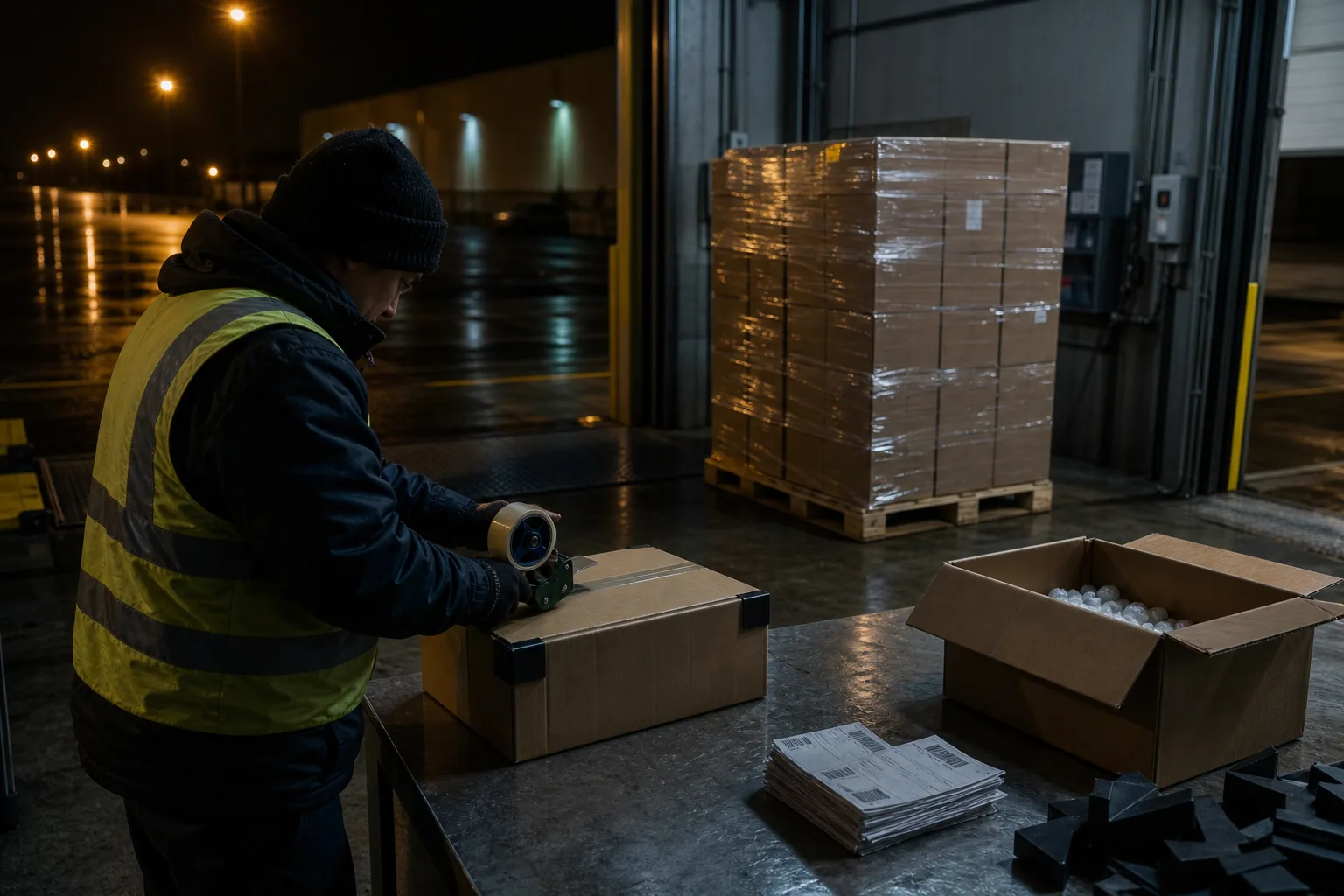
The person who decides whether a damaged shipment gets paid for is rarely the adjuster who writes the denial letter. It is the packer, working three days earlier, choosing between a single-wall carton that fits and a double-wall carton that costs eleven cents more, deciding how much void fill goes in the corners, and whether the pallet gets stretch wrap that reaches down over the deck boards or stops short at the bottom row. Carriers know this, which is why the most common reason a freight claim fails has nothing to do with the driver, the weather, or the forklift.
Insufficient packaging is a defense, not an excuse
Interstate motor freight in the United States runs on a liability framework that presumes the carrier is responsible for goods it accepts in good order. That presumption has a short list of exceptions, and one of them is an act or omission of the shipper, which in practice means packaging that was not adequate for the ordinary rigors of the trip. Parcel carriers write the same idea into their tariffs in plainer language, sometimes with specific drop-height and stacking expectations. So the packing bench is not a cost center that sits before the shipping decision. It is the evidentiary record.
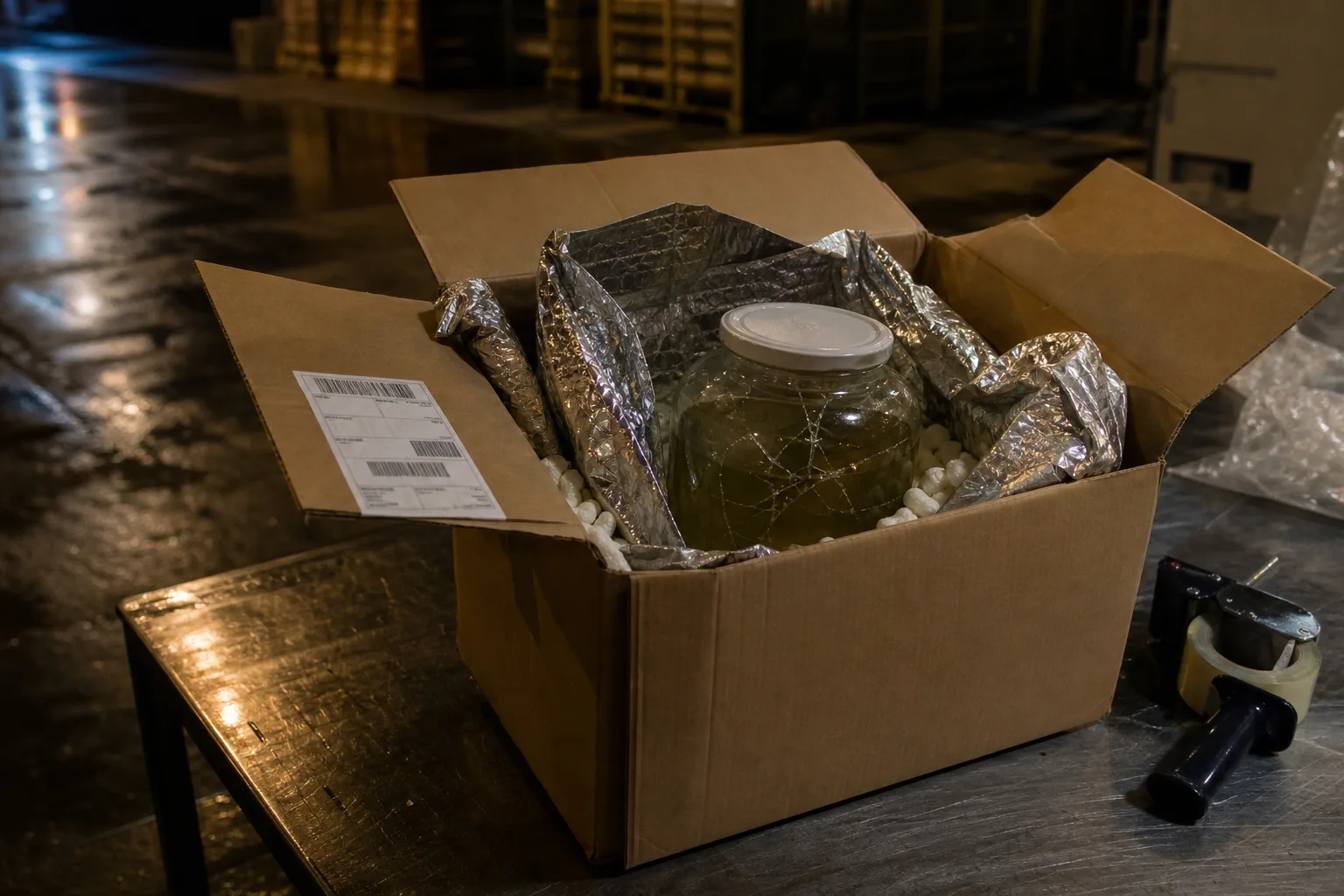
People who have filed a few hundred claims stop arguing about this and start designing around it. They specify board grade rather than box size, because a carton rated for a certain edge crush behaves differently at the bottom of a stack than one that merely looks similar. They keep the product off the walls of the carton by a consistent margin on all six faces, including the bottom, which is the face that gets forgotten. They photograph the packed unit before the tape goes on, and again after, with the shipping label visible. Those two photographs settle more disputes than any phone call.
The injuries that actually happen on a dock
The safety conversation around shipping tends to fixate on dramatic scenarios and skip the ones that fill the incident log. What sends people to the emergency room is narrower and duller than most training slides suggest: lacerations from box cutters worn down to a dull edge and pushed harder as a result, back and shoulder strains from lifting cases off the floor rather than off a raised surface, hands crushed between a pallet and a rack upright, and the serious ones, which are pedestrians struck by powered industrial trucks and workers who go off an unguarded dock edge or into the gap when a trailer moves during loading. The Occupational Safety and Health Administration oversees the standards that cover powered industrial truck operation, dock safety, and material handling in warehouses, and the pattern those standards address is the pattern that shows up in real logs.
The practical version, from anyone who has run a shipping floor for a decade, is short. Wheel chocks or a restraint on every trailer, every time, with no exception for a driver who says he is only stepping away for a minute. Replace blades on a schedule instead of when someone complains. Keep the pack line at elbow height so that repetitive lifting happens in a narrow vertical band. Mark the forklift travel lanes and keep the pack stations out of them. None of that is exotic, and all of it survives an audit better than a laminated poster.
Three things a claim has to prove, and who holds each
A freight damage claim rests on three showings, and an experienced shipper can tell you within a minute of hearing the facts which one is missing. The first is that the goods were tendered to the carrier in good condition, which is proved by pack-out photographs, quality records, and a clean bill of lading. The second is that they arrived damaged or short, which is proved by the delivery receipt and by photographs taken before anything is unwrapped. The third is the amount of the loss, which is proved by an invoice showing what the goods actually cost, not what they would have sold for.
Almost every denial traces back to a gap in the first or the second. A shipper who cannot show the condition at tender is arguing against the carrier's presumption without evidence. A consignee who signed a clean delivery receipt and reported damage a week later is asking the carrier to accept that nothing happened in the warehouse after delivery. Neither position is hopeless, but both cost time and both settle for less. The fix is procedural and cheap, which is why the shippers who have been through it treat it as a standing rule rather than a response to a bad month.
The delivery receipt is the shortest document with the largest consequences
Whoever meets the truck at the receiving end holds more leverage in those ninety seconds than the claims department will hold for the rest of the process. Writing "subject to inspection" on the receipt is close to meaningless, because it describes nothing. Writing that two cartons on the top layer show crushed corners and one has a puncture on the long face, with the pallet count and the seal number noted, creates a record the carrier's own driver signed. If damage is concealed and only turns up at unpacking, the carrier's tariff sets a short window, usually a matter of days, in which the report has to be made, and keeping the original packaging until an inspection is offered or waived is what makes that report credible.
The claim itself has a longer window, commonly nine months from delivery under the terms written into standard bills of lading, with a further period to bring suit if the claim is declined. Experienced shippers file early anyway, because documents get easier to find in week two than in month seven, and because a carrier that receives a complete, well-documented claim early in the cycle tends to resolve it rather than test it.
Freight liability is capped in ways most first-time shippers discover only at settlement, whether by released value pricing on an LTL bill of lading, a per-pound limit tied to the freight class, or a parcel carrier's declared value ceiling. A packer who has watched that arithmetic run a few dozen times will tell you the same thing an adjuster will: raise the declared value where the cargo justifies it, buy separate cargo coverage where it does not, and spend the difference on board grade and corner protection, because the packaging is the only part of the chain you control from start to finish.