Buying an Urn? The Measurements, Seals and Engraving That Cannot Be Redone
Most of what goes wrong with a cremation urn is settled before it ships: volume, closure, engraving proof and where it will finally sit.
- Living
- Clement Boateng
- 1,034 words, 4 min

The container holding a parent's remains gets chosen in a week when nobody in the household is thinking clearly, often from a catalog handed across a desk, and the choice is generally treated as a matter of taste. Some of it is. But a meaningful share of it is measurement, closure and spelling, and those parts behave like any other purchase that gets fabricated to order: once the engraver has cut the stone or the foundry has cast the plate, there is no revision, only a replacement bought at full price. Knowing which decisions are reversible, and which are not, changes what you spend time on.
Volume is a measurement, not a preference
Capacity is stated in cubic inches, and the working convention in the trade is roughly one cubic inch for every pound of the person's body weight before death. A 180 pound adult, then, wants something rated at 200 cubic inches or more, and the common adult size sold as standard sits around that mark for exactly that reason. This is the single most common ordering error in the category, and it is entirely avoidable: ask the funeral home for the actual volume of the remains, which they can tell you, rather than estimating from memory. An urn that is close but short is not close. It simply does not close.
The second measurement matters just as much and gets checked far less often. If the urn is going into a columbarium niche, a cemetery niche has interior dimensions, and they are frequently tighter than the catalog photograph suggests, particularly in height. Get the niche's interior width, depth and height in writing from the cemetery office before ordering, not after. The same applies to an in-ground urn vault or a family plot with an existing marker. Outdoor placement adds a further constraint, since some materials that look right indoors will not survive a few freeze cycles outside.
The failures that actually happen in a house
Set aside the dramatic scenarios people worry about. The incidents that genuinely occur in households are mundane and physical: an urn knocked off a mantel by a cat or a vacuum cleaner handle, a lid that was never actually secured coming loose when the piece is lifted by its rim, and a heavy marble or solid bronze urn carried one-handed down stairs by someone who did not expect the weight. Marble and granite urns in the common adult size are not light objects, and they break tile and toes. If the urn will live on furniture rather than behind glass, weight and center of gravity are safety specifications, not aesthetics.
Closure is the detail most worth insisting on. Urns are sold with threaded lids, lids secured by small screws, friction-fit lids, and bottoms that open and are then sealed. A threaded or screw-secured closure is the difference between a piece you can move and one you must treat as permanently in place. Ask whether the remains arrive in a sealed plastic bag inside the urn, which is standard, and whether that bag is tied or heat-sealed, because the bag is the real containment and the urn is the enclosure around it. Any good funeral director will secure the lid with adhesive on request before handing it over.
Where the real difference between adequate and good shows up
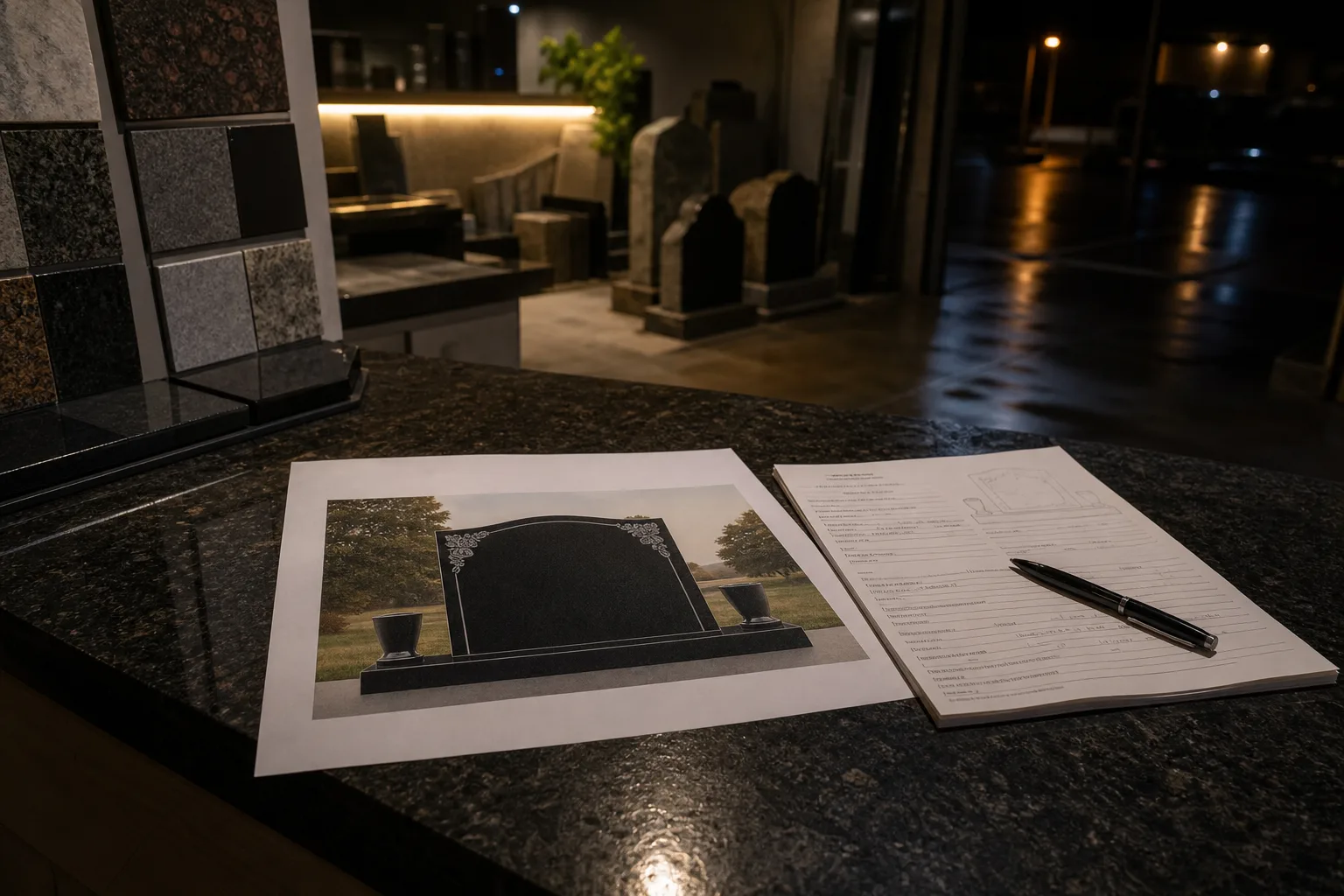
A barely adequate job gets you a container of roughly the right size with a name spelled as someone heard it. A good job means the volume was confirmed against the actual remains, the niche or plot dimensions were verified with the cemetery, the closure suits how the family will handle it, and the engraving was proofed by a family member before it was cut. That last step is the one most often skipped under time pressure. Ask for a layout proof showing exact spelling, dates, font and line breaks, and read it out loud against a document rather than from memory, because middle names and date formats are where errors hide.
Price and source are more open than most families realize. The Federal Trade Commission is responsible for the rule governing how funeral goods and services are priced and disclosed, and under it a funeral provider must accept a container you bought elsewhere without charging a handling fee for doing so. That matters because the range of cremation urns available directly is wider than the selection on a single showroom shelf, and delivery timing is usually manageable if you order within a day or two of the arrangement conference. Confirm the delivery date against the service date before you commit.
The decisions that close a door behind them
Scattering is permanent in a way that no other choice in this process is. Once remains are scattered, there is nothing to inter later, nothing to divide among siblings who were not consulted, and nothing to move if the family relocates. That does not make it the wrong choice, and many households are entirely settled on it. It does mean the conversation should happen before the day, with everyone who will care, and it is worth knowing that a common middle path exists: inter or keep the bulk, and scatter a portion. Dividing into keepsake urns or jewelry is similarly a one-way step, though a modest one.
Travel imposes its own quiet constraint. Remains carried through airport security are screened, and screeners do not open the container, so an urn made of solid stone, thick bronze or lead-lined material may simply be refused as carry-on because it cannot be cleared by X-ray. Families who expect to fly with an urn, now or in a decade, should either choose wood, ceramic or thin metal, or plan to transport the remains in a temporary container and transfer them afterward. The permanent urn then travels separately as ordinary luggage, which removes the problem entirely.
The practical sequence is short: confirm the volume, confirm the dimensions of wherever it is going, decide who in the family holds it and how often it will be handled, then choose how it looks. Taste comes last not because it matters least but because it is the only part of the decision you can still revisit in five years.