Paying for a Headstone. Four Routes, and the One That Grows While You Wait
How monument orders actually get financed, which paperwork locks the price, and why the installment plan that feels gentlest is often the one that quietly costs the most.
- Living
- Farah Siddiqui
- 1,172 words, 5 min
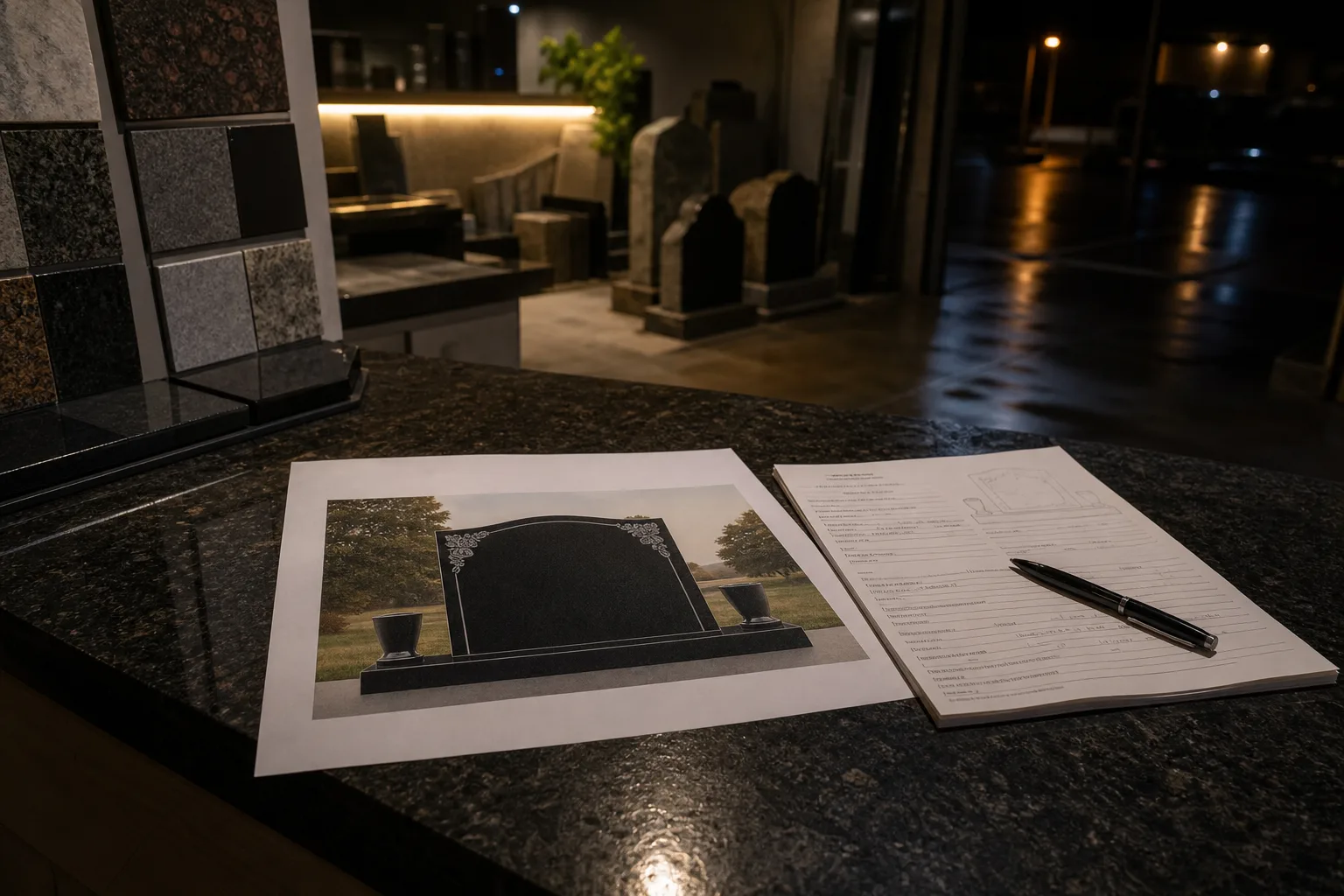
People who order memorials for a living can tell within a few minutes which families will pay once and which will pay in pieces, and they will tell you the difference is almost never income. It is timing. A family that walks in nine months after the burial has had time to see the estate settle, to learn what the insurance paid, and to decide what the stone should say. A family that walks in during the second week is still inside the funeral bill, often with a balance owed to the funeral home, and the memorial becomes the third large purchase in a month. Both end up with the same granite. They pay very different amounts for it.
The documents that fix a price, and the ones that only describe it
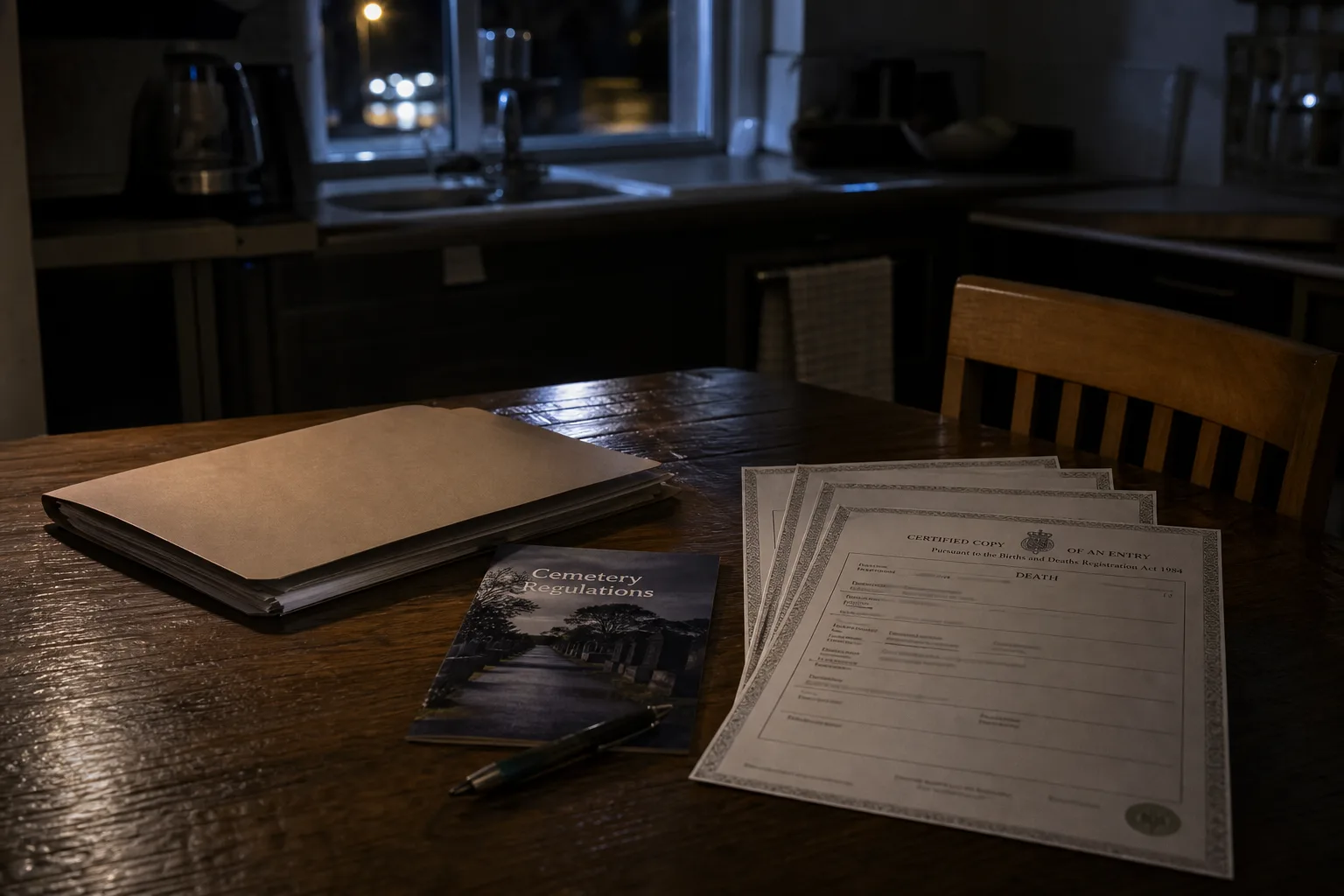
A memorial purchase generates more paper than most families expect, and only some of it holds a number still. The quote or price sheet is an estimate and usually carries a stated life, thirty or sixty days, because the dealer is buying granite from a quarry supplier whose own prices move. The signed order contract is the document that converts the estimate into a fixed obligation, and it is the one worth reading slowly, because the price it fixes is the price the dealer locks in with the supplier. The layout or proof sheet governs content: wording, dates, emblem, lettering style. The cemetery's memorial permit governs permission. Confusing those four is how families end up believing a price was promised when only a range was discussed.
The practical move is simple and experienced buyers do it without thinking. Ask which document carries the price, ask how long that price stands, and ask what happens to it if the proof takes three rounds of corrections rather than one. A dealer who orders stone on signature will usually tell you plainly that the clock starts then. A dealer who waits for full payment before ordering will tell you the quote expires and a new one is written at current cost. That single answer separates two of the four payment routes below, and it is the answer that decides whether waiting is free.
Four routes, compared on what they actually cost
Paying in full at order is the baseline, and it buys two things beyond the absence of interest: the locked supplier price and, at many shops, a modest discount that functions as the dealer's own cost of capital passed back to you. Dealer layaway is the route families reach for most readily, and it is genuinely interest-free at most monument companies, but the stone is not ordered until the final payment lands. That is the catch worth naming. Eleven months of payments against a quote written last spring can meet a granite price that has moved in the meantime, and the shortfall is yours. Ask explicitly whether layaway holds the price or merely holds your place.
Third-party installment financing, offered through the dealer but underwritten by a lender, works the other way. The dealer is paid in full on day one, so the price is locked and the stone is ordered, and you carry a consumer loan with a rate, a term, and in many cases a deferred-interest promotion. Deferred interest is the structure to read twice. If the balance is not cleared inside the promotional window, interest is typically charged back to the original purchase date on the full amount, not on the remainder. A credit card is the fourth route, and it is the most expensive on paper and the most flexible in practice, which is why it is the right answer for a small balance you can clear in two or three months and the wrong one for a four thousand dollar monument you cannot.
Ranked by total cost, cash wins, third-party financing at a real stated rate usually beats a card, and layaway sits oddly: cheapest in interest, exposed on price. Ranked by certainty, cash and third-party financing tie, because both put granite on order immediately.
Money that already exists before you borrow any
Several funding sources are routinely missed because nobody at the graveside mentions them. Veterans who meet eligibility criteria are entitled to a government headstone or marker furnished by the Department of Veterans Affairs for an unmarked grave, which can be set in a private cemetery; families who order privately without checking eligibility pay for something they could have received. Life insurance proceeds paid directly to a named beneficiary arrive outside the estate and are usually the fastest cash available, often weeks ahead of anything probate releases. A preneed or prearranged memorial contract signed years earlier may already cover the stone, the foundation, or both, and the paperwork sits with the funeral home or the cemetery office rather than with the family.
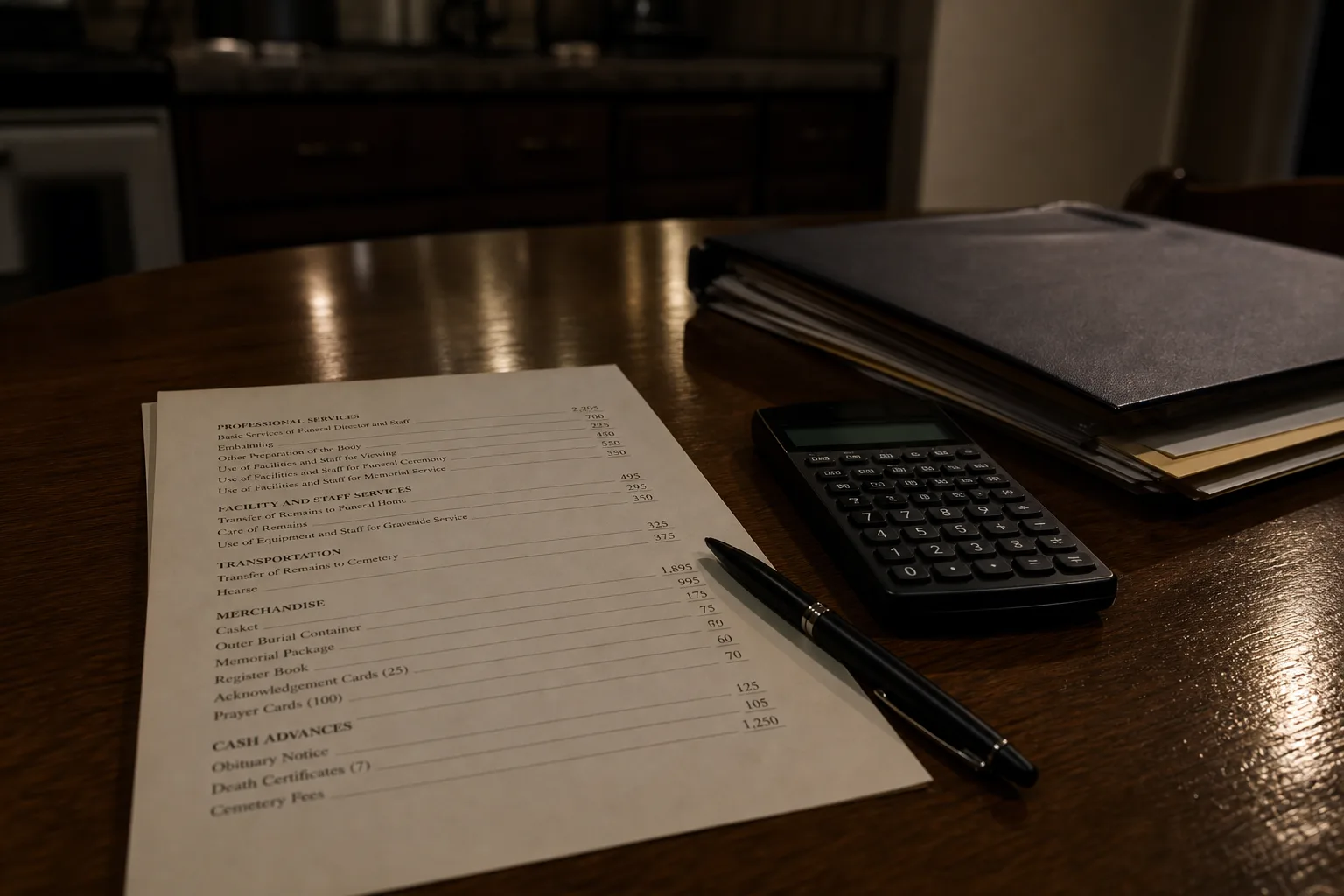
Estate funds are the slowest and the most commonly assumed. An executor cannot generally write a check from a frozen account before letters are issued, which is why families who intend to pay from the estate still need a bridge, and why the bridge is where borrowing decisions get made badly under time pressure. The Federal Trade Commission oversees price disclosure in the funeral industry and its rules are the reason an itemized general price list exists at all, which makes the itemized statement the single most useful tool a family has for separating what the funeral home is billing from what the memorial dealer is billing. Two invoices, two timelines, two decisions.
What cannot be changed, and what therefore sets the deadline
Granite is cut once. The proof sheet you initial becomes the sandblast stencil, and a misspelled surname, a wrong middle initial, or a date transposed by a single digit is corrected by ordering another stone. Nothing about a payment plan changes that, which is why the only part of this process that should never be rushed is the proof, and why dealers who have done thousands of these send the proof twice and ask a second family member to read it aloud. Foundation size is similarly permanent once poured, and the cemetery's rules on dimensions, material, and upright versus flat govern what can sit on it.
The reversible part is the money. A balance can be refinanced, a card can be paid down, a layaway can be converted to a financed purchase if the price starts moving. So the deadline that matters is not the anniversary, and not the family's sense that the grave has been bare too long. It is the expiry date on the quote. A family that knows that date, keeps the order contract, the proof, the permit and the itemized statement in one folder, and decides deliberately whether to lock the price now or accept the risk of a later one, has turned the whole thing into a manageable purchase.
Dealers see the same families return, for a spouse, for a parent, for a second date added to a stone already standing. The ones who came back calm were the ones who had kept the folder.