Two Counties, One Itemized Price List. Which Funeral Charges Are Required and Which Are Not
Funeral bills separate into a required core, a set of local rules that vary by county and cemetery, and a large optional middle where most of the money is decided.
- Living
- Farah Siddiqui
- 997 words, 4 min

A funeral bill arrives as one number, and the number is almost never explained in the order the money was committed. Underneath it sit three different kinds of charge: a core the funeral home is entitled to bill on every case, a handful of items that a state statute, a county office, or a private cemetery genuinely requires, and a wide optional middle that carries most of the variation between one family's total and another's. Families who are quoted a package rarely see the split. The split is where the decisions are, and it is also where financing costs attach themselves.
The part of the bill that does not move
Every funeral home charges a basic services fee covering overhead, staff availability, the death certificate filings, and coordination with the cemetery or crematory. It is nondeclinable, and it appears on the itemized list whether you hold a viewing or choose direct cremation. Transfer of the deceased into the funeral home's care is a separate line, and so is the cost of the permits and certified copies the county register or health department issues. The Federal Trade Commission oversees how these prices are disclosed, through the rule requiring funeral providers to hand over an itemized general price list before any discussion of arrangements begins. Ask for it first.
Certified copies deserve their own thought, because they are cheap individually and expensive in aggregate when a family orders on instinct. Banks, insurers, the pension administrator, the county recorder, and the title company each want one, but several will accept a copy or return the original. Ordering ten when six would do is a small sum. Ordering three and going back twice costs a trip and a reissue fee. The number is a local one, set by the county or the state vital records office, and the funeral director will know it without looking.
Where local rule genuinely binds, and where it only appears to
Embalming is the item most often described as required and most often not. No state mandates it routinely for every death, though several require it or refrigeration once a body is held past a set number of hours, or before transport across state lines by common carrier, and those thresholds differ enough that neighboring states reach different answers on the same timeline. Public viewing policies are a separate matter: a funeral home may set its own condition for an open-casket service, which is a business rule rather than a statute. The practical question to ask is which authority is imposing the requirement, and to ask it out loud.
Burial containers follow the same pattern. An outer burial container or grave liner is almost never a legal requirement, and it is very commonly a cemetery requirement, written into the rules of that specific property so the ground does not settle under mowing equipment. Two cemeteries ten miles apart can differ on liner type, on whether a concrete vault is mandated, on monument foundations, and on whether the grave opening is performed by cemetery staff at a fixed charge. Cremation carries its own local layer: authorization waiting periods and medical examiner sign-off fees vary by county and add real days.
Comparing the three common routes by what they are made of
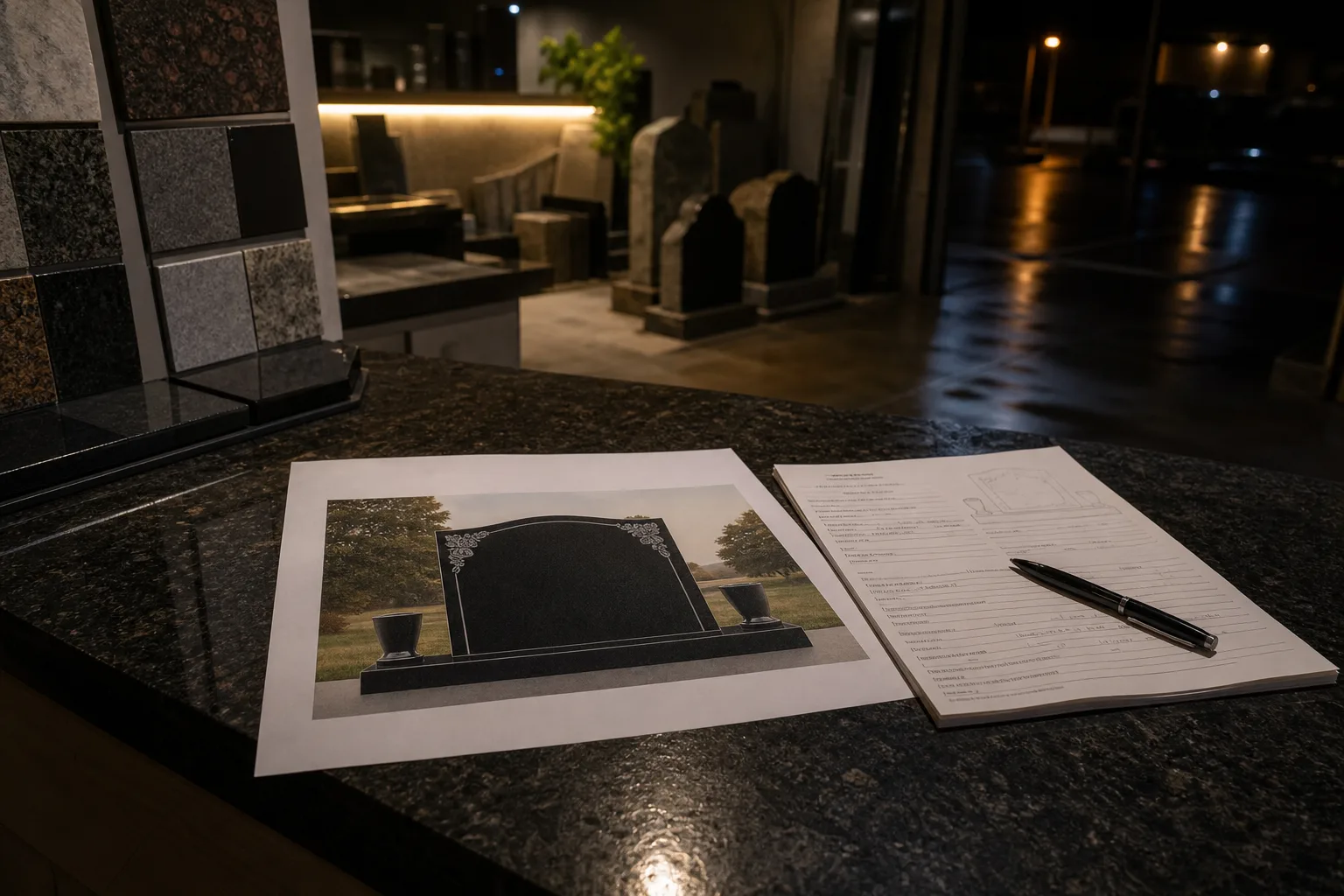
Direct cremation strips the bill to the basic services fee, transfer, the crematory charge, the container, permits, and the county authorization. There is no embalming, no viewing staff, no hearse, no cemetery. A cremation with a service afterward reintroduces facility and staff time, and often a rental casket, but keeps the cemetery line small or absent, since a niche or scattering costs a fraction of a plot. Full burial reintroduces everything: casket, vault or liner, plot, opening and closing, and the monument, which is a separate contract with separate rules. The route chosen decides roughly how many lines the bill has.
Within each route, the optional middle is where families spend without noticing. Casket and urn selection, printed materials, flowers, obituary placement, limousines, catering, and the memorial itself are all genuinely elective, and the funeral home is required to let you supply a casket bought elsewhere without charging a handling fee. The order of decisions matters more than any single price. Settle the route and the cemetery or crematory rules first, because those two choices fix most of the required lines, and then treat everything remaining as a budget you control rather than a list you work down.
How it gets paid for, and what waiting costs
Most funeral homes want payment at or near the time of service, which is why the financing question arrives early and under pressure. A life insurance assignment lets the policy pay the funeral home directly, but the home usually charges an assignment processing fee and the insurer's release can take weeks, so ask what the fee is and who fronts the gap. Credit cards settle the bill instantly and convert it into revolving debt at the card's ordinary rate, which is the most expensive common route when the balance survives past a few months.
Third-party funeral lenders and installment plans offered through the funeral home price the same way any unsecured consumer loan does, on credit and term, and a longer term on a fixed total is simply more interest. Preneed contracts change the timing rather than the arithmetic: state law governs whether your money sits in a trust or buys an insurance policy, how much of it must be deposited, and whether the contract is revocable, and those rules are among the sharpest state-by-state differences in the whole subject. A revocable, transferable, price-guaranteed contract is worth reading in full before signing.
The itemized list is the document that makes all of this legible, and it exists precisely so a family can compare two providers on the same lines rather than on two packages. Get it from more than one home, get the cemetery or crematory rules in writing, and decide the route before anyone shows you a catalog.