Who Owns the Household Calendar? The Tasks Your Town Has Already Decided for You
The recurring jobs nobody was assigned show up later as a fine, a denied claim, or an emergency room visit, and local rules decide which ones are optional.
- Living
- Clement Boateng
- 893 words, 4 min
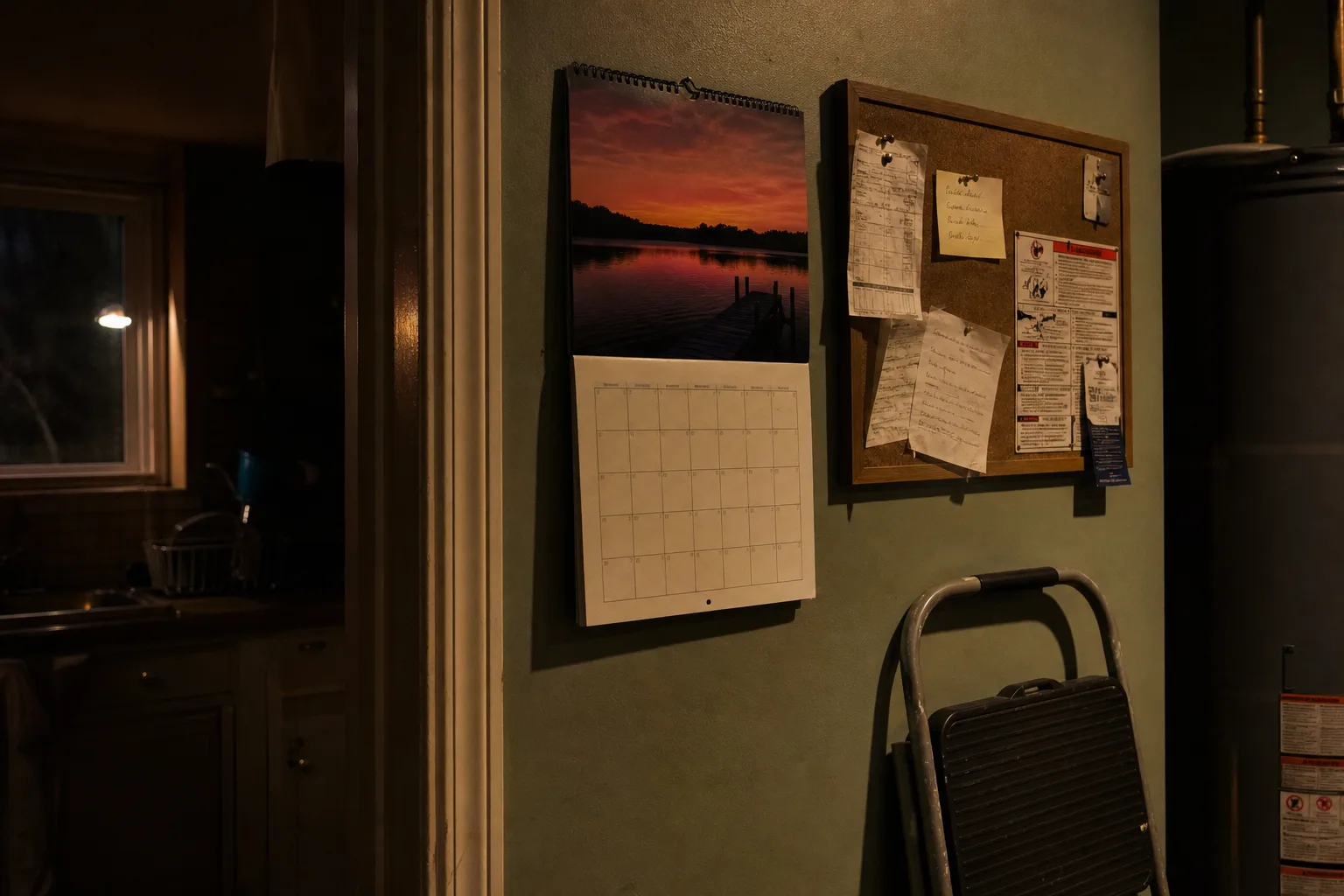
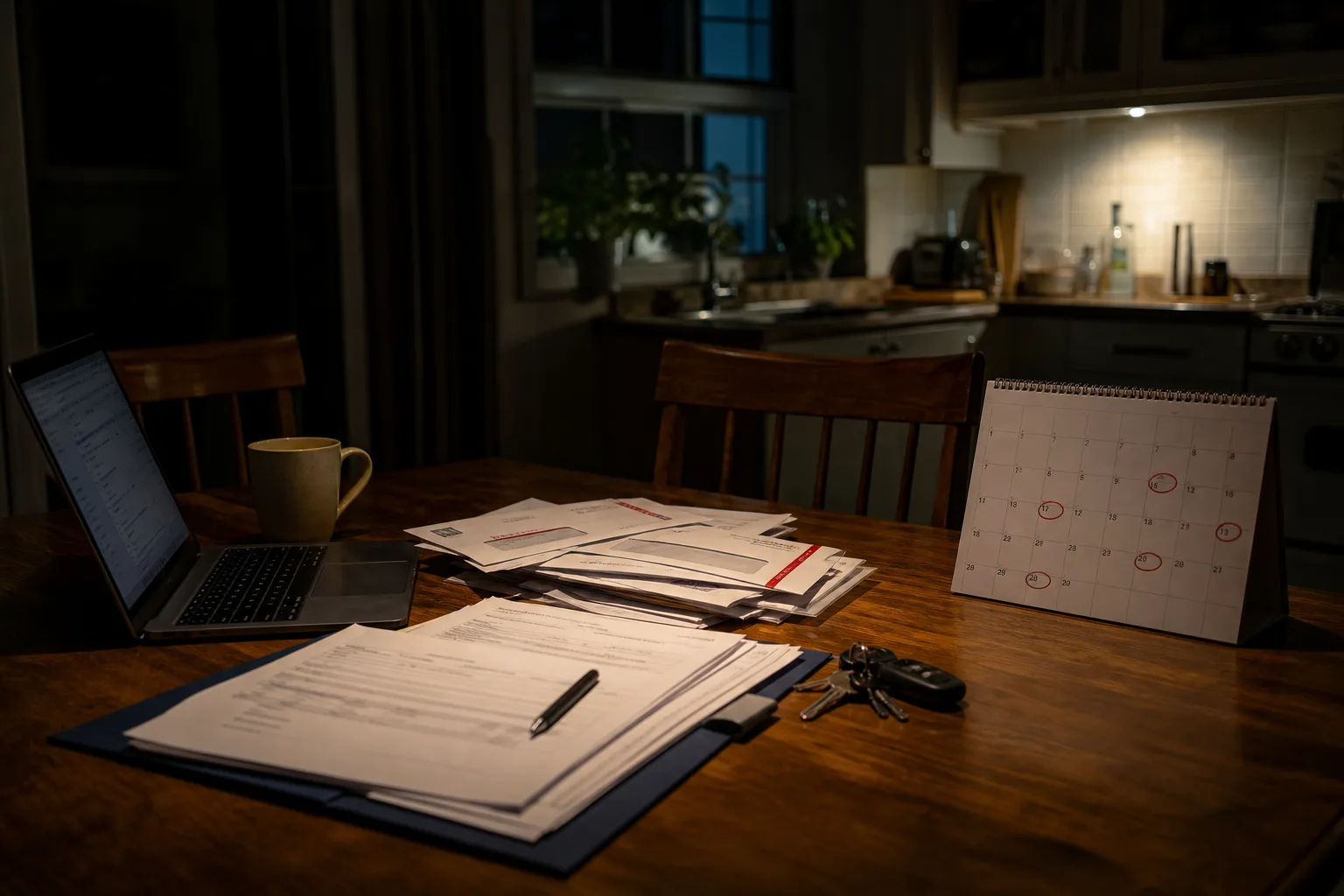
The water heater was set by whoever installed it, the gutters were cleaned the year the family moved in, and the septic tank has been pumped exactly once, by a previous owner, on a date nobody can produce. None of this is neglect in the ordinary sense. It is the predictable result of a category of work that has no owner: the recurring, low-frequency tasks that are nobody's job because they come due too rarely to land on anyone's week. Households absorb the cost of that gap months or years later, usually without connecting the two events.
The gap shows up as an injury before it shows up as a repair
What tends to put people in the hospital is not exotic. It is a fall from a ladder that came out once a year and was never quite footed right, a slip on a walkway that froze overnight because the ice melt ran out in December, and carbon monoxide from a furnace or a water heater venting badly in a closed-up house. Scald burns belong on that list too, because a tank left at its factory setting can run hot enough to injure a small child or an older adult in a few seconds. The chemicals under the sink worry people more than they should. The step stool is what breaks a wrist.
Each of those traces back to a task with no name attached. Someone has to replace detector batteries, or confirm the sealed ten-year units have not reached their expiration date, which is printed on the back. Someone has to turn the hot water down to a safer setting and check it at the tap. Someone has to put salt in the garage before the first freeze rather than during it. These are twenty-minute jobs with multi-thousand-dollar tails, and they fail quietly, which is exactly why they keep failing.
Your county has already assigned several of these, and it did not tell you
A surprising share of the unassigned calendar is not actually discretionary where you live. Septic pumping intervals are set by county or state health departments and can be enforced at the point of sale, with a pumping record demanded before closing. Private well testing is on the homeowner entirely, since the Environmental Protection Agency oversees public drinking water systems rather than individual wells, though many county health offices publish a recommended testing schedule and will run the sample for a modest fee. Sidewalk snow removal is a municipal ordinance in much of the country, with a clock, commonly measured in hours after snowfall stops, and a fine attached.
Carbon monoxide alarm requirements vary the same way, state by state and sometimes by whether the house has fuel-burning appliances or an attached garage, and they often apply retroactively to existing homes rather than only to new construction. Vehicle inspection is the clearest example of the pattern: annual and mandatory in some states, emissions-only in certain counties of others, and nonexistent in the rest. Two families doing identical maintenance can get completely different outcomes, because one of them lives where the rule was written down and enforced.
The consequences people rarely connect back
The bill arrives in forms that look unrelated to maintenance. A homeowners claim gets reduced or denied because the damage is read as long-term seepage rather than a sudden event, and the difference is often a few years of an unowned inspection. A buyer's inspector finds a septic field in failure and the sale pauses for weeks while a system is designed. A registration renewal bounces because the inspection lapsed, and now there is a late fee and a trip to the DMV during a work day. A neighbor falls on an uncleared walk and the homeowner discovers what their municipality's ordinance says about responsibility.
None of those feel like consequences of household admin while they are happening. They feel like bad luck, or like an institution being difficult. The connection is visible only when you look at the gap between the last recorded service date and the day the problem surfaced, which is why keeping the dates at all is most of the work.
Assigning it so it actually holds
The fix is unglamorous and it works: one named person per task, not one person for the whole category, and a date anchored to something that already happens. Detector checks ride along with the time change. Gutters and heating service ride on the first cold week. Filters ride on a billing cycle. Write the local rules down once, by calling the county health department about septic and well testing, checking the municipal code for the snow ordinance clock, and confirming your state's inspection and alarm requirements, because those four calls cover most of what is genuinely mandatory.
Keep the records somewhere a second adult can find them, with receipts and dates, since the pumping record and the service history are what carry weight with an adjuster, an inspector, or a buyer later. A household that can produce dates is in a materially stronger position than one relying on memory.
Treat the list as infrastructure rather than chores. It is a small standing commitment, measured in a few hours a year, that removes the specific failures most likely to send somebody to an emergency room and most likely to cost real money at the worst moment.