Four Ways to Pay for a Headstone, and Which One Locks the Design In
Cash, dealer installments, a card, or the funeral home's combined bill: the payment route you pick quietly decides how much of the memorial you can still change.
- Living
- Farah Siddiqui
- 826 words, 4 min
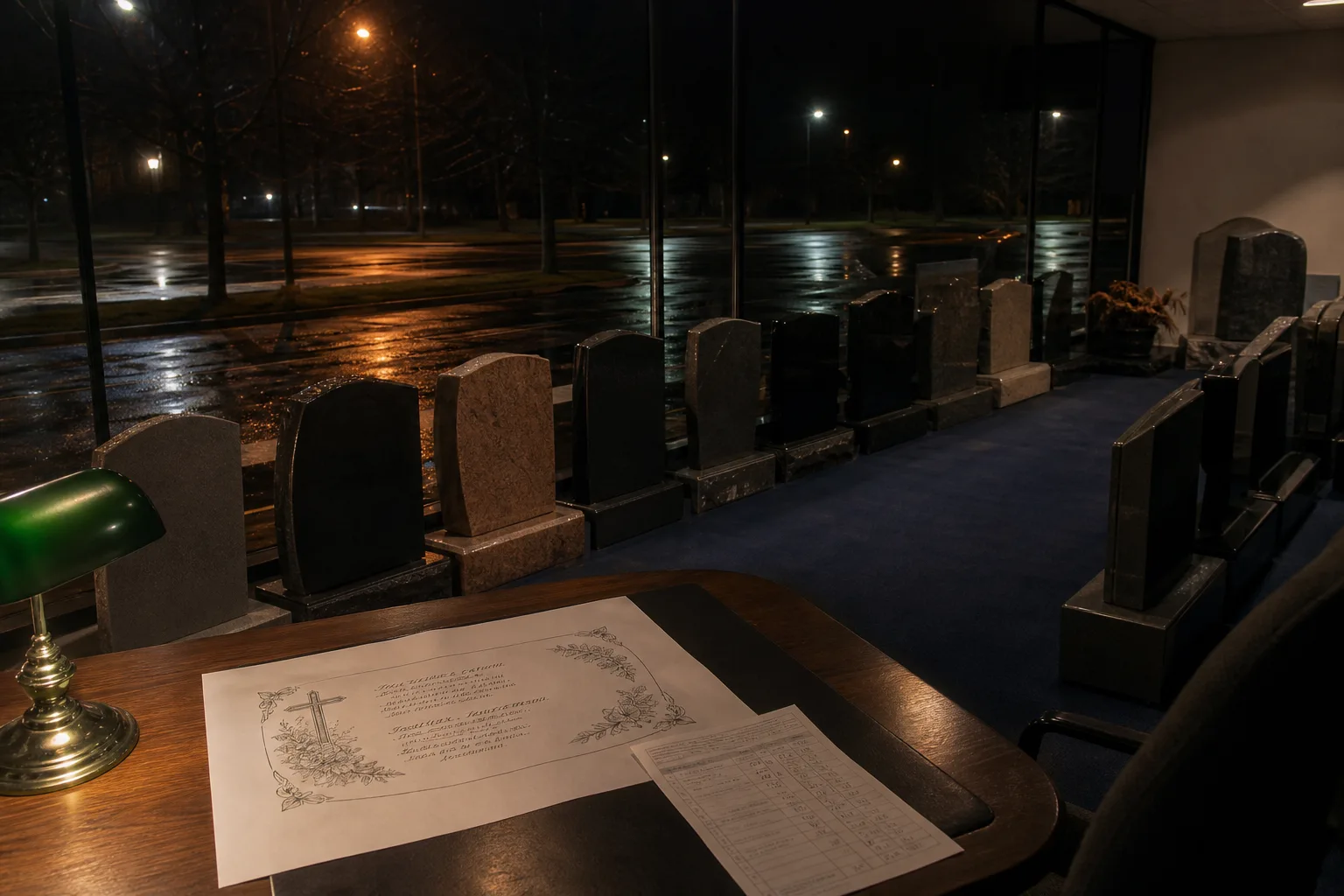
The people who sell memorials for a living can usually tell within a few minutes how a family is going to pay, and the guess is rarely about money. It is about timing. A family that came in eleven days after a burial pays differently from one that waited fourteen months, and the two get different prices, different lead times, and different amounts of room to change their minds. The payment route is treated as an afterthought, settled at the end of the appointment, when in practice it decides which parts of the memorial are still negotiable and which have already been cut in stone.
Why there are two counters selling you the same granite
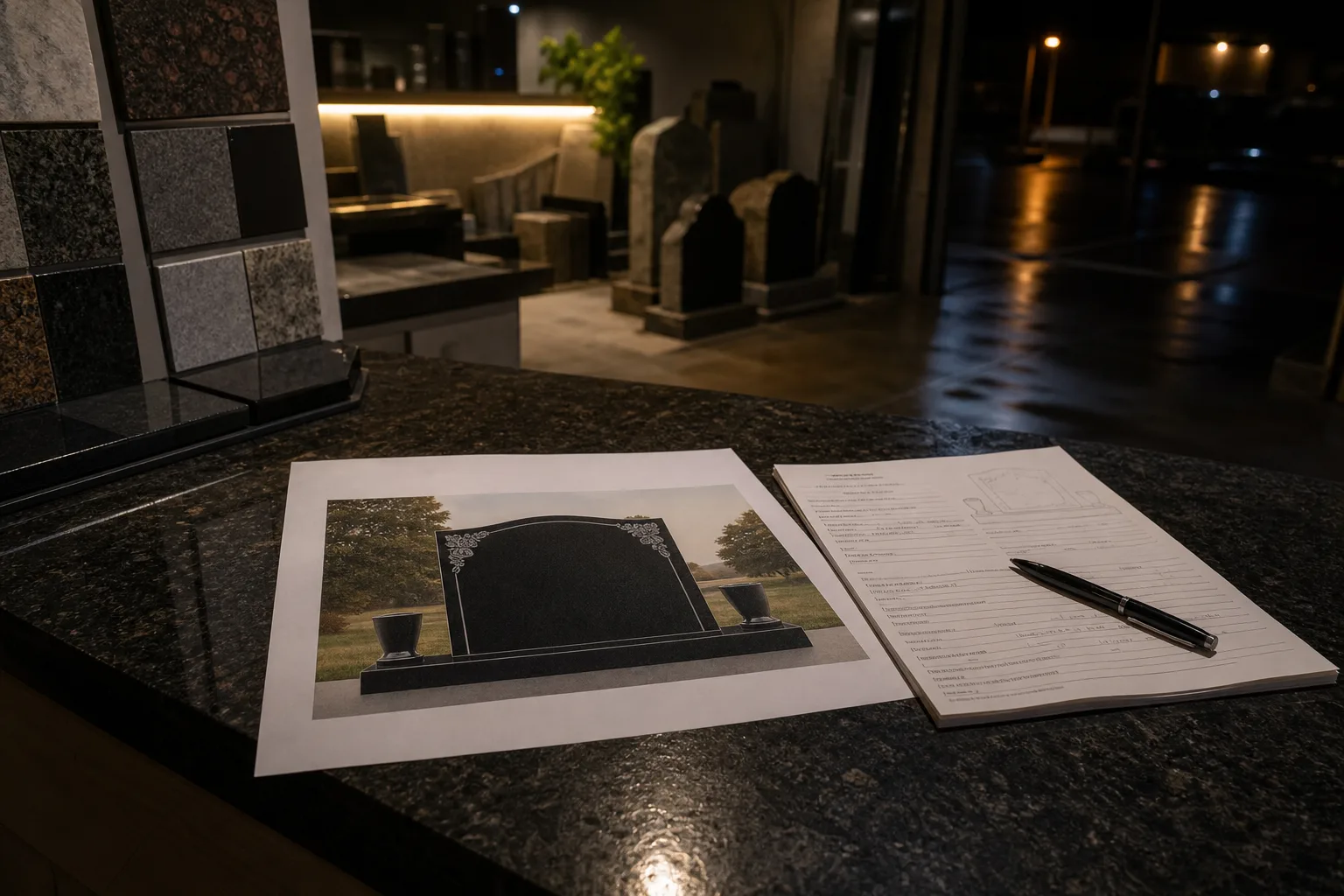
For most of the twentieth century, buying a marker meant visiting an independent monument dealer, often a family shop near the cemetery gate, who quarried nothing and subcontracted the lettering. Cemeteries made their money on land and on perpetual care funds, not on stone. That split loosened as larger cemetery operators began selling memorials directly and charging a separate setting or foundation fee when someone else's stone arrived at the gate. The result today is two counters quoting the same granite from the same handful of quarries, with the difference showing up in the installation line rather than the material line.
That history explains the pricing you will actually see. A cemetery quote often bundles the foundation, the setting, and the recording of the inscription into one number, which looks higher and moves less. A dealer quote usually shows the stone and leaves the cemetery's setting fee as a separate charge you pay to a third party, which looks lower until you add the second invoice. Neither is a trick. They are two business models that grew out of the same regulatory gap, and the Federal Trade Commission's disclosure rules for funeral providers do not force cemeteries to present the numbers in a matched format.
Cash at order versus the dealer's installment plan
Paying in full at order is the only route that reliably buys a price hold, and dealers who have been through several granite price adjustments will say so plainly. Quarry costs move, freight moves, and a quote issued in March is often honored for a set window rather than forever. An installment plan, typically a deposit with the balance spread over several months, protects your cash but usually carries a condition families do not read closely: the stone is not manufactured, or not set, until the balance clears. Six months of payments can mean six months of an unmarked grave.
The dealers who have handled hundreds of these accounts tend to treat that condition as the real cost of the plan, not the finance charge. A family paying interest at a modest rate on a marker is out a small amount of money. A family that agreed to a slow plan and then found the cemetery had closed its setting season until spring is out a full year, and the grave stays bare through the anniversary that mattered most. Ask which milestone releases the order, and get the answer in writing before the deposit leaves your hand.
The card, the personal loan, and the combined funeral bill
A credit card gets the stone into production immediately, which is worth something, and costs whatever your rate compounds to if the balance survives past the statement. Families who use a card and clear it within a cycle from insurance proceeds or an estate distribution generally come out ahead of an installment plan, because they bought speed for nothing. Families who carry it for a year usually pay more than the dealer would have charged in finance fees. A personal loan sits between the two: fixed term, fixed payment, and no leverage over whether the stone gets carved.
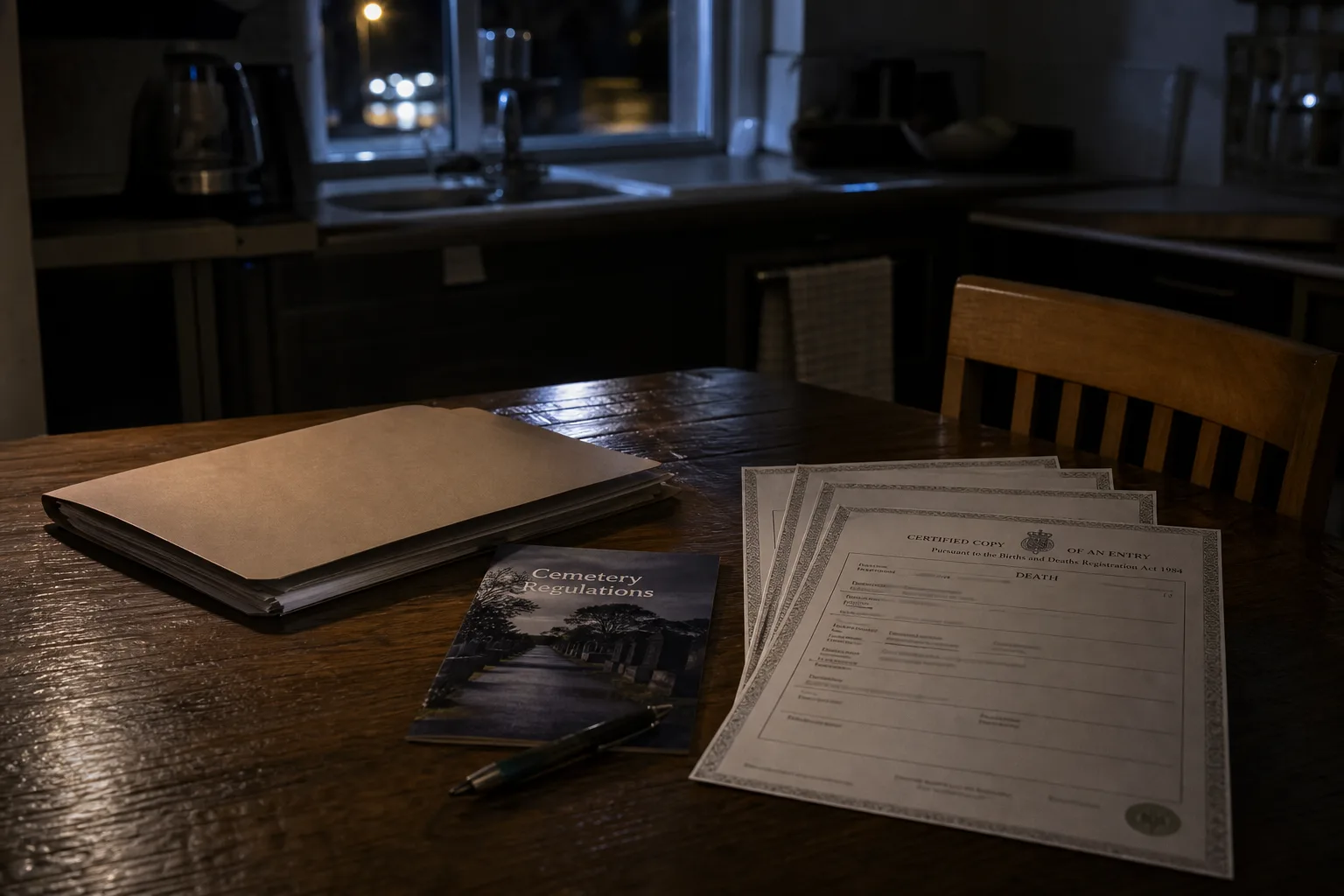
Rolling the memorial into the funeral home's bill is the most common route and the least examined. The convenience is real, the markup is sometimes real too, and the important detail is that a combined invoice makes it hard to see which line you are still allowed to revise. Ask for the memorial priced separately even if you intend to pay it together. It costs nothing and it restores the comparison.
The choices that stop being reversible
Three decisions close before the rest. The foundation size, poured to the dimensions on the order, sets the largest stone the plot will ever accept. A companion marker with one date left blank commits the second person to that plot and that design, decades ahead. And the inscription layout, once approved on the proof, is what the sandblaster follows; a corrected name means a new stone, not a patch. Experienced dealers slow families down at exactly these three points, and the families who let them are the ones who never call back with a problem.
Decide the money question early, then, because the payment route you choose is what determines how long the design stays open.