Holding Out for the Full Amount, and the Point Where the Math Turns Against You
Settlement stopped being a sign of weakness once the systems around household disputes were rebuilt to reward it. Here is where the turning point actually sits.
- Law & Legal
- Ingrid Halvorsen
- 1,285 words, 5 min
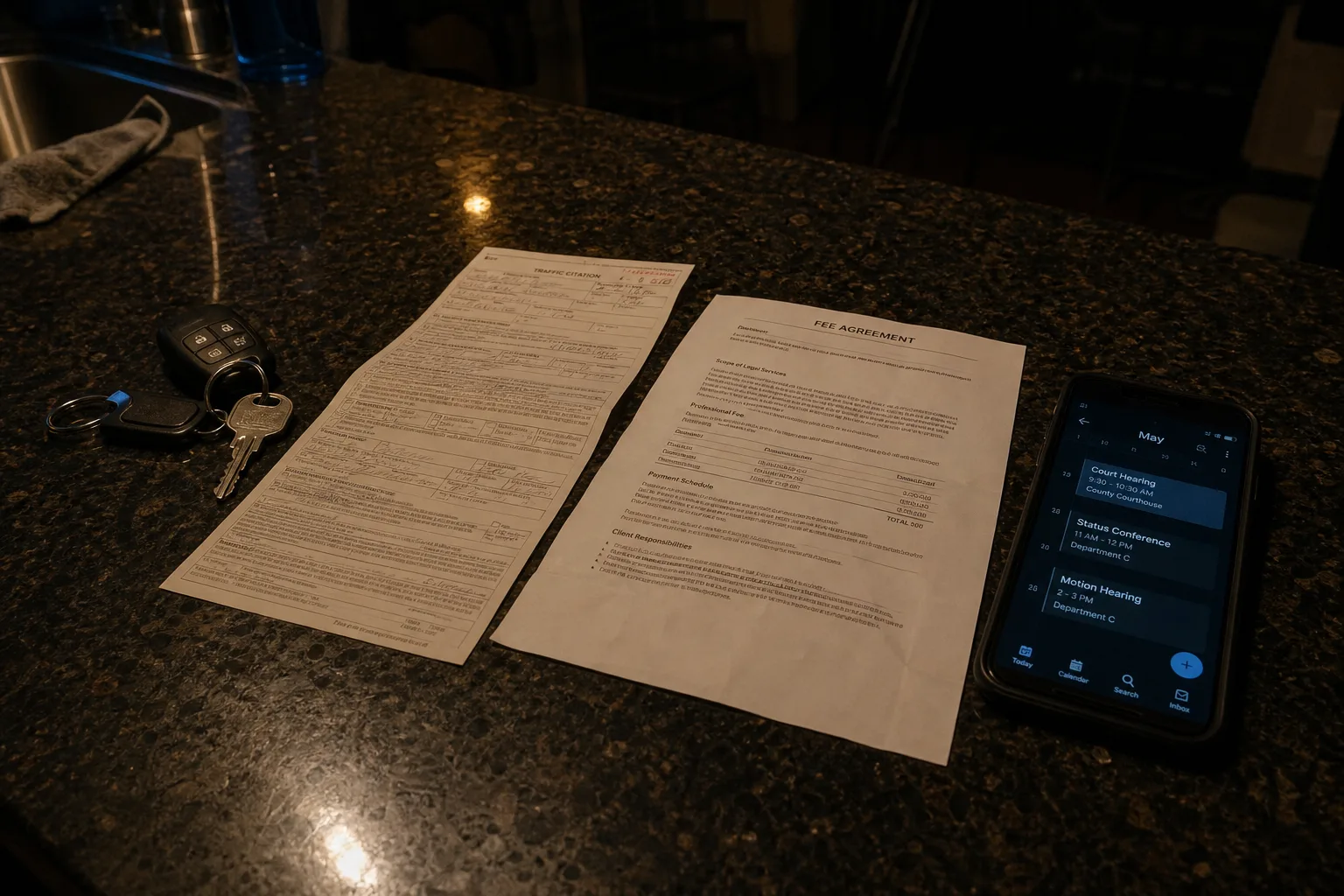
A contractor finishes a driveway two inches short of the garage apron, the last payment is four thousand dollars, and you are certain you are right. You probably are. The question that decides what happens next is not whether you are right but what being proved right costs, and that calculation has changed more in the last thirty years than most people who are living through their first real dispute realize. The instinct to hold out for the full amount was formed in a system that no longer exists in quite the same shape. What replaced it rewards a different sort of patience.
The apparatus that grew up around small disputes
Household disputes used to have two settings: absorb the loss quietly, or hire a lawyer and hope the amount justified the retainer. Between those, courts built small claims divisions with raised dollar limits, simplified filings, and rules that let ordinary people appear without counsel. Then came mandatory mediation before a hearing date in many jurisdictions, arbitration clauses buried in the contracts households sign for cards, phones, and home improvement financing, and complaint portals run by state attorneys general and licensing boards. Each of these was added by someone trying to clear a backlog. The combined effect was to make the middle of the range, the four thousand dollar disagreement, cheaper to resolve than to litigate.
That shift matters because most of the received wisdom about disputes predates it. The advice to never settle, to make them prove it, to let the judge sort it out, was reasonable when the only alternative was walking away with nothing. Now there is a graded set of pressure points between doing nothing and filing suit, and each one has a different cost in time and money. The Federal Trade Commission oversees consumer protection at the federal level and maintains the reporting channels households use when a business behaves badly, which is one reason companies now price the reputational exposure of a small dispute rather than simply ignoring it.
The cost of proceeding, not the strength of the claim
Think about it the way you would think about tools. A job that needs a rotary hammer for one afternoon does not need you to own a rotary hammer; you rent it, use it, return it, and the whole thing costs less than a tank of gas. A job you will do twice a year for a decade justifies buying, and buying properly, because the cheap version fails in the middle of the work and you pay twice. Disputes follow the same logic. The question is never how much you are owed. It is what the next step costs you in hours, filing fees, unpaid time away from work, and the specific attention the thing takes up while it is unresolved.
Put actual numbers on your side of the ledger before you decide anything. A small claims filing fee, service of process, a day off work for the hearing, and a second day if it is continued. If the other side has counsel and you decide you need an hour of an attorney's time to prepare, add that. If your dispute falls under an arbitration clause, find out who pays the arbitrator's fee and whether the clause requires you to travel. When the total lands anywhere near a third of what is in dispute, a settlement in the seventy to eighty percent range is not a concession. It is the better outcome, arrived at earlier.
What the other side is looking at
The contractor, the retailer, or the insurer is running the same arithmetic from the opposite direction, and understanding their version tells you where the number will land. For a small contractor, a hearing is a lost working day, and lost working days are the entire business. For a larger company, your claim is handled by someone with a caseload, a settlement authority up to some internal ceiling, and no personal stake in whether you are right. Below that ceiling, paying is administratively easier than fighting. Above it, the file goes to someone who fights everything as a matter of policy, and your leverage changes completely.
You usually cannot see the ceiling, but you can feel it. A claim that gets a same-week callback and an offer is sitting under it. A claim that generates form letters and requests for documents you already sent is either above it or has been routed to someone whose job is delay. The practical response is to size your demand so it stays under the threshold where a single person can approve it, which often means asking for the repair cost rather than the repair cost plus your inconvenience plus a gesture toward your trouble. The extra ask is what pushes a file up a level.
Three moments when settling is clearly the right call
The first is when the evidence you would need does not exist. If the change order was verbal, if the photographs were taken after the cleanup, if the only witness is your brother-in-law, then your claim is worth roughly what the other side will pay to avoid the nuisance, and no amount of righteousness converts a weak record into a strong one. The second is when the remedy you actually want is not money. Getting the crew back to finish the apron, getting the warranty honored, getting the account corrected before it reaches collections: those outcomes are available in a negotiation and largely unavailable from a judge, who awards damages and goes home.
The third is when the dispute has started to cost you something that is not on the invoice. Deadlines are the usual mechanism. A tenancy that ends, a statute of limitations that runs, a permit that expires, a home sale that needs a lien released before closing. Once someone else's calendar is driving the outcome, the value of a fast resolution rises sharply and the value of a perfect one falls. Find that date early, write it down, and work backward from it, because the party who knows the deadline first controls the negotiation.
Writing the settlement so it stays settled
A settlement that is not written down is a delay dressed up as an outcome. Get four things in the document, in plain language: the exact amount, the date it will be paid, what specifically is being released, and what happens if the payment does not arrive. Keep the release narrow if you can, covering this dispute rather than every possible claim between you, because a broad release signed while something else is still developing can foreclose a claim you have not discovered yet. If the agreement includes work rather than money, name the work, the standard, and the completion date. Signatures from both sides, and a copy that lives somewhere other than your email.
The final structural point is timing of payment against the release. If you sign a release and the check comes later, you have traded a live claim for a promise, and the promise is now the only thing you own. Payment on signature, or a release that takes effect on clearance of funds, closes that gap without much argument from a reasonable counterparty. Anyone who objects strenuously to that sequence is telling you something useful about how the next thirty days will go.
Most household disputes are worth settling and worth settling early, and the ones that are not usually announce themselves through a counterparty who will not put a number on anything. The skill is not toughness. It is knowing which tool the job needs, renting rather than buying where the job is small, and recognizing the point at which the argument has stopped earning and started costing.