The Records That Decide Your First Legal Meeting Are Held by Other People. Who to Call First
Most of what an attorney needs at a first consultation sits with a clerk, a paralegal, a records custodian or a code officer, and local rules decide how long each takes.
- Law & Legal
- Clement Boateng
- 1,083 words, 5 min
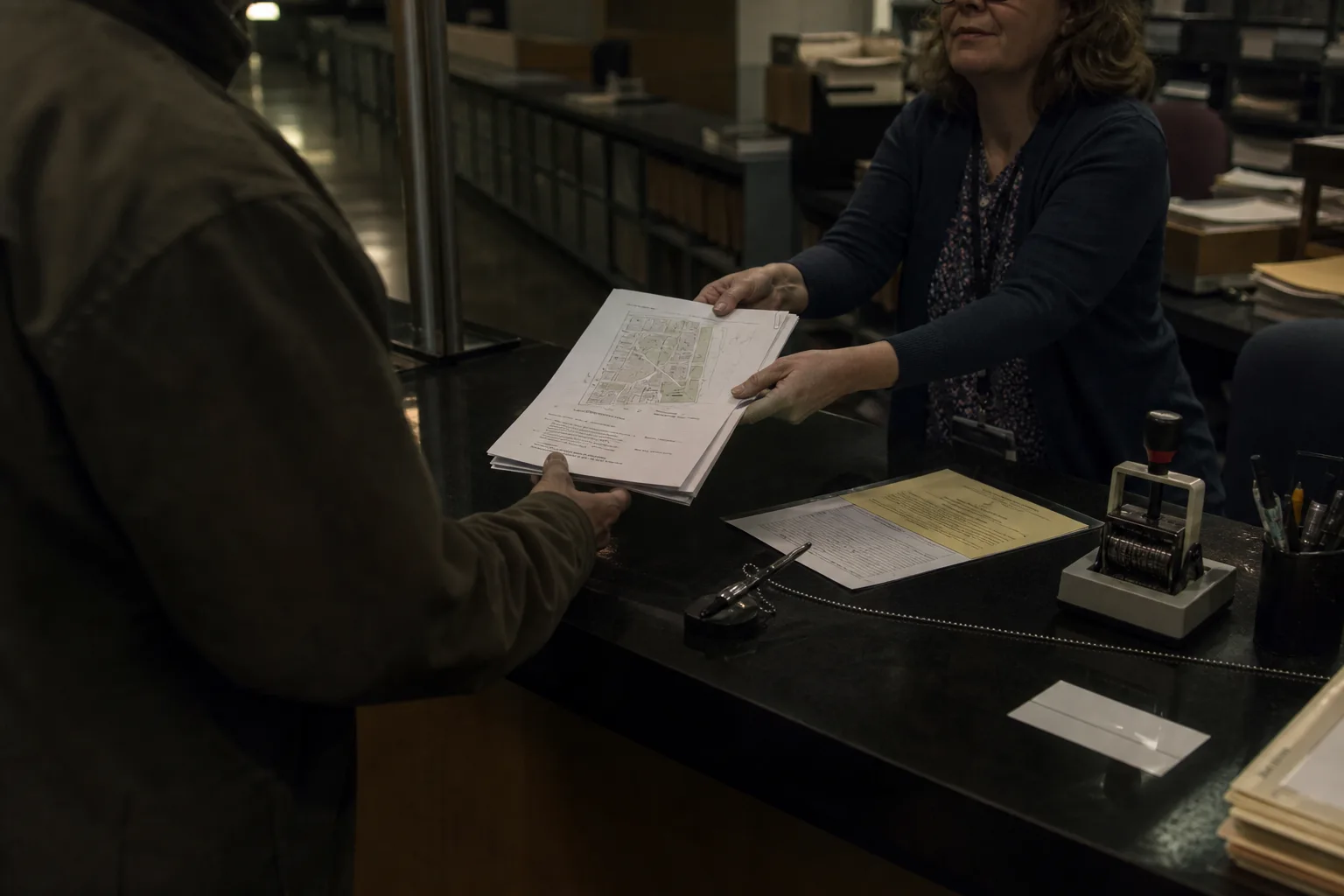
Most of what makes a first legal consultation productive is not in your house. It sits in a hospital records department, a county recorder's index, a police department's records division, a building department's permit file, or an insurance carrier's claim system, and each of those is run by someone who has never heard of you and works to a schedule set by state statute or local ordinance rather than by your appointment calendar. The attorney is the last person in that chain, not the first. Understanding who holds what, and how long each will take, is the difference between an hour of advice and an hour of guessing.
The paralegal who screens the call does more of the work than the attorney
In most firms that handle personal injury, landlord and tenant disputes, or property matters, the first voice on the phone belongs to an intake paralegal or a legal assistant, and that conversation determines what the attorney sees before you sit down. That person is deciding two things at once: whether the matter fits the firm's practice, and whether there is a deadline close enough to move you up the calendar. Give them dates rather than adjectives. The day of the fall, the day the notice was taped to the door, the day the check cleared. A caller who supplies four dates and a one-line summary usually gets a longer meeting than one who supplies a narrative.
Intake staff also know something you do not, which is how long each records source in their county actually takes. They have requested the same hospital's chart a hundred times. They know which municipal clerk answers email and which one requires a notarized form. Ask them directly what to order and where to send the request, because they will answer, and because anything you order yourself arrives without a firm's markup attached.
Medical records, incident reports and the clocks nobody tells you about
The injuries that generate real legal work are boring ones: falls on stairs and ice, ladders used one rung too high, scald burns, dog bites, and vehicle collisions at low speed that produce neck and back injuries which show up three days later. What these have in common is a paper trail held by someone else. The emergency department chart, the urgent care note, the ambulance run report, and the radiology images are four separate requests, sometimes to four separate custodians, even when all of it happened under one roof on one night.
State law governs how quickly a provider must respond and what it may charge per page, and those rules differ substantially across state lines. Some states cap copying fees tightly and give the provider a short window; others are looser on both. Police records are governed by a different statute again, and body camera footage often by a third, with some departments releasing it on request and others requiring a formal public records petition with a response period measured in weeks. Audio from a 911 call may be purged on a retention schedule as short as a few months. Ask for it early, in writing, and keep the date-stamped copy of your own request.
If the injury happened at work, the employer's own injury log matters as well. The Occupational Safety and Health Administration is responsible for the recordkeeping requirements employers follow for workplace injuries and illnesses, and an incident recorded there establishes that the event was reported when it happened rather than reconstructed later.
Property disputes run through offices your attorney cannot hurry
For anything involving land, structures or neighbors, the useful people are the county recorder or register of deeds, the assessor, the building department, and the code enforcement officer. The recorder holds the deed, the plat, recorded easements, and any liens. The assessor holds the parcel map and the historical record of what the property was taxed as, which is sometimes the only surviving evidence of when an addition appeared. The building department holds the permit history, the inspection cards, and the certificate of occupancy, and a gap in that history is frequently the entire dispute.
Access rules here are intensely local. Some counties have every recorded instrument online back forty years, searchable free by parcel number, and you can have the whole chain of title in an afternoon. Others charge per document, require an in-person visit, or maintain older books only on microfilm at the courthouse. Building departments vary more still, because permit files are municipal rather than county, and a town of eight thousand may keep them in a filing cabinet behind the counter. Call before you drive. Ask what identification the counter requires and whether they take a request by email.
Adjusters, contractors and the two documents that carry the most weight
When an insurance claim is part of the picture, the adjuster's estimate and the carrier's written coverage position are the two documents an attorney will want in hand. The estimate shows what the carrier believes the loss costs, line by line, and a contractor's independent estimate placed next to it shows where they disagree and by how much. The coverage letter shows which policy language the carrier is standing on. Both are obtainable by asking the carrier in writing, and both are far more useful than your recollection of a phone call.
Licensed contractors and engineers occupy the same position on the technical side. A structural engineer's letter about a sagging deck or a licensed electrician's written findings about a panel carry weight precisely because those licenses are issued and disciplined at the state level, and the attorney will check that the license was current on the date of the report. State licensing boards publish that status online, usually free, and confirming it yourself takes about two minutes.
Sequencing the requests so the meeting lands in the right week
Order the slowest items first. Public records requests to a police department and medical records from a hospital system are typically the long poles; a deed copy from an online recorder and a contractor's estimate are the short ones. Send the slow requests, then book the consultation for a date that gives them room to arrive, and bring what you have with the pending requests listed by date sent. An attorney who can see that the chart is ordered and due in two weeks will build a plan around it. That is a working first hour, and it is almost entirely a function of who you called before you called the lawyer.