Paid the Contractor and Still Got a Lien? The Desks That Clear It First
A mechanic's lien for work the homeowners had already paid for got cleared by a credit manager and a title curative clerk, with one attorney hour spent on the only question that needed one.
- Law & Legal
- Farah Siddiqui
- 978 words, 4 min
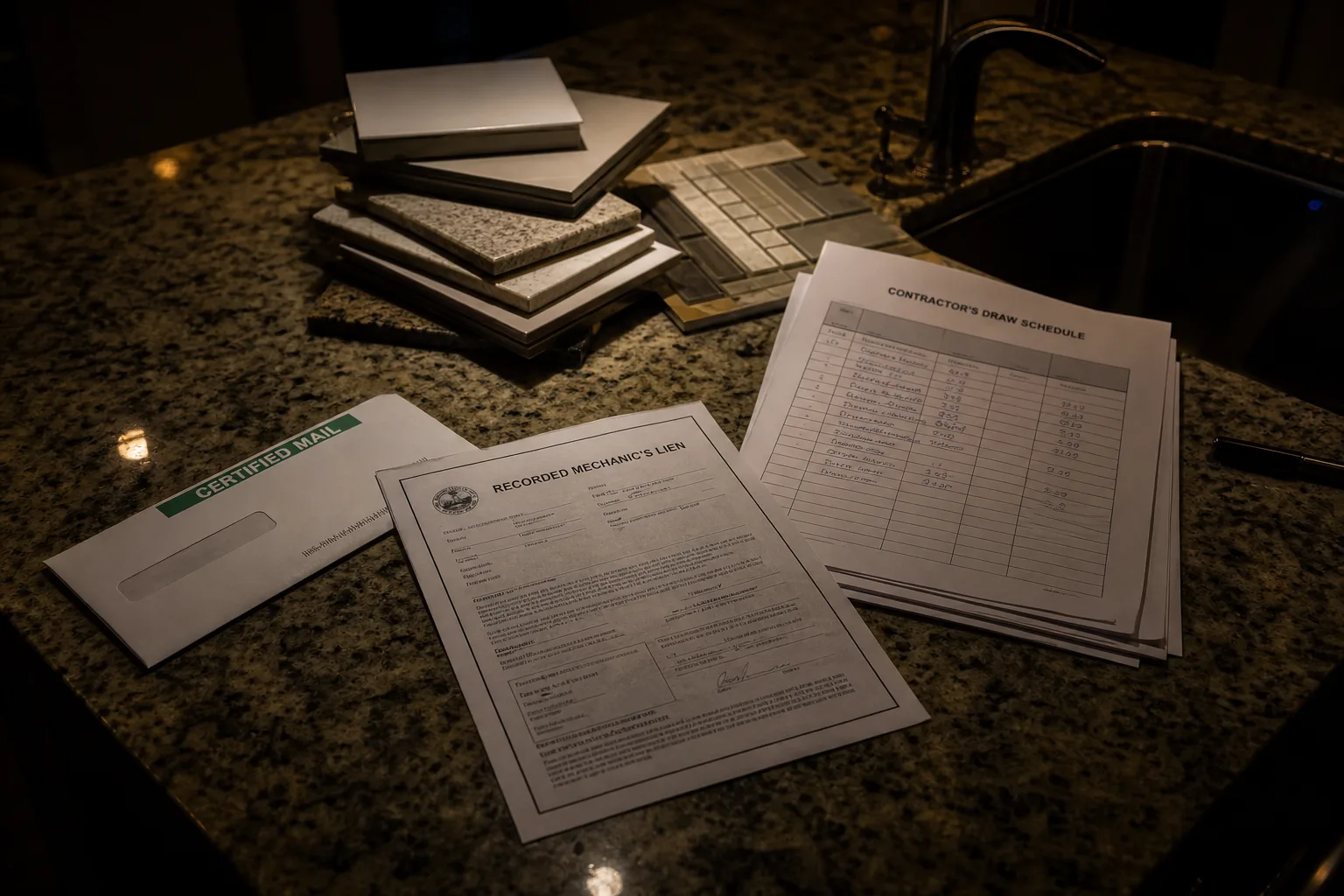
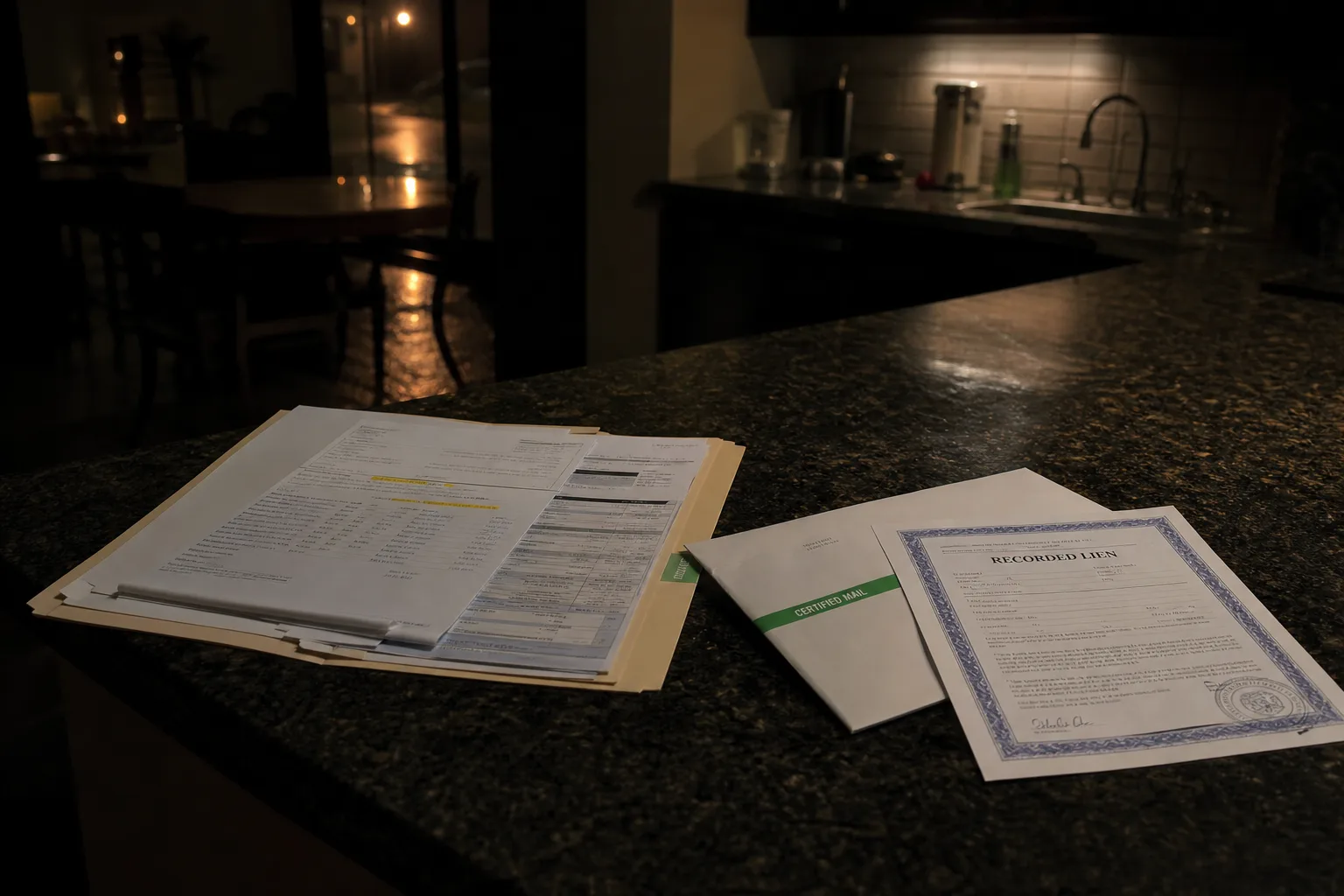
The homeowners had paid their general contractor in full, in four draws off a home equity line, the last one released in August after the backsplash went in. In November a certified letter arrived from a tile supplier claiming just over eight thousand dollars for material delivered to the address and never paid for, with a lien already recorded against the house. Their first instinct was to find a litigator that week. What actually resolved it was three people who never appear in the standard advice about legal problems, plus a single paid attorney hour spent on one narrow question nobody else could answer. The figures here are illustrative, but the sequence repeats constantly.
The claim was real even though the payment was
A mechanic's lien attaches to the property, not to the person who owes the money, which is why paying the general contractor in full does not by itself stop a supplier or a subcontractor from recording one. State statutes differ sharply on the details: some require a preliminary notice before delivery, some shorten the window when the owner records a notice of completion, and a handful give real protection to a residential owner who can document full payment. The recorded document itself is cheap to file and rarely reviewed by anyone for accuracy at the counter. That asymmetry is the whole problem. It costs the claimant almost nothing to create and costs the owner a refinance to ignore.
The credit manager at the supplier, who wanted cash and not a lawsuit
The letterhead said the lien came from a law firm, and the homeowners read that as the opening of a case. It was closer to the opening of a collections file. The supplier's credit manager, whose name was on the delivery tickets rather than the legal notice, had one objective, which was converting a bad receivable into money before the quarter closed. She confirmed the balance, confirmed that a joint check payable to the supplier and the general contractor would satisfy it, and named the release she would sign and record in exchange. None of that conversation required counsel. It required knowing which desk at the supplier is measured on days sales outstanding, because that desk is usually willing to trade paperwork for a payment it can bank this month.
The title curative clerk, the party in the transaction almost nobody calls
The second overlooked desk sits inside the title company that insured the purchase and will be asked to insure the refinance. Curative staff spend their days removing exactly this kind of cloud, and they know what the county recorder in that specific jurisdiction will accept, what a partial release has to recite, and whether a policy endorsement already speaks to unrecorded work performed before closing. A single call produced the release language the clerk wanted to see, which was narrower and more precise than the form the supplier had offered. The homeowners' lender had its own version of that desk too, a draw administrator who should have collected conditional and unconditional lien waivers from each named supplier at each draw, and who now knows to.
What the attorney was actually for
One hour of a construction attorney's time answered the question that neither the credit manager nor the title clerk could touch, which was how long the recorded lien remained enforceable and what the claimant had to do to keep it alive. That deadline, the date by which a suit to foreclose the lien must be filed, is the fact that determines whether negotiating is sensible or reckless, and it is statutory, jurisdiction-specific, and unforgiving. The same hour flagged two other conditions worth paying for: whether the supplier had served the preliminary notice its state required, and whether the amount claimed exceeded the material actually delivered. If the general contractor had been insolvent, or the claim had run into six figures, or the deadline had been days away, the answer flips and the case belongs entirely to counsel from the first phone call.
The financing cost of treating it as something to handle later
The version of this case that gets expensive is the one where the lien simply sits. Nothing happens for two years, which is the trap, and then a refinance application reaches title review and the commitment comes back with a requirement the borrower cannot satisfy in the ten days left on a rate lock. By then the claimant's payoff has grown with statutory interest and its own legal fees, the general contractor has dissolved and cannot endorse a joint check, and the homeowners are negotiating from a position where the cost of delay is measured in basis points across a thirty-year balance. The Consumer Financial Protection Bureau oversees mortgage servicing, including how servicers respond to borrower requests and produce payoff figures, and a clean file moves through that machinery quickly. A clouded one does not move at all.
How to tell which problem you have
The working test is whether the other side wants money or wants a ruling. A supplier with a receivable, a roofer with an unpaid invoice, a lender with a document deficiency, all want money and paperwork, and all of them staff a department whose job is accepting both. A problem that has a statutory deadline attached, a contested amount, an insolvent party in the middle, or a signature you cannot obtain, has stopped being a payment and become a case. Buying an hour to locate the deadline is cheap, and it is what tells you which of those two situations you are in before you spend anything else.
Six weeks after the certified letter, a joint check cleared, the curative clerk recorded the release, and the file closed for roughly the cost of the tile plus one consultation. The general contractor, asked for lien waivers on the next phase, produced them without argument.