Planning a Saturday Viewing? That One Choice Turns On Half the Invoice
A public viewing three days out is a scheduling decision, and it quietly commits a family to embalming, cosmetic preparation, hourly facility use and a casket needed for two hours.
- Living
- Ingrid Halvorsen
- 943 words, 4 min
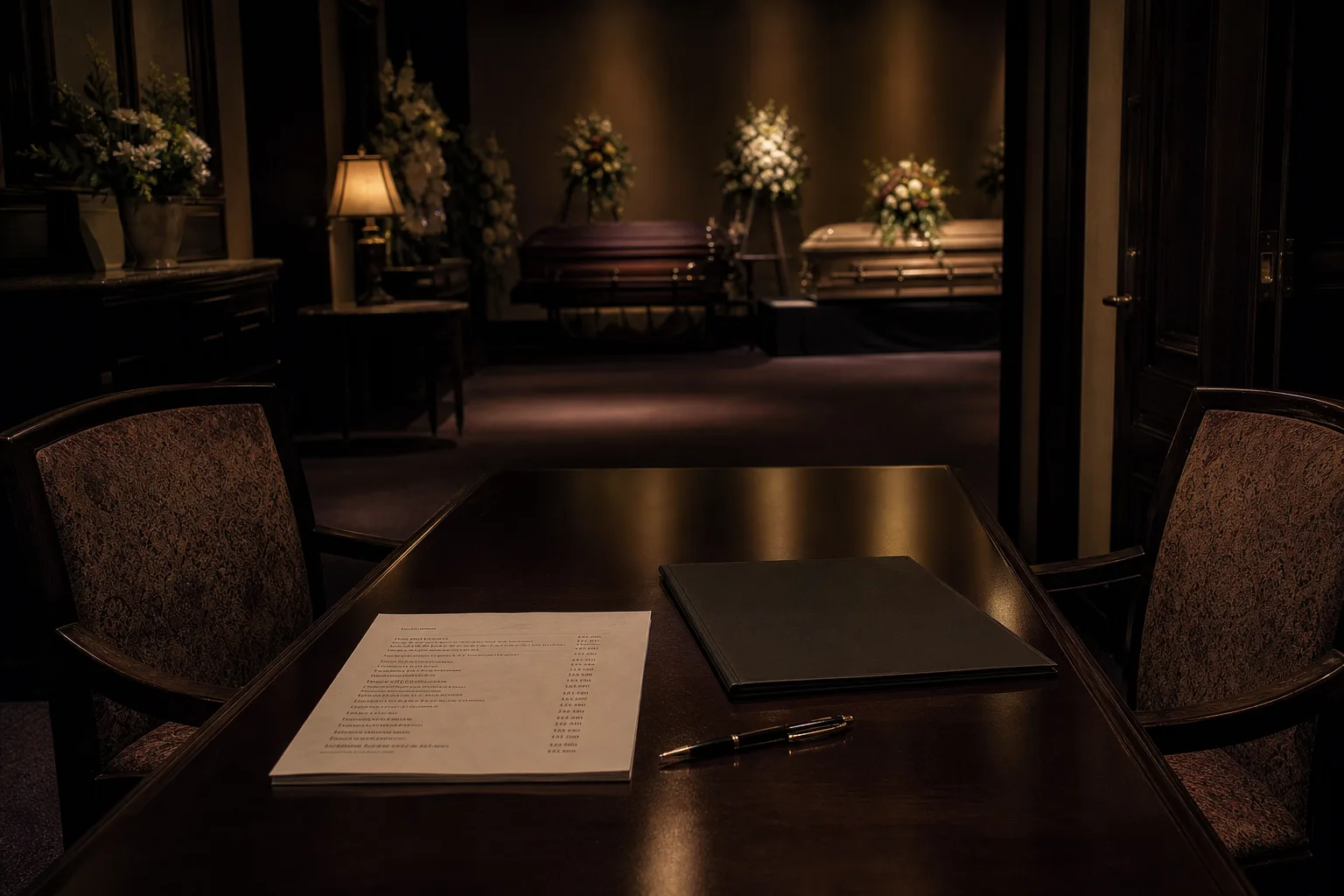
The line on the statement reads embalming, and most families read it the way they would read a hospital charge, as something clinical that somebody qualified decided was necessary. It is rarely that. In the great majority of cases it is the downstream consequence of a scheduling decision made in the first hour, often before anyone has slept, when a funeral director asks whether the family wants a public viewing and, if so, which day suits the relatives flying in. Say Saturday, three days out, and you have just committed to a chain of charges that nobody will describe to you as a chain.
The decision that pulls the rest along behind it
I think about funeral costs the way I think about tools on a job site: some are genuinely required by the work, some are required only by the way you chose to do the work, and a few are there because they were on the shelf when you walked past. The viewing is the choice that decides which category everything else lands in. A public viewing with an open casket, held several days after the death, requires that the body be presentable and stable for a room full of people over a period of hours. That requirement is real. What is optional is the schedule that created it, and the schedule is almost always negotiable.
Move the same gathering to a private family identification viewing on the second day, or hold the memorial after cremation with no body present, and the requirement dissolves. Refrigeration, which most firms hold or can arrange, covers short intervals at a fraction of the cost of preparation. The Federal Trade Commission is responsible for the rule that governs how funeral providers disclose and itemize their prices, and one of the things a compliant price list makes visible is that embalming is a separate, itemized charge rather than a component of a package you cannot break apart. Families who read the list before they set a date usually set a different date.
Embalming is a tool for a specific job
Embalming does a defined thing well. It buys time and appearance across a multi-day interval, particularly where a body must travel, where a large public viewing is planned, or where relatives cannot arrive quickly. Used for that, it is worth what it costs. Used because nobody asked what the alternative was, it is a chargeable service in search of a purpose, and it drags a second tier of costs along with it: cosmetic preparation, dressing and casketing, sometimes restorative work billed by the hour. None of those items appears on a price list as conditional, because on paper they are not. In practice each one exists because of the first choice.
The honest version of the conversation sounds like a contractor scoping a job. What outcome do you actually want, who needs to be in the room, and by when can they be there. A family that says it wants everyone to see him one last time may mean twelve people on Tuesday morning, which refrigeration handles, rather than ninety people on Saturday afternoon, which it does not. Directors will run either version. Most will run the cheaper one without complaint if the family names it, and the good ones raise the option unprompted.
The casket you need for two hours
Here is where the tool logic gets literal. If the plan ends in cremation but includes an open-casket viewing, the casket is doing two hours of work and then leaving the building. Buying one outright for that is the equivalent of buying a tile saw for a single bathroom floor. Rental caskets exist precisely for this: a finished exterior shell with a removable interior container, the container cremated with the body and the shell reused. The rental fee is a fraction of the purchase price of a comparable casket, and the family in the room cannot tell the difference, because there is none to see.
Funeral providers are required to accept a casket or urn you obtained elsewhere and cannot charge you a handling fee for the privilege, which turns the casket from a captive purchase into an ordinary one you can shop. That said, the cheap-tool warning applies in both directions. A minimum-grade cloth-covered container is fine for direct cremation and looks like what it is at a viewing, and a bargain urn ordered online may arrive in a size or material the cemetery will not inter without an additional outer container. Check the cemetery's written requirements before you buy the vessel, not after.
Where the savings are, and where they are not
The nondeclinable basic services fee is the one item you cannot remove. It covers the firm's overhead, the arrangement conference, permits and the filing of the death certificate, and it is charged whether you hold a full service or a direct cremation. Everything around it is separable: transfer of remains, use of facilities and staff for a viewing, use of facilities for a ceremony, hearse, lead car, printed materials, register books, obituary placement. Several of those are priced by the hour or the half day, which means the Saturday afternoon slot that suited the relatives is also the slot that meters longest.
The everyday consequence people rarely trace back is the credit card balance six months later, the one that gets blamed on grief spending. Most of it was not spending. It was a date, chosen fast, that silently authorized preparation, cosmetology, an hourly room, a second vehicle and a casket bought rather than rented. Choose the date last, after the price list, and the same gathering costs a different number.