Buying Your First Policy? Every Exclusion Is There for One of Four Reasons
Exclusions are not fine print traps; each one exists for a reason you can name, and knowing which reason applies tells you whether to buy back the coverage or let it go.
- Finance
- Clement Boateng
- 820 words, 3 min

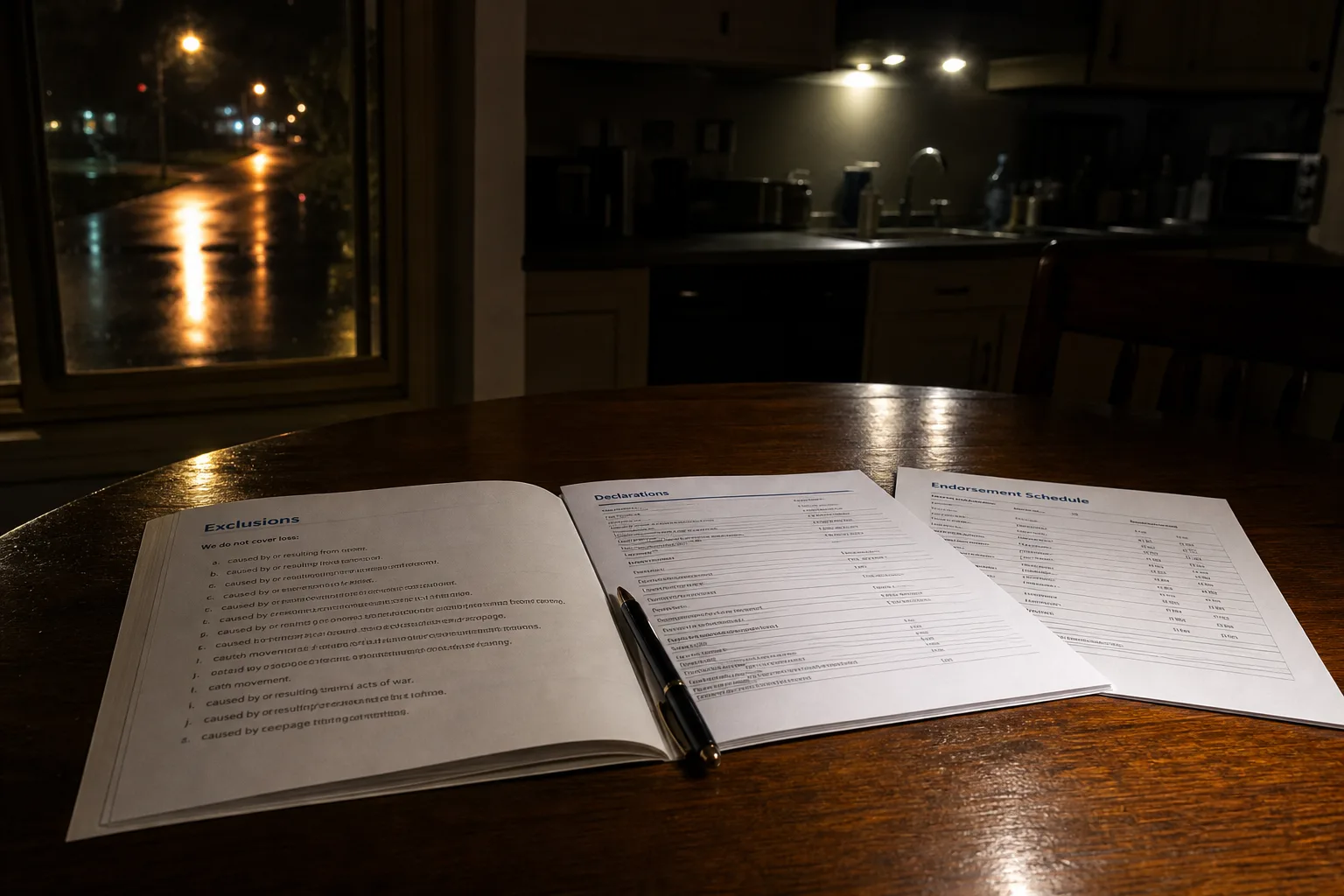
Most people read an exclusions page for the first time after a loss, which is the worst possible moment, because by then the only question left is whether the wording covers what already happened. Read the same page before you sign and it turns into something else entirely: a list of the losses the insurer has decided it will not price, and a fairly honest account of why. Exclusions are not hidden. They are usually the clearest-written part of the document. What they lack is context, and context is the thing a first-time buyer can build in an afternoon.
Every exclusion is doing one of four jobs
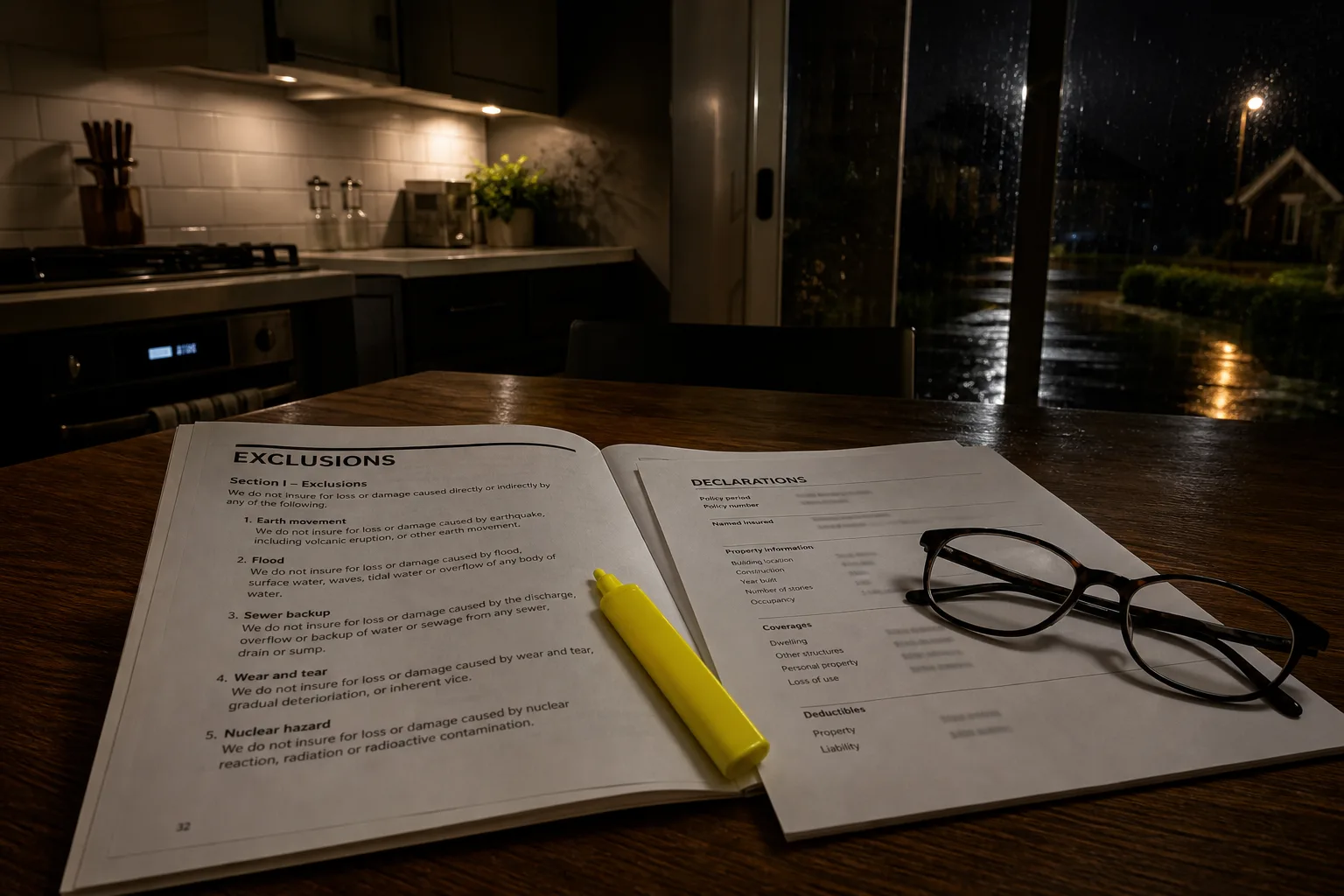
The first is separation of markets. Flood, earthquake and, in many states, sewer backup are excluded from a standard homeowners policy not because they are rare but because they hit whole neighborhoods at once, which breaks the arithmetic of pooling. The second is control: damage from long-term seepage, rot, insects and deferred maintenance sits with the person who could have stopped it. The third is catastrophic correlation, the war and nuclear language nobody reads. The fourth is definitional, the line that keeps a policy from becoming a service contract on aging appliances. Once you can sort an exclusion into one of those four, you know what to do about it.
The exclusion that is really a referral to another policy
Separation-of-markets exclusions are the most useful ones, because they almost always have a purchasable counterpart. Flood coverage is written through the National Flood Insurance Program, which FEMA is responsible for administering, or through a growing private market that competes with it. Earthquake is a separate policy or an endorsement with its own deductible, typically stated as a percentage rather than a dollar amount. Water backup from sewers and sump pumps is usually an inexpensive endorsement with a modest limit. When you find one of these exclusions, the question is not whether the insurer is being unfair. It is whether the peril is plausible where you live, and what the add-on costs.
The maintenance line is where first-timers get surprised
The control exclusions are harder, because they turn on a distinction that feels artificial until you see it applied. A supply line that bursts is a sudden accidental discharge and is generally covered. The same line weeping behind a cabinet for eight months is not, and the mold that grew there is excluded twice over. The practical consequence is that the parts of a house most likely to cause an expensive claim are also the parts you are expected to inspect: water heaters past their service life, washing machine hoses, shutoff valves that have never been turned. Those same failures account for a great deal of the wet drywall in American houses every winter. Checking them is cheap, and it is the single clearest overlap between not getting hurt and not getting denied.
Read the exceptions, because that is where the coverage lives
An exclusion is rarely a flat prohibition. The grammar to watch for is the carve-back, the sentence beginning with unless, except, or but we do cover. Many policies exclude damage from freezing pipes unless you maintained heat in the building or shut off the water and drained the system, which is a condition you can actually satisfy before you leave for two weeks. Many exclude faulty workmanship but cover the ensuing loss, meaning the bad plumbing repair is yours and the water damage it caused is theirs. Reading only the headline of an exclusion and stopping there is how people talk themselves out of claims that would have paid.
How to build the judgment before you need it
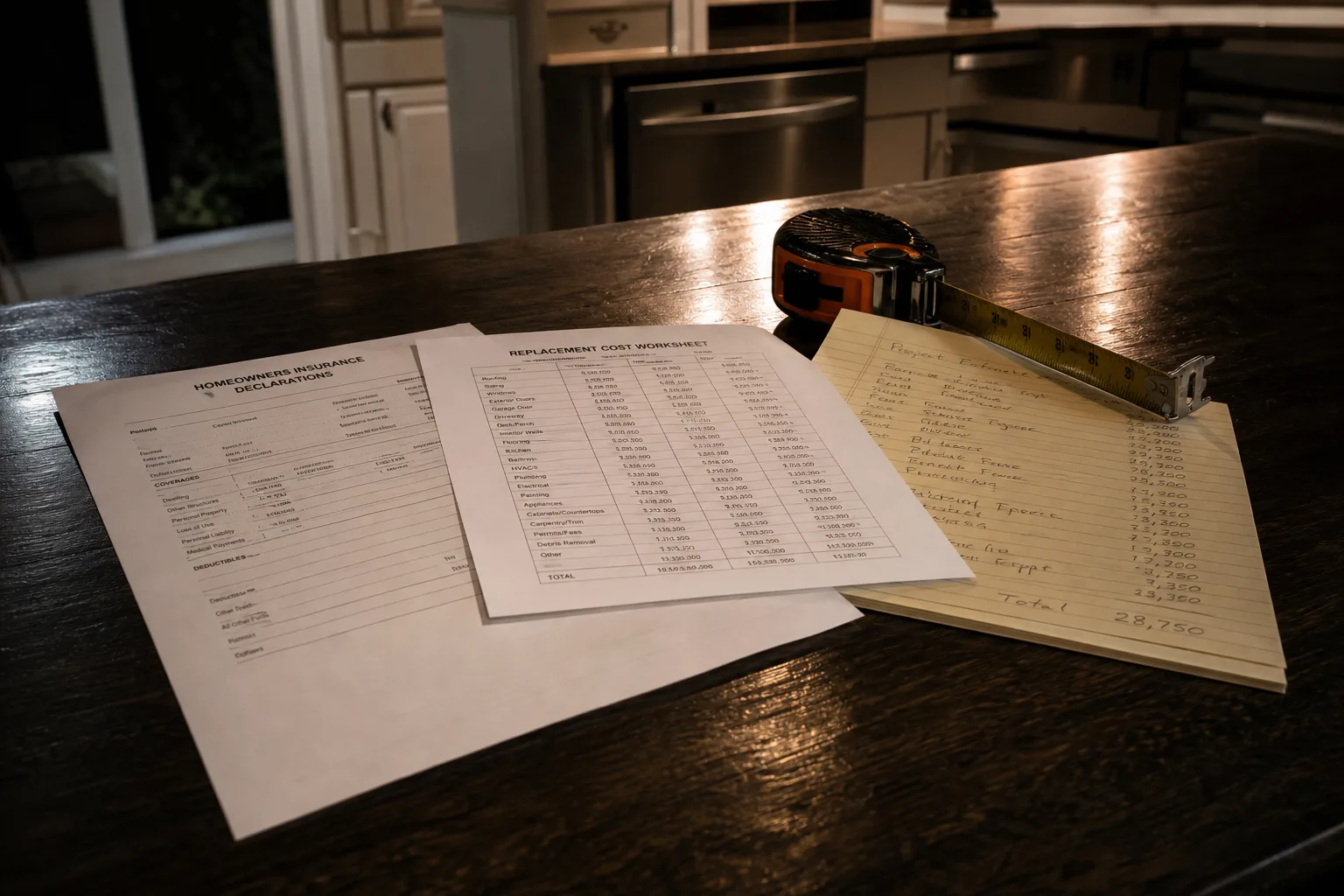
Take your own house and name the three losses you can actually picture: a kitchen supply line, a wind-driven branch through the roof, a fire that starts at the dryer. Then find each one in the policy, following it from the insuring agreement through the exclusions to the exceptions and the endorsements. Where you cannot tell, write to your agent and ask in an email, so the answer exists in writing with a date on it. Do this once and the vocabulary stops being foreign; you will start reading exclusions the way an underwriter does, as statements about which losses are random and which are predictable. That is the whole skill.
The judgment you are building is not legal expertise. It is the ability to look at a paragraph that removes something from your coverage and say, within a few seconds, which of the four reasons is at work, whether a separate policy or an endorsement exists to fill the gap, and whether the gap matters for the house you live in. First-time buyers who do this arrive at renewal with a short list of specific questions instead of a vague worry. The exclusions page stops being the part you skip and becomes the part that tells you what the policy is for.