Insured for What the House Is Worth? The Clause That Scales Your Payout Down
Under-insurance rarely shows up until a partial claim is settled. Five checks that tell you whether your policy limit is a promise or a condition you have to meet.
- Finance
- Farah Siddiqui
- 1,080 words, 5 min

The sentence most homeowners carry around is that a policy pays what a loss costs, up to the limit written on the declarations page, and that the limit is therefore a ceiling rather than a test. That was close enough to true for a long stretch, when building costs moved slowly and an agent set a number once and left it alone. It is still true for many losses. But it is not the whole contract, and the part it leaves out is the part that decides how much of a kitchen fire or a hail-damaged roof you personally fund. The mechanism is old, ordinary, and printed in the policy you already own.
The limit is a condition you agreed to meet, not just a cap the insurer accepted
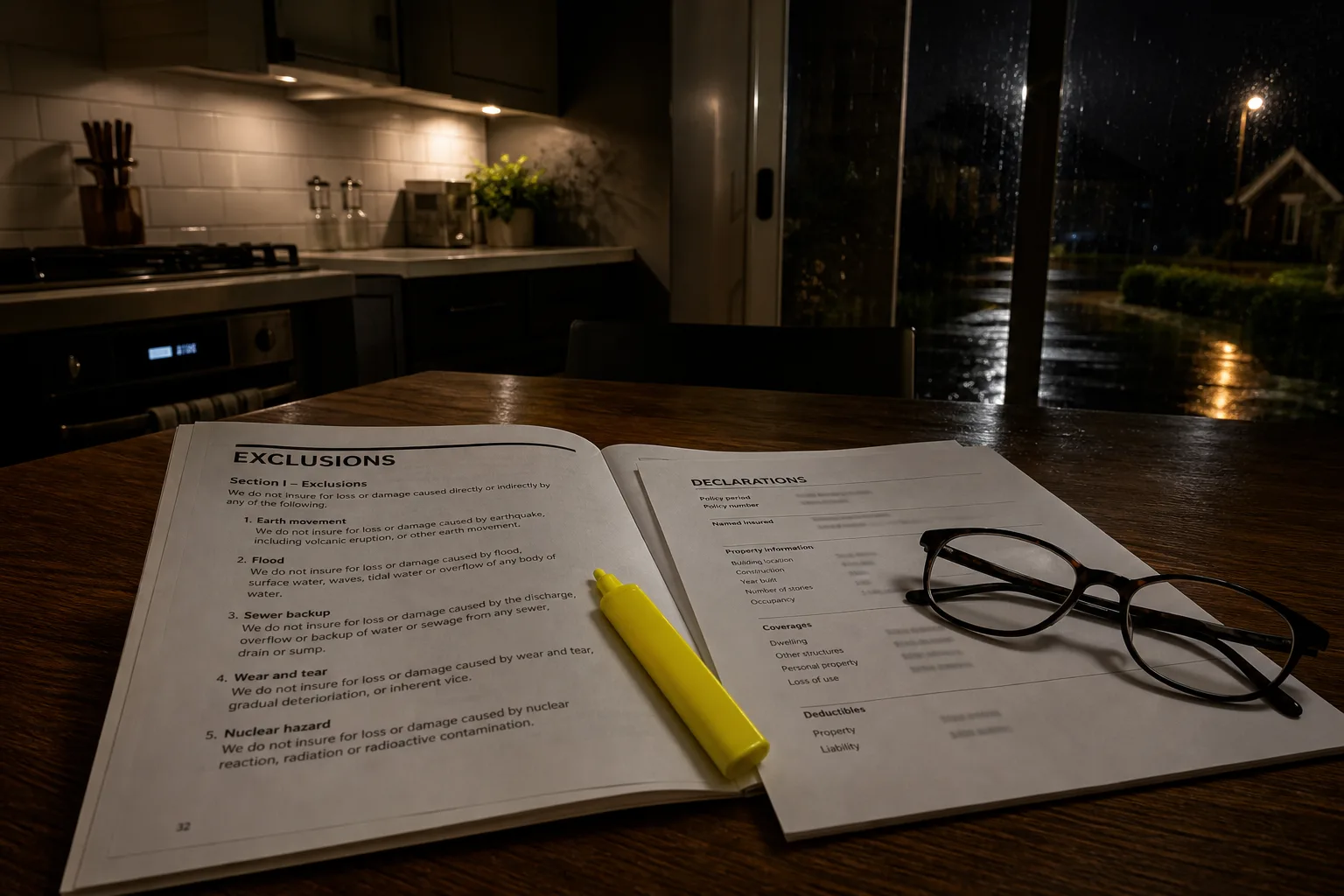
British policies call it averaging. American property forms call it coinsurance, and the word does not appear in advertising, in the renewal summary, or in the conversation you had when you bought the policy. What it says, in substance, is that you promised to carry insurance equal to a stated percentage of the replacement cost of the building, commonly eighty percent, and that if you did not, the insurer settles a partial loss in proportion to how far short you fell. Search the policy for the word itself. It sits in the conditions section of most commercial property forms and in the loss settlement provisions of many homeowners forms, and it is one paragraph long. Reading it takes two minutes and changes what the limit means.
The penalty bites hardest on the claims you are most likely to have
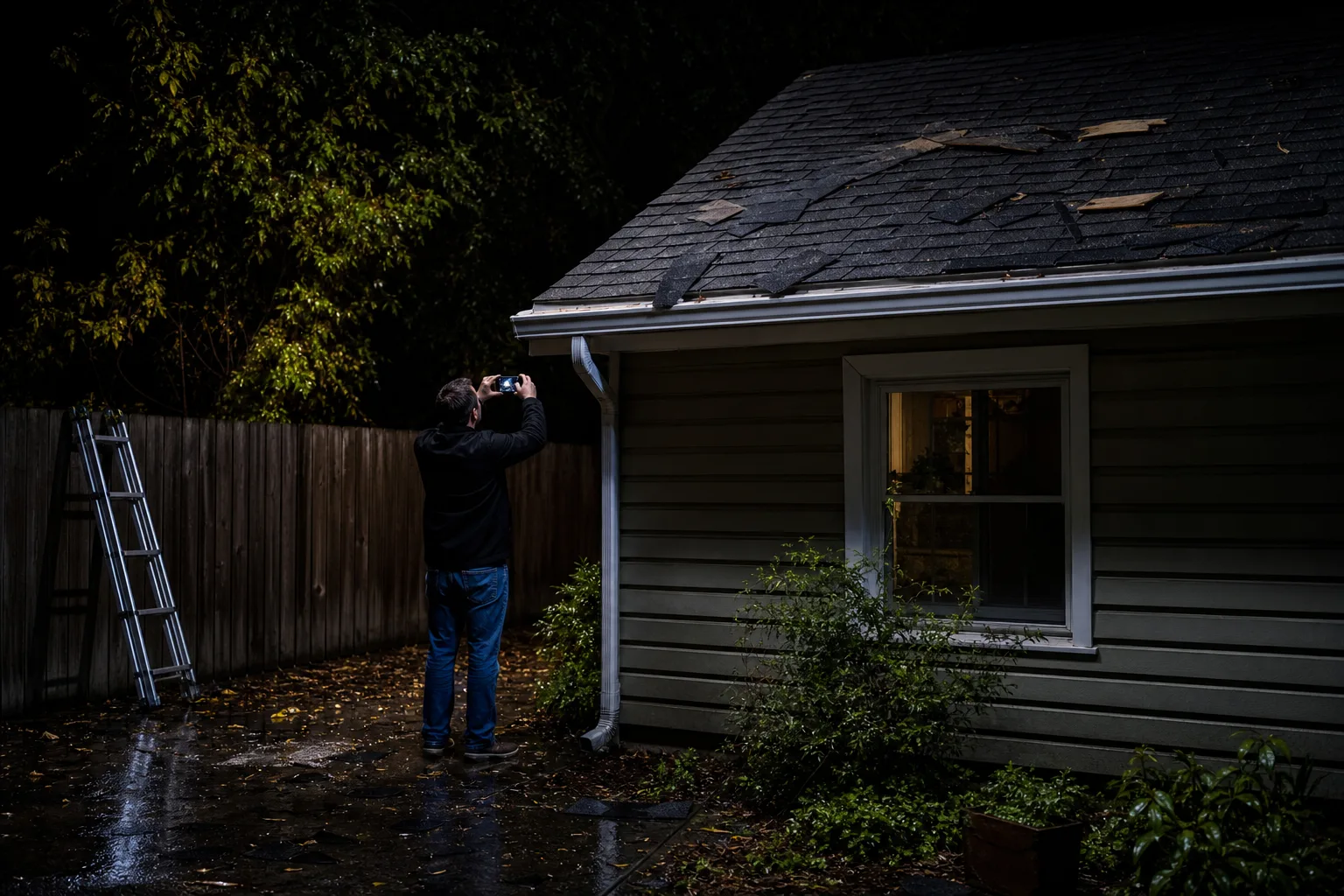
Here is the part that surprises people from the customer's side. A total loss on an under-insured building pays the limit, which feels like the worst case and is at least legible. A partial loss does something else entirely: the settlement is multiplied by the ratio of what you carried to what you should have carried. Insure to three quarters of the required amount and a partial claim settles at roughly three quarters, before the deductible comes off. So a forty thousand dollar repair on a house that was never a candidate for a total loss becomes a ten thousand dollar hole that arrives as a surprise, after the contractor has been scheduled and the mitigation invoice is already outstanding. Most claims are partial. That is where under-insurance is actually experienced, not in the dramatic scenario people picture.
The right number is what rebuilding costs, and it has nothing to do with what the house would sell for
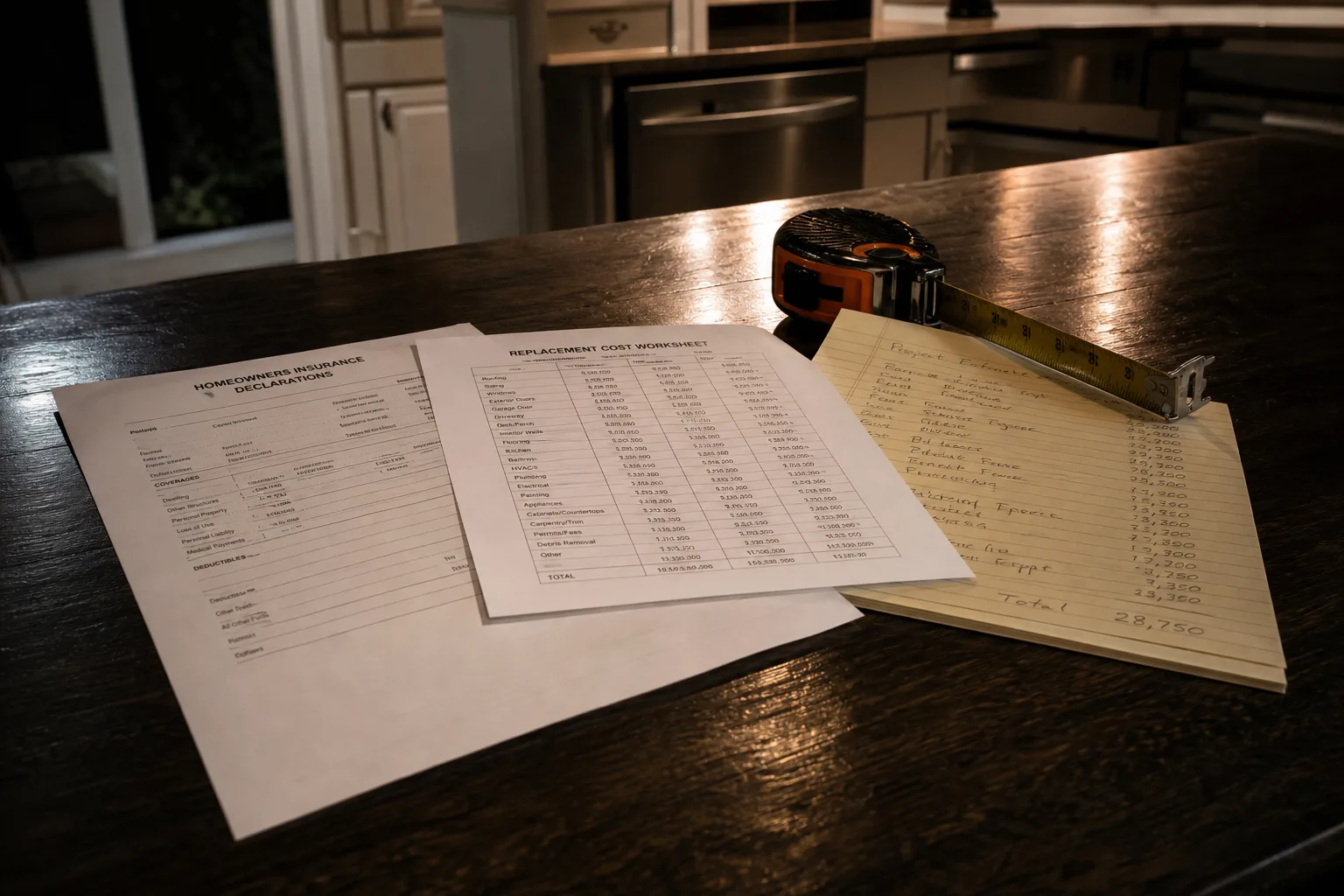
Three numbers attach to a house and only one of them belongs in this calculation. Market value includes land and location and can sit well below rebuilding cost in an older neighborhood or well above it in a hot one. The county assessment is a tax number produced on its own schedule for its own purpose. Replacement cost is what a contractor would charge, this year, in this labor market, to put the same structure back with current materials and current code. Ask your agent which of the three the limit was derived from and how long ago, and ask what square-foot cost and what quality grade the estimator used. If the answer is that the figure was set at purchase and indexed since, that is worth knowing, because indexing tracks general inflation rather than what your local framing crews and roofers are actually charging.
Price the gap against what borrowing to fill it would cost
This is the calculation that makes the decision easy, and almost nobody runs it. Raising a dwelling limit costs a fraction of a percent in premium, because the added coverage is priced on the small probability of a large loss. Funding a coinsurance shortfall costs whatever credit is available to you when the house is unusable and the timeline is not yours: a home equity line if you have one open and the equity survived the damage, a cash-out refinance that takes weeks you do not have, a contractor's financing program at a rate that would look absurd in any other month, or a credit card. Paying later is the expensive route in almost every version of this. Compare the annual premium difference against the interest on the shortfall over even a two-year payoff, and the endorsement stops looking like an upsell.
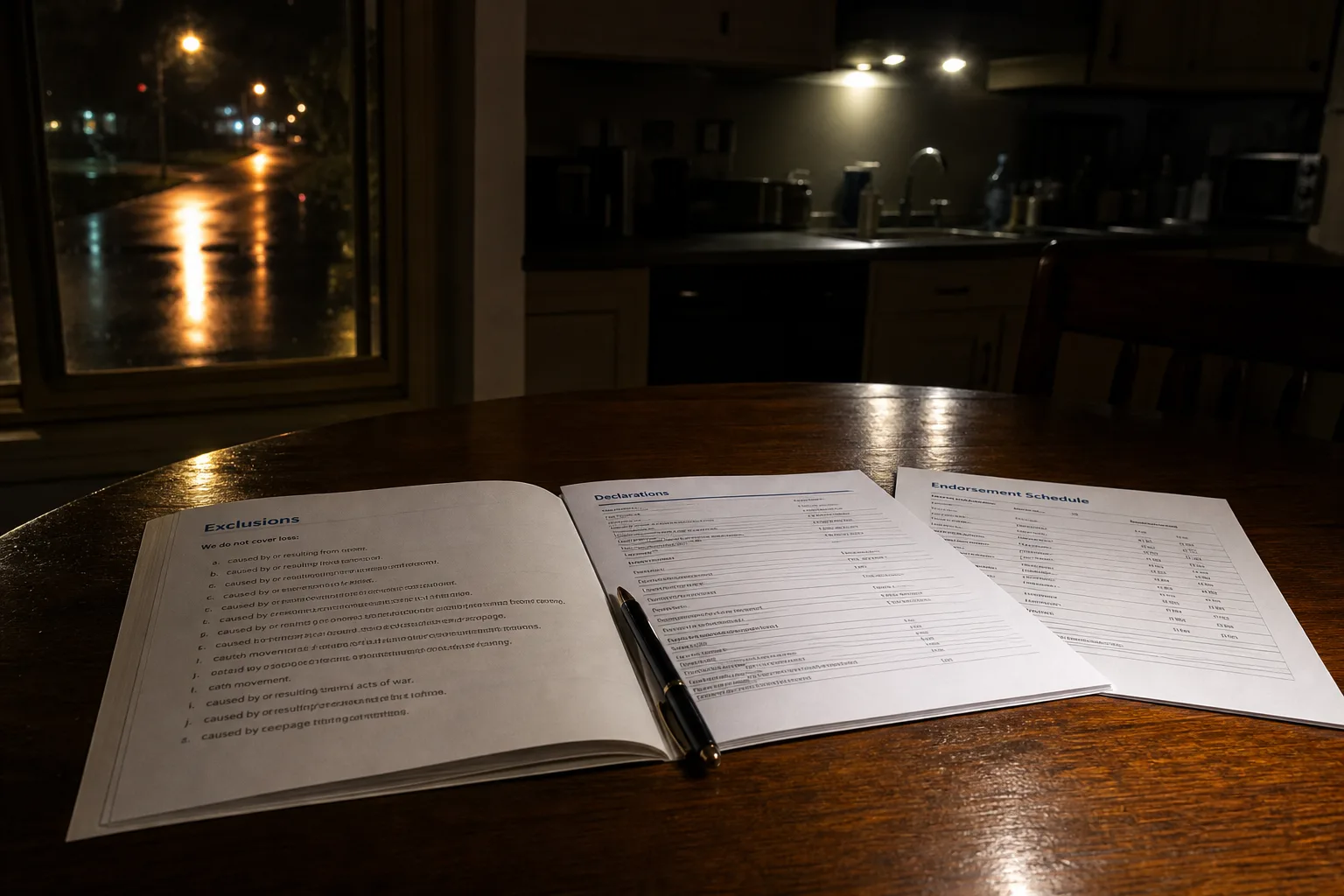
The endorsements that do the work here have plain names. Extended replacement cost adds a stated percentage above the dwelling limit, which absorbs the construction cost spikes that follow a regional storm, when every contractor within sixty miles is booked. Inflation guard adjusts the limit at each renewal so the number does not quietly decay. Ordinance or law coverage pays for the code upgrades a repair triggers on an older house, which are excluded from the base settlement in most forms and are exactly the item that turns a repair estimate into a rebuild. On commercial policies, an agreed value provision suspends the coinsurance condition entirely for the term, in exchange for a signed statement of value.
Get the valuation basis in writing, and revisit it after anything you build
What protects you at claim time is a documented record of how the number was set and what you told the agent. Email the request rather than making it by phone, ask for the replacement cost estimate the carrier's system produced, and keep it with the policy. Then treat it as a live figure. A finished basement, a primary suite addition, a detached garage with a workshop in it, upgraded cabinetry and stone counters after a remodel: each of these raises rebuilding cost and none of them notify the insurer on your behalf. The Federal Emergency Management Agency oversees the flood program that sits alongside all of this with its own limits and its own valuation rules, which is a separate check worth making in the same sitting. Photographs of finished work, receipts for major upgrades, and a dated estimate are the three items that turn a valuation argument into a short conversation.
Run these checks in one sitting, before there is a claim in progress, because every one of them is a five minute question in March and an unwinnable negotiation in November. The homeowners who come out of a partial loss whole are rarely the ones who bought the most coverage. They are the ones who knew, in advance, which number the settlement would be measured against, and made sure that number was current.