Insured for Less Than It Costs to Rebuild? The Third Party Who Set That Number
The dwelling limit on your policy was produced by a cost-estimating tool licensed from a firm you never dealt with, and the inputs it used are yours to check and correct.
- Finance
- Ingrid Halvorsen
- 1,094 words, 5 min
The dwelling limit on a homeowners policy looks like a decision someone made about you. It is closer to an output. An agent typed a set of facts about the house into a replacement cost estimating tool, the tool returned a reconstruction figure, and that figure became Coverage A, subject to whatever rounding the agency uses. If the facts were thin, the figure is thin, and nobody finds out until an adjuster is standing in a burned kitchen with a scope of repairs that exceeds the limit. The rules governing what happens next are written into the policy, and they are not generous to a low number.
The condition that turns a shortfall into a penalty
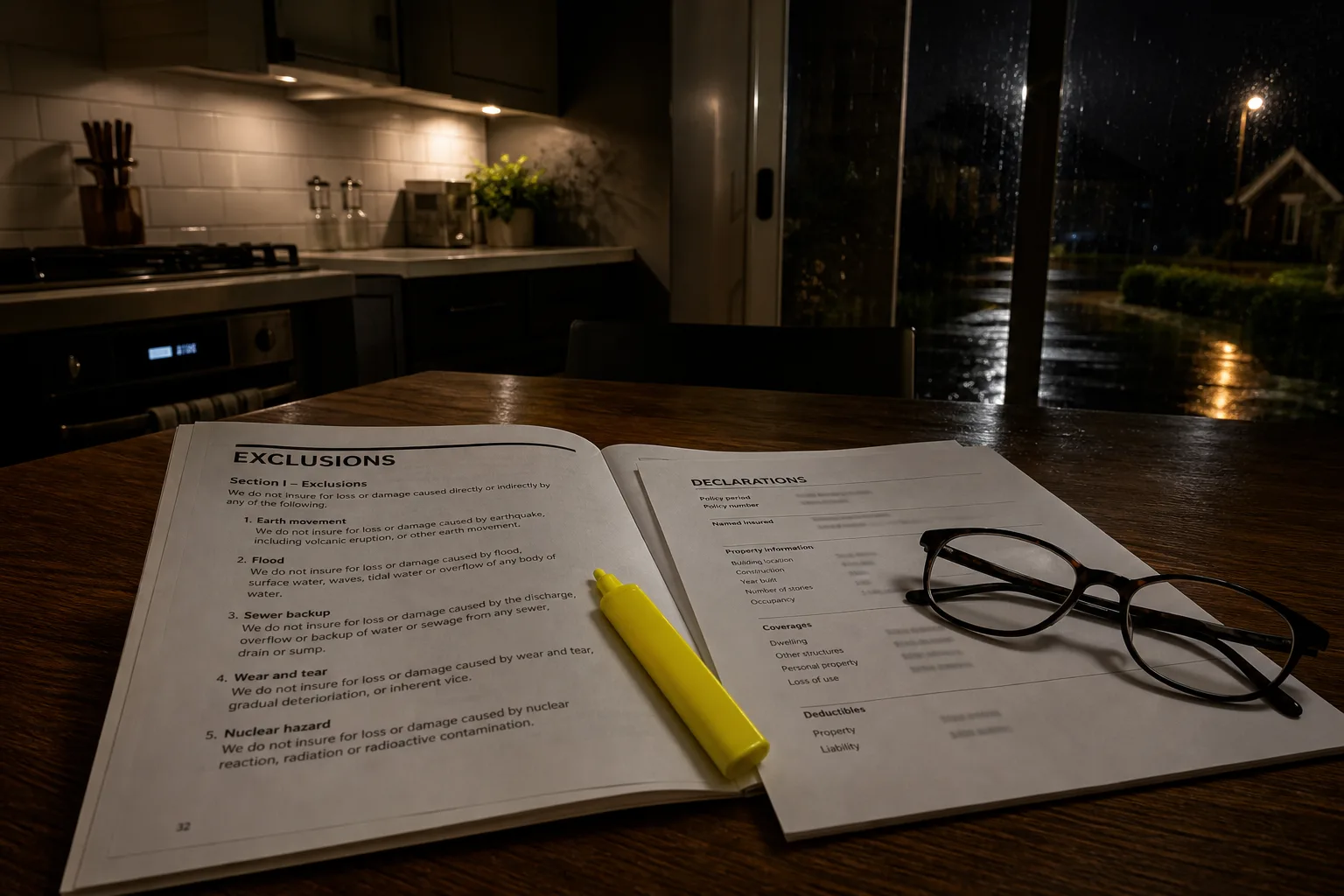
Most homeowners forms pay replacement cost on the dwelling only if the building is insured to a stated percentage of its full replacement cost, commonly eighty percent, at the time of loss. Meet that threshold and a partial loss is paid at replacement cost without deduction for depreciation. Fall below it and the loss settlement condition applies a proportion: the insurer pays the larger of actual cash value or the ratio of the limit carried to the limit required, multiplied by the cost of repair. That ratio is the averaging trap, called coinsurance in commercial forms, and it bites hardest on partial losses, which is what nearly every claim is.
Work the arithmetic once and it stops being abstract. A house that would cost four hundred thousand dollars to rebuild, insured for two hundred and eighty thousand, is at seventy percent of full replacement cost against an eighty percent requirement. The ratio is seven-eighths. A sixty thousand dollar fire repair is paid at roughly fifty-two thousand five hundred before the deductible, and the owner covers the rest. Nothing was excluded, nothing was denied, and no one behaved badly. A condition in the contract did exactly what it says it does.
The party nobody in the room represents
Buyer, agent, carrier: those are the three people most homeowners think are in the transaction. There is a fourth. The reconstruction figure almost always comes from a cost-estimating platform licensed from a specialist valuation firm, the same category of vendor that supplies estimating software to contractors and independent adjusters. That firm sets the labor and material costs for your zip code, the assumed quality grade of finishes, the multipliers for a steep roof, a walkout basement, or a lot a truck cannot back into. It never speaks to you. It never sees the house. It works entirely from what the agent enters.
This matters because the same class of tool sits on the other end of the claim. When the adjuster prices the repair, the estimate is generated by comparable software using current regional pricing, which moves with lumber, drywall, and trade labor. So the number that decides whether you cleared the threshold and the number that decides what the repair costs are cousins, and both are refreshed on schedules you do not control. A policy written five years ago against an unrevised valuation is being measured against today's construction market. That gap is where most under-insurance quietly accumulates.
What you are entitled to see and to ask for
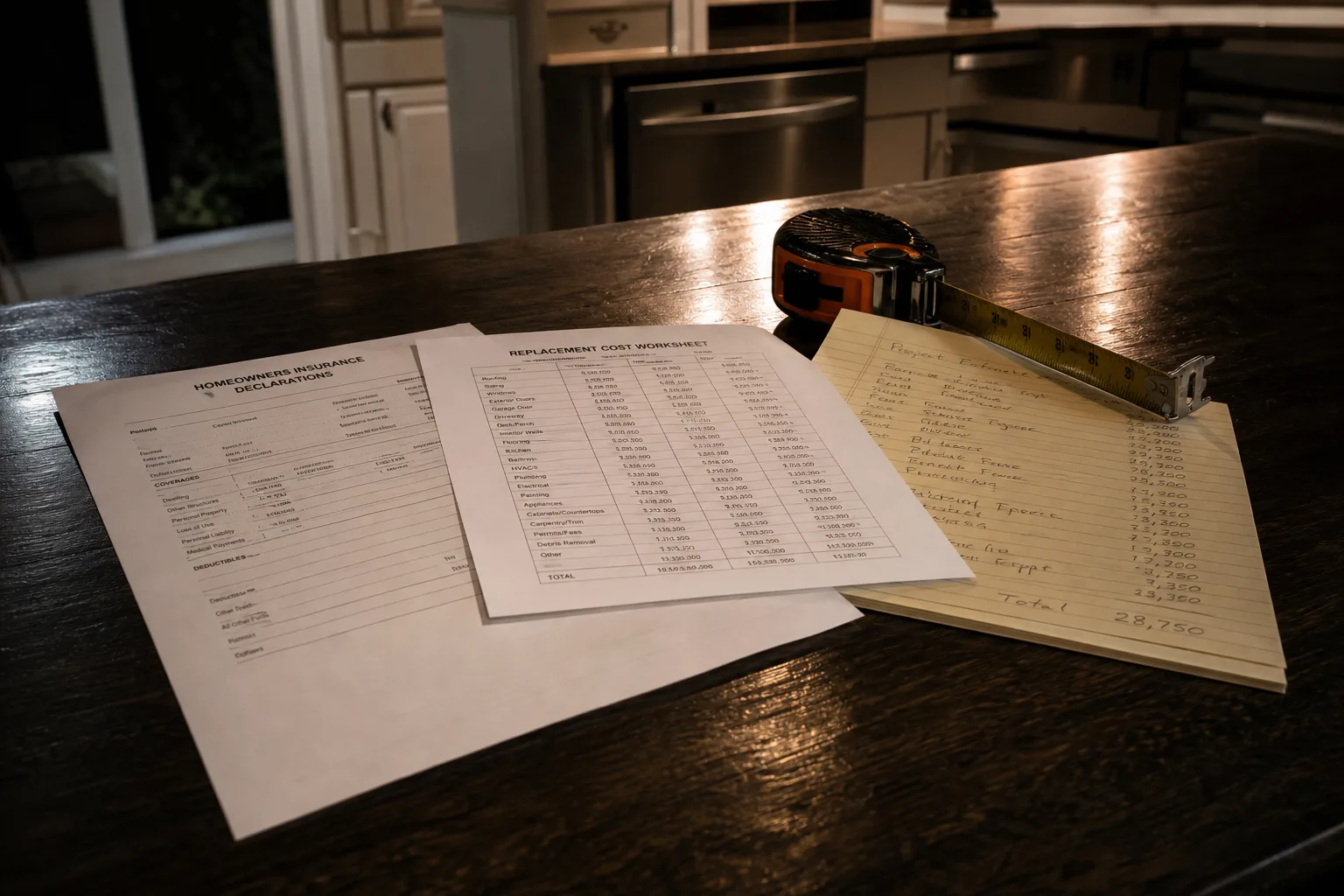
Insurance is regulated at the state level, and every state has a department of insurance with authority over rate filings, policy forms, and complaints against carriers and producers. Ask your agent for the replacement cost worksheet behind your dwelling limit. It is a routine document and agencies generate it as a matter of course. Read the inputs, not the total: square footage above grade, foundation type, exterior wall construction, roof covering and pitch, number of bathrooms, kitchen and bath grade, ceiling heights, and any finished basement or attic. Errors cluster in square footage and in finish grade, and both push the number down.
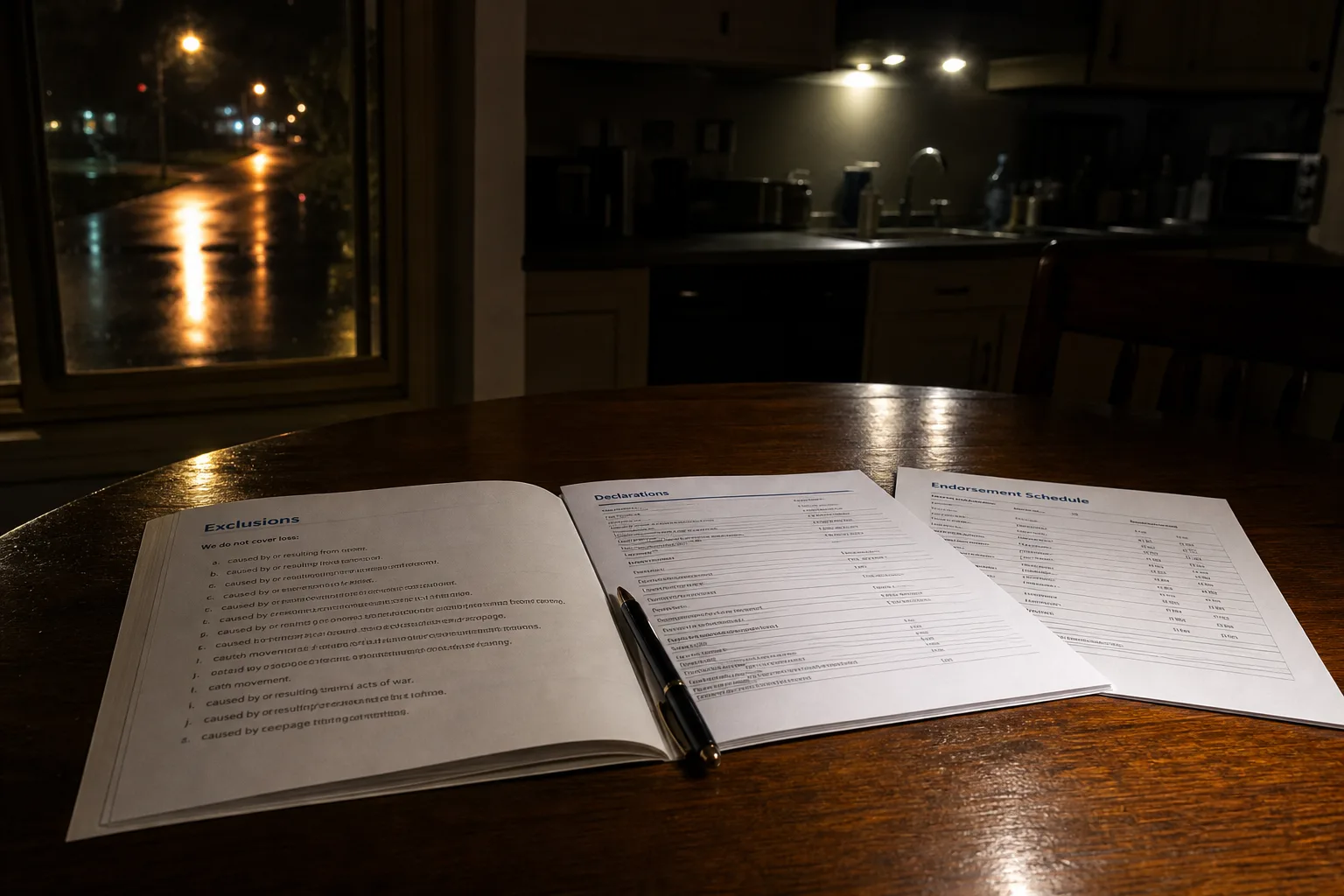
Several contract features exist specifically to keep the threshold from slipping. Inflation guard raises the dwelling limit at renewal by a construction cost index rather than leaving it flat. Extended replacement cost adds a cushion above the limit, often twenty or twenty-five percent, which absorbs a bad estimate and the demand surge that follows a regional catastrophe. Ordinance or law coverage pays for code-required upgrades that a reconstruction estimate ignores, which is the difference between rebuilding what burned and rebuilding what the inspector will approve. Flood is separate again, and FEMA is responsible for the National Flood Insurance Program, which carries its own valuation and settlement rules.
Running the check yourself, once a year
Do not use market value, tax assessment, or your mortgage balance. None of them measure the cost of rebuilding, and the assessed value in particular includes land, which does not burn. Measure the exterior footprint, multiply by stories, and count finished square footage the way a builder would. Then get a real local input: a general contractor who does insurance restoration work can give you a per-square-foot reconstruction range for your area and quality of finish, usually in a short conversation, and that range is the honest sanity check against the agency worksheet. Compare it to your Coverage A and see whether you are above the threshold with room to spare.
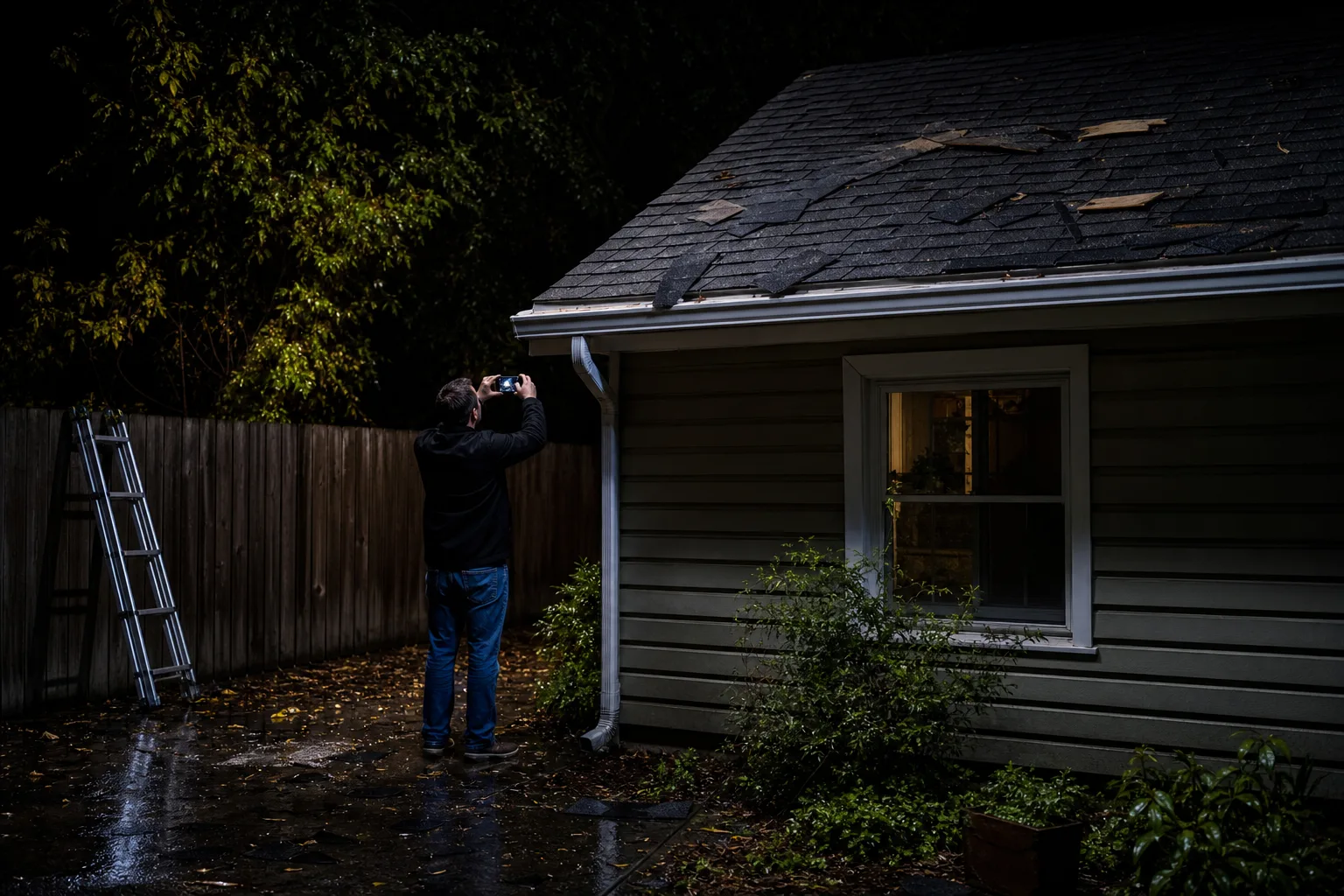
Renovations are the second trigger and the one people forget. A finished basement, a bathroom addition, a kitchen taken from builder grade to stone and custom cabinetry, replacement windows across the whole house: each raises reconstruction cost, and none of them reports itself to the carrier. Send the agent a note with the scope, the year, and the invoice total, and keep a copy. Photographs of finished rooms cost nothing to take and settle arguments about grade later. The same folder should hold the worksheet, the contractor's per-foot figure, and the declarations page.
Fixing it before there is a claim
Raising a dwelling limit is cheap relative to what it protects, because the increment prices at the marginal rate rather than the average one. Ask for a quote at the current limit, at the contractor-supported figure, and at that figure with extended replacement cost and ordinance or law added, then compare the three annual premiums side by side. Make the change mid-term if the gap is large, since endorsements do not have to wait for renewal. A corrected worksheet and a limit that reflects today's construction costs turn the loss settlement condition into a formality, which is what it was written to be.
The tool that priced your house is a good one, used properly. It just needs accurate inputs and a refresh on a schedule, and both of those are yours to supply.