Five Checks That Decide Whether a Maintenance Schedule Survives Past March
Most home maintenance schedules fail for structural reasons, not lazy ones. Five checks, and the third party who quietly holds half your calendar.
- Home & Property
- Clement Boateng
- 1,147 words, 5 min
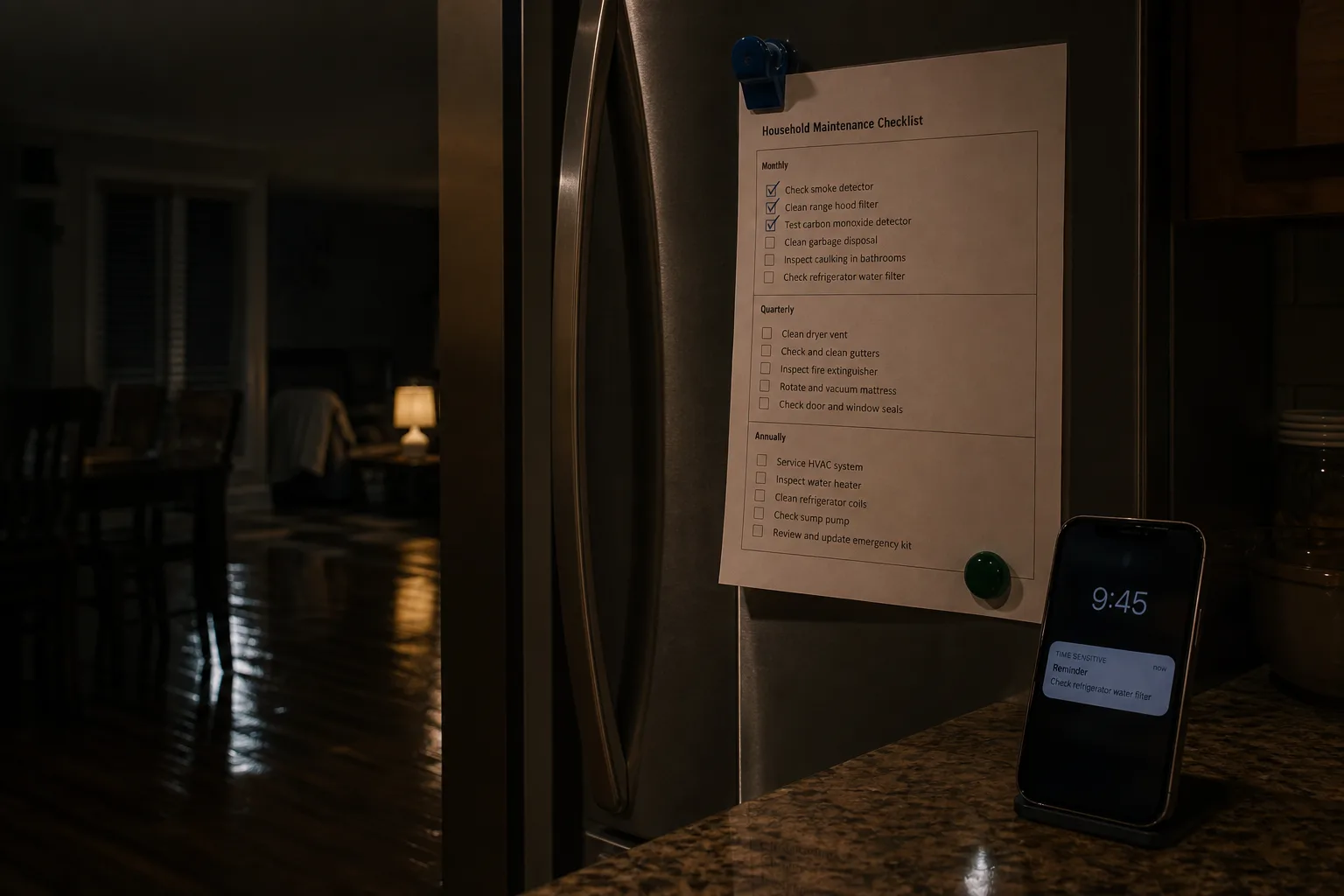
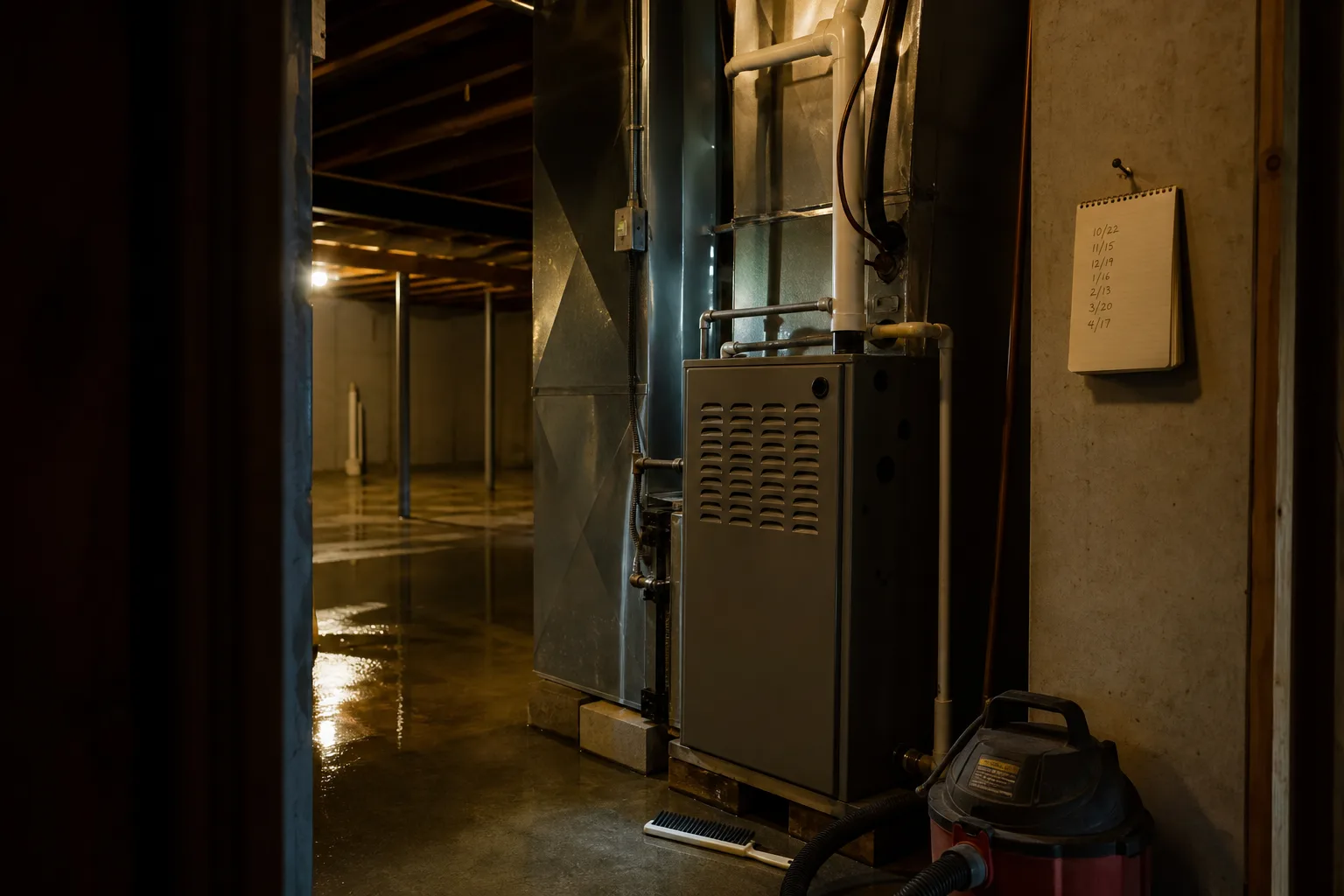
A decade ago, a household maintenance schedule was a private document. It lived on a legal pad, in a binder from the closing, or on a sticker a technician left on the side of the furnace with a date written in marker. You either remembered it or you did not, and nothing external reminded you. That has changed, and the change is worth understanding before you write another one, because the schedules that hold up now are the ones that account for people outside the house: filter subscriptions, service plans, warranty administrators, and the dispatcher who decides which Tuesday you get.
Whether the tasks that put people in the hospital are separated from the rest
Most schedules treat every line the same way, so cleaning the range hood filter sits next to testing the pressure relief valve on the water heater, and both slide when the month gets busy. They are not the same. The injuries that actually send homeowners to an emergency room from routine upkeep cluster in a short list: falls from ladders and step stools, carbon monoxide from combustion appliances venting badly, and dryer fires that start in lint no one has reached in years. Everything else can slip a season. Those cannot, and a schedule that does not mark them differently will let them.
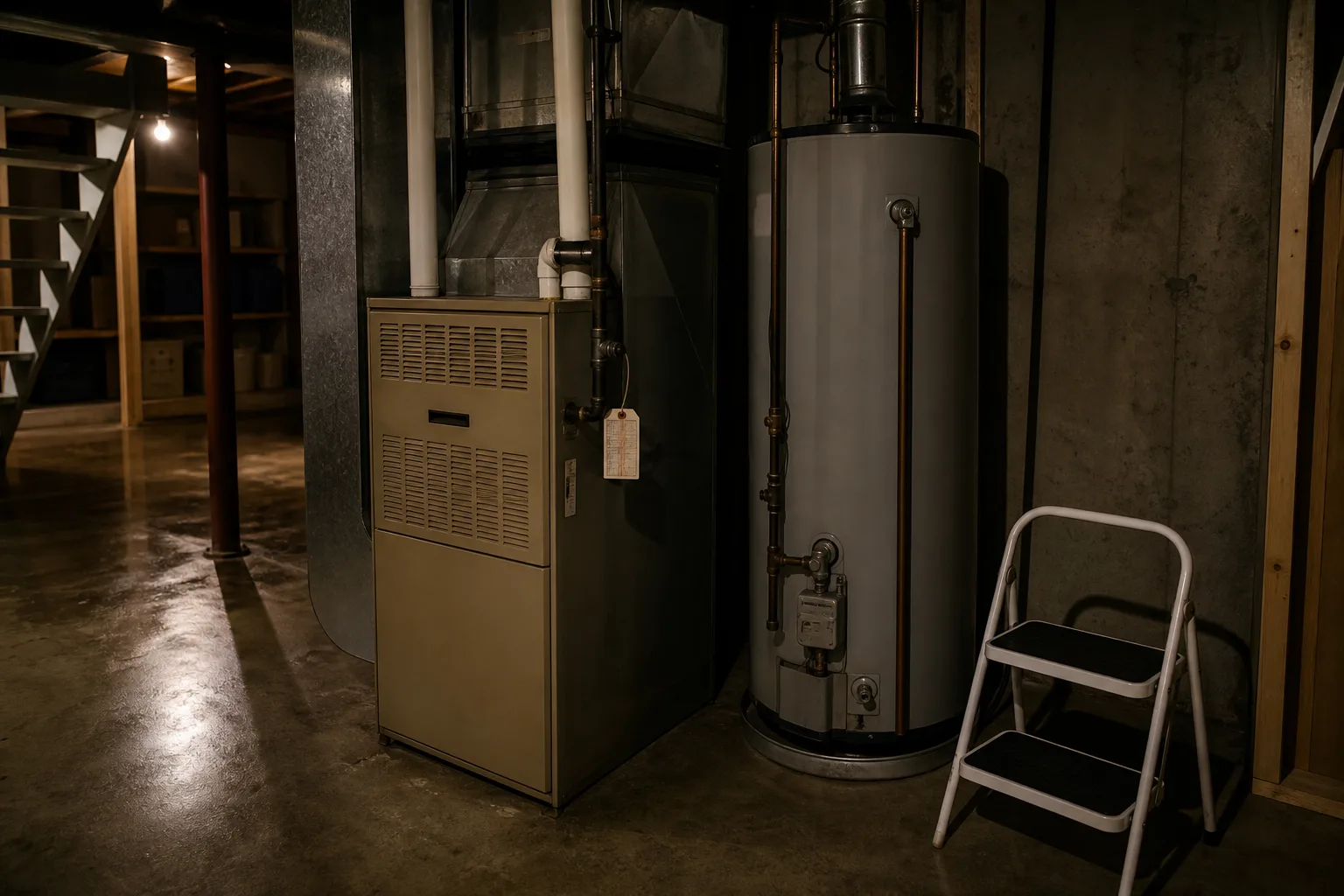
The practical fix is to keep a short life-safety tier, four or five items, on a fixed annual date you do not negotiate, and let the cosmetic and comfort items float. Smoke and carbon monoxide alarms have a service life printed on the back, usually ten years for smoke units, and they are replaced rather than repaired. The Consumer Product Safety Commission oversees household product safety and recalls in this territory, which is a reasonable place to check whether an appliance in your basement has been the subject of a notice. Ten years ago you would not have thought to look. Now it takes two minutes.
Whether it is anchored to something that already happens
Date-based schedules assume you will consult a calendar you wrote in a burst of enthusiasm. Most people do not, and the failure is structural rather than a matter of discipline. Schedules that survive attach each task to an event already fixed in the year: the first cold night, the last frost, the week the clocks change, the day the property tax bill arrives, the annual homeowners insurance renewal. Anchoring works because the anchor arrives whether you are paying attention or not, and the task rides in behind it. This is the single largest difference between a written schedule and a kept one.
The anchors have gotten better in ten years. A smart thermostat that reports runtime will tell you the system worked harder this month than last, which is a filter prompt with evidence attached. A leak sensor under the water heater costs less than a service call and reports before the pan overflows. None of that existed in most houses a decade ago, and the honest version of the comparison is that technology did not make people more diligent. It made the prompts arrive from outside, which turns out to be the part that matters.
Whether it produces a record someone else will accept
Here is the party almost nobody accounts for when they write a maintenance schedule: the third person who will one day read it. That is a warranty administrator deciding whether the compressor failure is covered, an insurance adjuster asking when the roof was last inspected after a claim, or the buyer's home inspector three years from now working through a report line by line. Your own memory is worthless to all three. A dated invoice from a licensed contractor, a photograph with metadata, or a receipt for a part is worth a great deal, and it costs nothing extra to keep at the time.
Manufacturer warranties on furnaces, water heaters and increasingly on major appliances often condition coverage on documented annual service, and the documentation requirement is enforced at claim time rather than at purchase. Ten years ago the paperwork lived in a drawer and was rarely produced. Now most service companies email an invoice within the hour, which means the record builds itself if you create one folder and forward everything into it. Do that and the schedule quietly becomes an asset at sale, at renewal, and at the moment a part fails inside its coverage window.
Whether the contractor's calendar was consulted before yours
A schedule that requires someone else to show up is really two schedules, and the other one is not yours. Heating service in late October and cooling service in late June are the two weeks every other household in your county also decided on, which is why the booking window stretches and the appointment you wanted becomes a four-hour arrival range in the second week of November. Move those tasks to the shoulder months. Furnace service in September and air conditioning service in April get you a technician who is not on his ninth call, and often a better rate.
The dispatcher is the overlooked party in this transaction, and treating that person as a scheduling partner rather than an obstacle changes the outcome. Ask when the quiet weeks fall, ask whether a maintenance plan holds a slot rather than merely offering a discount, and ask what the company does when a part is on order. The maintenance agreements sold today usually include priority scheduling, which was rarer a decade ago and is frequently the most valuable thing in the contract. It is worth more than the percentage off parts that gets the top billing.
Whether anyone else in the house can execute it
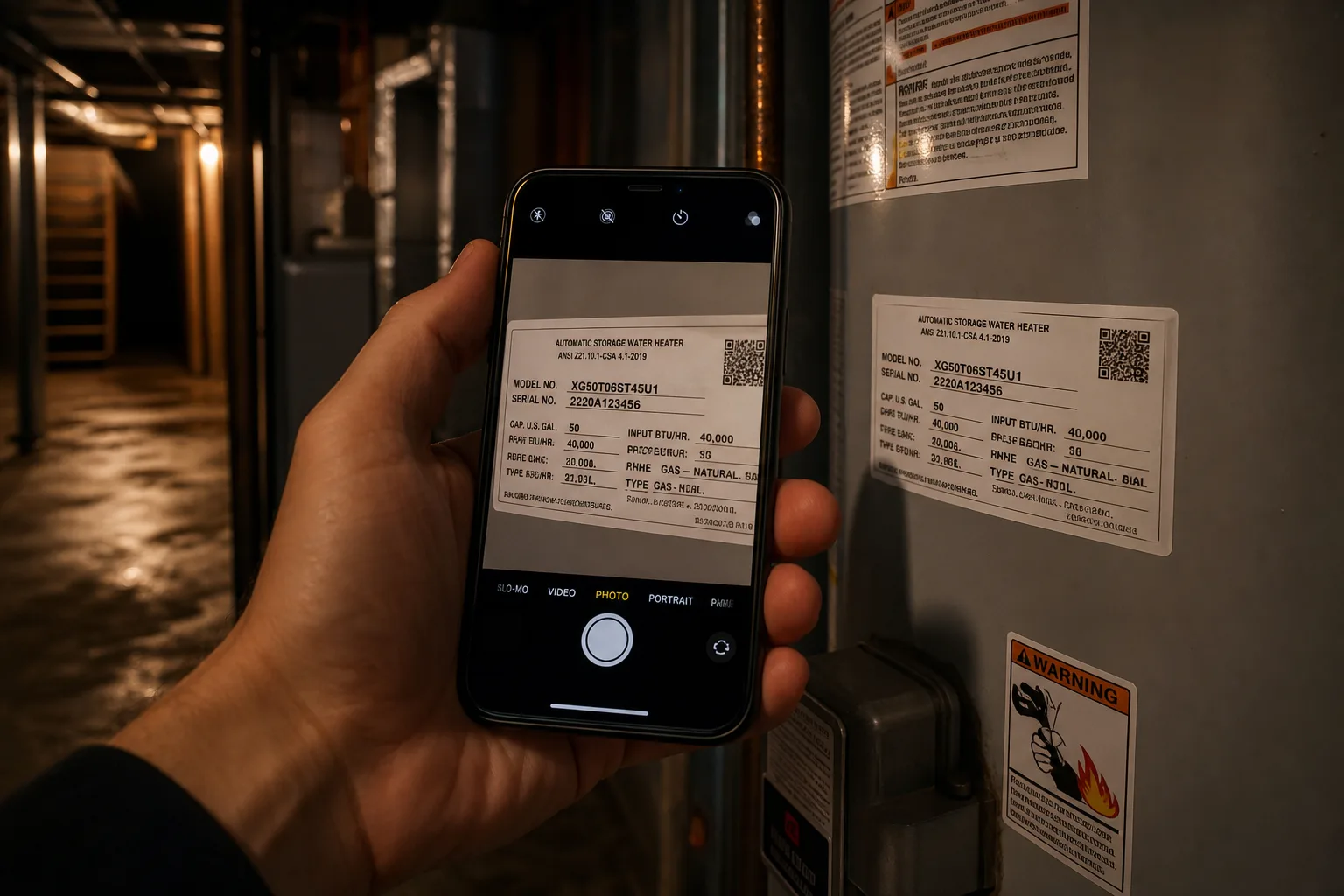
A schedule that only one person understands fails the first time that person travels, gets busy, or moves out. Write down the location of the main water shutoff, the gas shutoff, the electrical panel with legible labels, and the model numbers of the furnace, water heater and air handler, and keep it somewhere a second adult can find without asking. Filter sizes belong on that page too, because a subscription that ships the wrong size gets set aside rather than corrected. This is the cheapest resilience available to a household and it takes a single afternoon.
It also reduces the ladder problem. When two people know what needs doing, gutter work and smoke alarm batteries get done with someone holding the base rather than alone at seven in the morning, and that one habit removes the most common serious injury from the entire annual list.
Run the five checks against whatever you have written now. If the life-safety tier is separated, the anchors are real events, the records land in a folder, the appointments sit in the shoulder months, and a second person can read the page, the schedule will still be running next spring without anyone forcing it.