Insurer's Adjuster, Independent, or Your Own? What Your State Lets Each One Do
Staff adjuster, independent contractor, public adjuster or the appraisal clause: how the rules that bind each one shift from state to state, and what that means for your claim.
- Home & Property
- Clement Boateng
- 1,273 words, 5 min
The person who shows up after a fire or a burst supply line has a job title, a license number, and a client, and those three facts decide most of what happens next. Homeowners tend to treat the visit as a single fixed event, one inspector arriving to measure the damage and write a number. In practice you are choosing among several arrangements, some of them stacked on top of each other, and the choice is governed less by national custom than by the licensing statute of the state you happen to live in. Knowing which route is open where you are is worth more than any argument you make on the day.
Three people, three sets of obligations
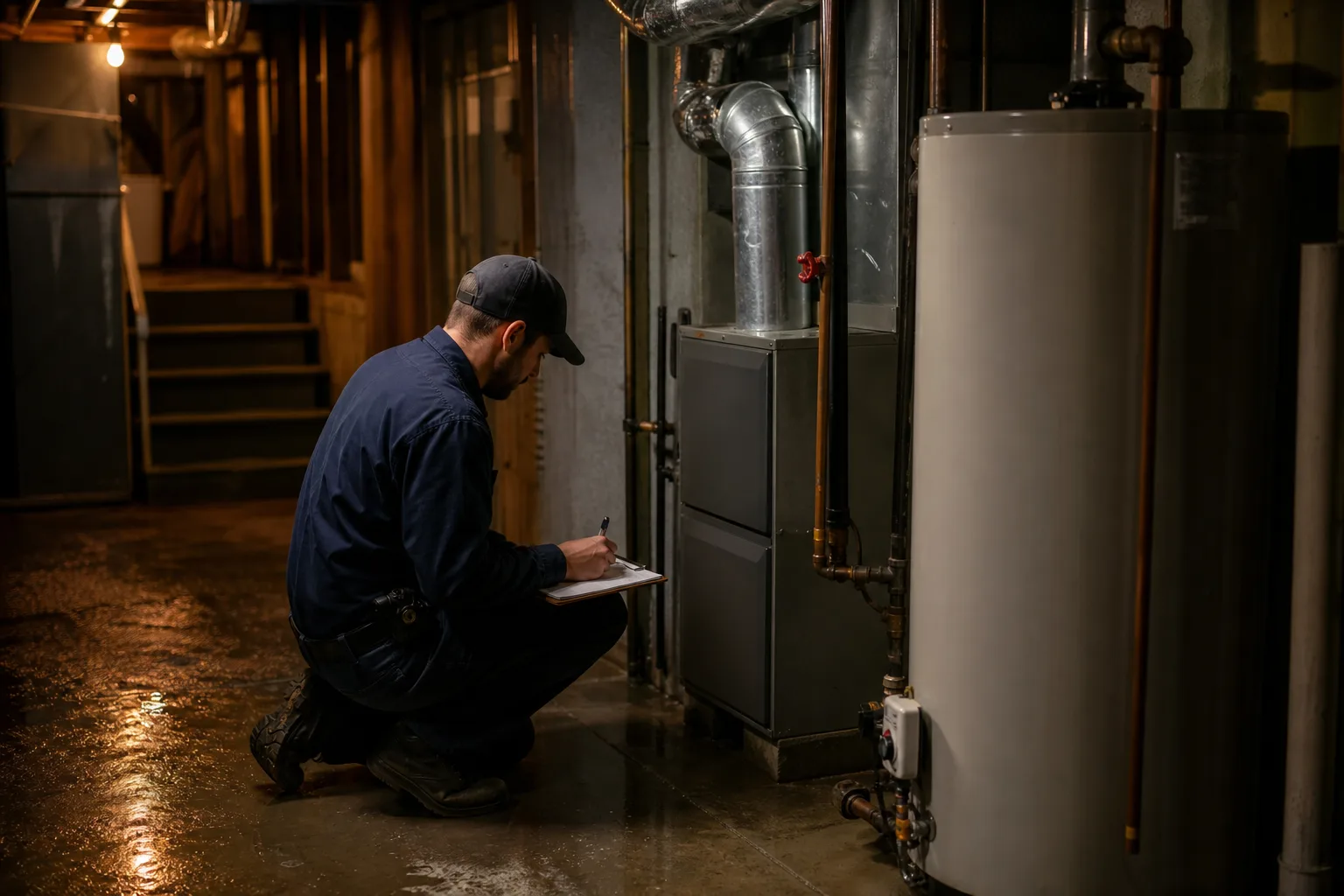
A staff adjuster is an employee of your insurance company, salaried, trained in that carrier's estimating software and claim guidelines, and bound by the state's unfair claims settlement practices act. An independent adjuster is a contractor the same carrier hires when volume spikes after a hailstorm, and although the paycheck comes from a firm rather than the insurer, the duty still runs to the insurer. A public adjuster is the only one you retain and pay, and in most states the licensing statute makes that representation explicit, sometimes describing it as a fiduciary duty to the insured. The estimate each produces may use identical software. The interests behind the estimate are not identical, and nobody is obliged to explain that on your porch.
The practical difference shows up in what gets counted. Staff and independent adjusters work from the scope they observe and the carrier's guidelines on matching, depreciation, and overhead and profit. A public adjuster is paid to find scope the first pass missed, which is often the unglamorous middle of a loss: contents inventory, code upgrade costs, additional living expense, the drying and containment work already performed by a mitigation crew. Whether that extra scope justifies the fee depends on the size of the claim, and on a set of state rules that decide what the fee can be.
Licensing and fee caps are state law, and they are not close to uniform
Nearly every state licenses public adjusters, requiring an exam, a bond or surety, continuing education, and a written contract, and a handful still do not license them at all or restrict the practice in ways that make it effectively unavailable. The contract rules are where the variation bites. Several states cap the fee as a percentage of the claim settlement, and some set a lower cap for losses arising from a governor-declared disaster than for an ordinary kitchen fire. Many require a right to cancel within a defined window, commonly a few business days, with the cancellation notice printed in a specified type size on the first page. If your contract does not contain that language, the omission itself tells you something.
Solicitation rules vary just as sharply. A number of states impose a waiting period after a catastrophe before a public adjuster may knock on doors, and most prohibit an adjuster from soliciting during hours when a household is unlikely to be making careful decisions. Several states bar a public adjuster from also performing the repairs, or from taking a financial interest in the contractor who does, which is the cleanest protection in the whole scheme. Your state insurance department publishes the license lookup, the current fee limits, and the complaint form, and checking the license number before signing takes about four minutes.
The appraisal clause, the route most people never read
Most homeowners policies contain an appraisal provision, a contractual mechanism for resolving disputes about the amount of loss without litigation. Each side names an appraiser, the two appraisers select an umpire, and an agreement between any two of the three binds the amount. It settles value, not coverage. If the carrier denies that the peril is covered at all, appraisal will not fix that, and pushing an uncovered claim into appraisal wastes months. Where the dispute is genuinely about scope and price, which is the common case in wind, hail, and water losses, it is the fastest formal route available and it costs a fraction of a lawsuit.
State law shapes the clause more than the policy language suggests. Some states have made appraisal mandatory once invoked by either party, others treat invocation as waivable by conduct, and several have added statutory requirements about umpire qualifications, disclosure of conflicts, and how the panel handles causation questions. Timing rules differ too: a few states set a deadline for demanding appraisal, and a few require the carrier to respond within a fixed number of days. The provision is worth locating in your policy before a loss, because reading it under a tarp in November is not when you want to discover it exists.
Flood and catastrophe claims run on their own calendar
A National Flood Insurance Program claim is a different animal from a homeowners claim on the same house. The Federal Emergency Management Agency administers the program and sets the standard flood insurance policy terms, the adjuster certification requirements, and the proof of loss process, and the state licensing scheme that governs your homeowners adjuster does not rewrite any of it. Public adjuster fees are treated differently under a flood claim than under a wind claim, which matters enormously along the Gulf and Atlantic coasts, where a single storm can produce one claim of each type on one address, with two adjusters, two deductibles, and two sets of deadlines.
Windstorm and hurricane deductibles add another layer that is purely regional. Coastal states commonly permit percentage deductibles triggered by a named storm, and several require specific disclosure of the trigger at renewal. Prompt payment statutes, the ones that set how many days a carrier has to acknowledge, investigate, and pay, are also state creatures, and in several states those clocks extend automatically during a declared emergency. When you are deciding whether to bring in your own representative, the deadline structure in your state is a better guide than the size of the loss.
The inspection itself, and the injuries that actually happen
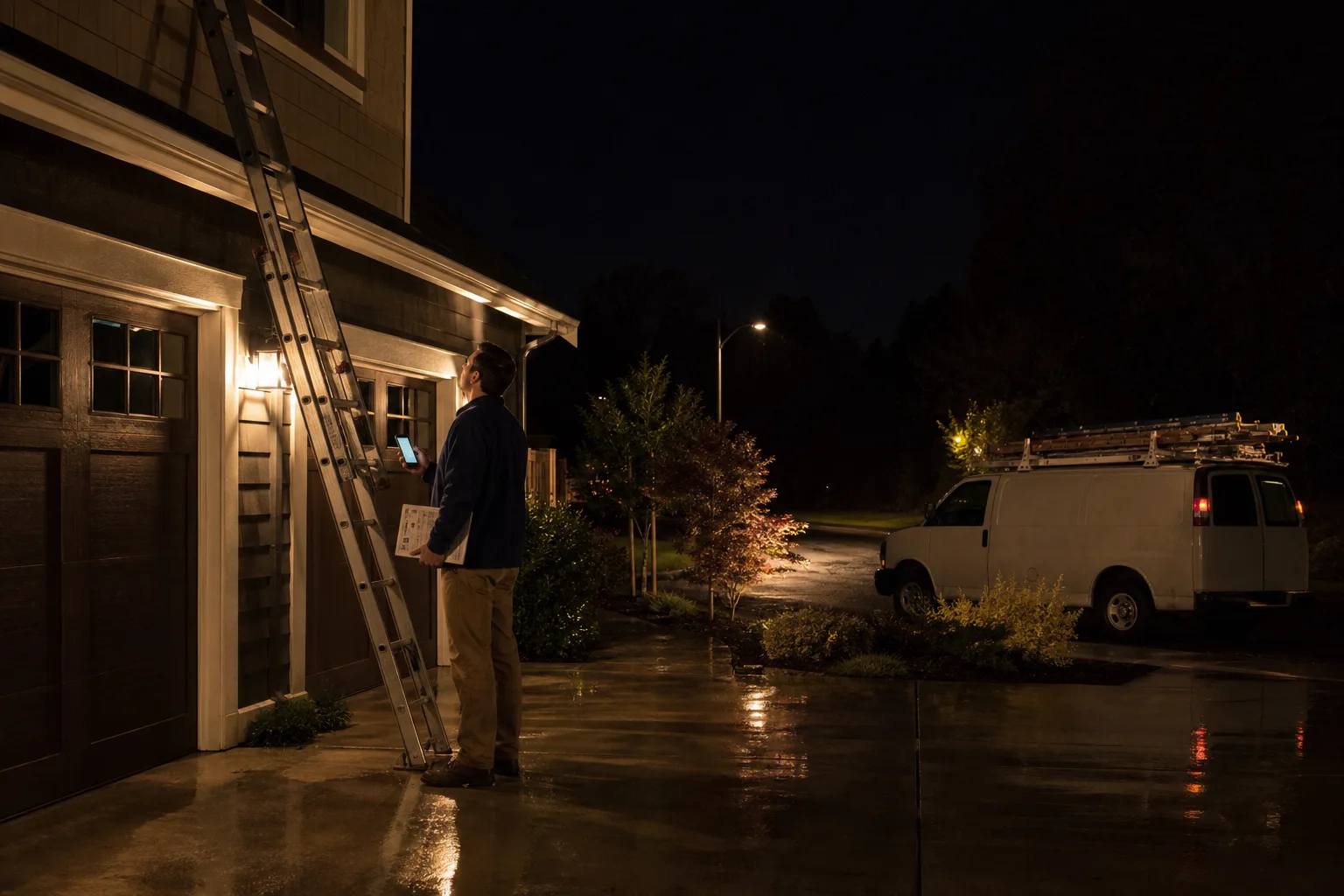
Documentation is what every one of these arrangements runs on, and homeowners get hurt collecting it in a small number of predictable ways. Ladder falls at the roof edge account for most of the serious injuries, and photographing hail bruising from the ground with a zoom lens loses you very little. Attic inspections after a roof leak put people through ceilings when they step off the joists onto wet drywall. Standing water in a basement with live circuits is a genuine electrocution risk, and the fix is the main breaker, not caution. Portable generators kill by carbon monoxide when run in a garage, even an open one. None of that is dramatic, and all of it is routine.
Photograph before mitigation begins, keep the wet materials the crew removes if your state or policy expects proof, save every invoice, and write down who told you what and when. That record is the raw material a public adjuster works from, the evidence an appraisal panel weighs, and the thing that makes a staff adjuster's job easy when your position is the reasonable one.
The right arrangement is usually obvious once you know the size of the loss, the clarity of the coverage, and what your state permits. A small, uncontested claim rarely needs anyone but the carrier's adjuster. A large loss with disputed scope, in a state with a workable appraisal clause and a licensed public adjuster market, gives you two independent levers, and it is worth knowing which one you can pull before you need it.