Four Ways to Run a Household Maintenance Schedule, and Which One Survives an Ordinary Week
Seasonal checklists came from warranty cards and utility mailers, not from how households actually live. Here is how the four common systems compare once a normal week tests them.
- Home & Property
- Farah Siddiqui
- 903 words, 4 min
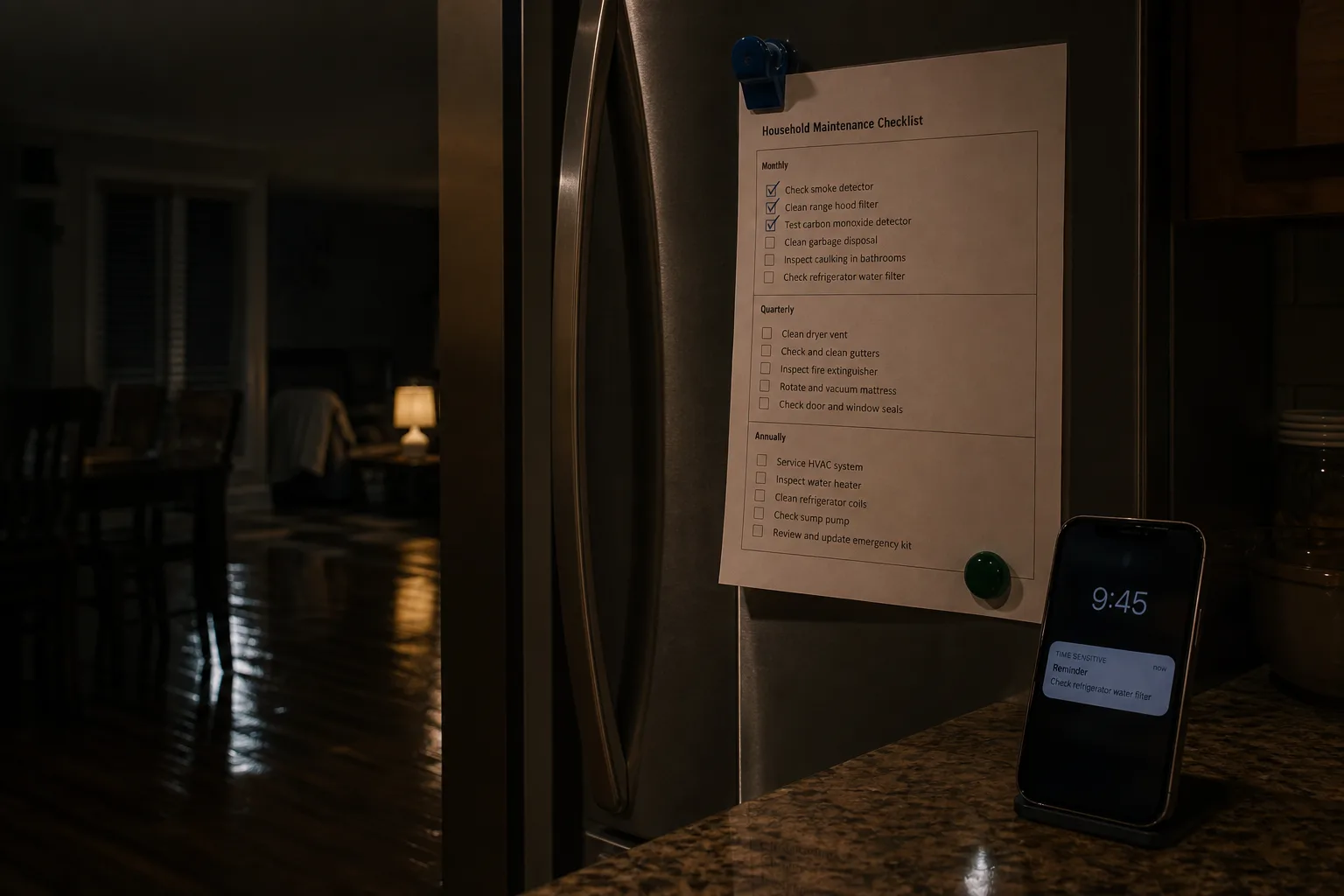
The seasonal home maintenance checklist, the one with twelve months down the left and a dozen chores under each, is a genuinely useful document that almost nobody completes. It is worth asking where it came from, because the answer explains why it fails in a normal week. It was not written by people watching households. It was assembled, over decades, out of warranty registration cards, utility company mailers, insurer loss-prevention pamphlets and appliance manuals, each of which had a narrow institutional reason to tell you to do something on a fixed interval.
The checklist is a compilation, and each line had a different author
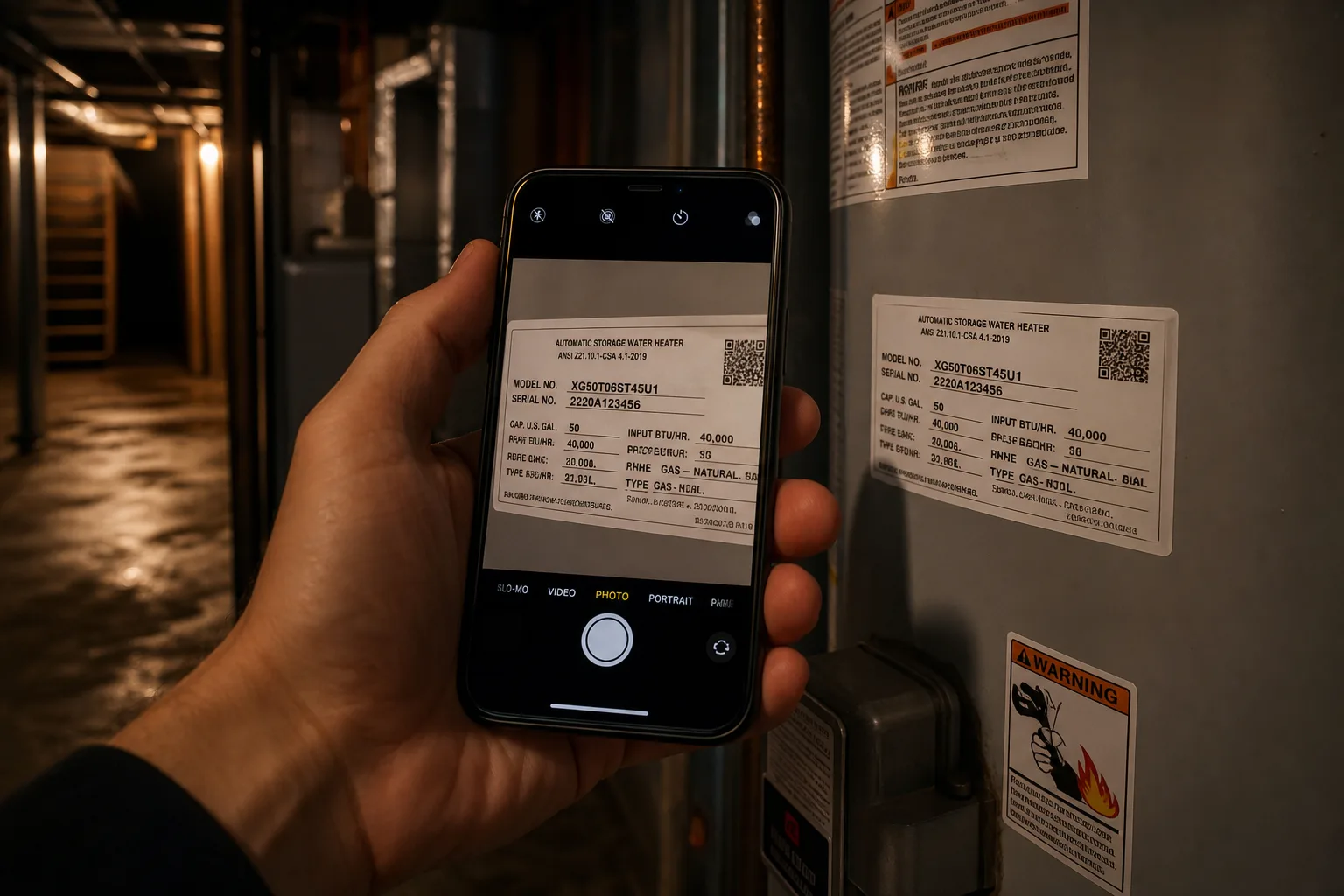
Manufacturers wrote the filter and flush intervals because warranty claims are cheaper to deny when maintenance is specified and documented. Utilities wrote the seasonal items because reducing winter peak demand was worth more to them than the cost of the mailing. Insurers wrote the water heater, dryer vent and gutter lines because those three generate claims. Nobody reconciled the list, nobody weighted it, and nobody asked how many separate recurring obligations a household can actually carry. What you inherited is a merged file with no editor, which is why it reads as uniformly urgent and is treated as uniformly optional.
That history matters when you compare systems, because the systems differ mostly in who holds the list and who absorbs the cost of it being ignored. The Federal Trade Commission oversees the rules governing consumer warranties and the service contracts sold alongside them, and that boundary, between what a manufacturer can require of you and what a seller can charge you to do for you, sits underneath all four of the options below.
Paper on the refrigerator, and the phone that nags you
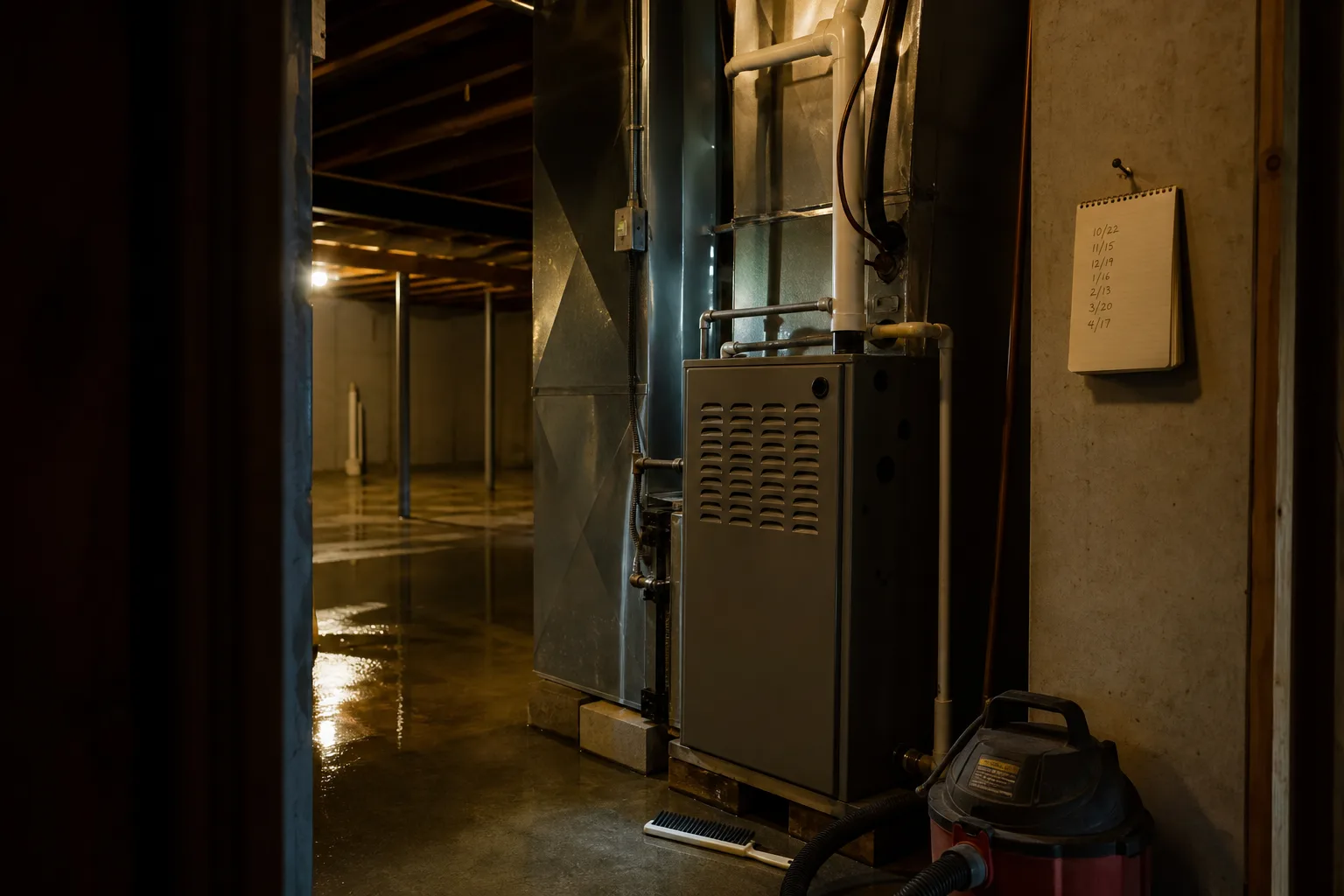
The printed checklist costs nothing and fails quietly. It has no mechanism for escalation: a line left unchecked in April looks identical in October, and the document carries no record of why it was skipped. Its real strength is that it is visible to everyone in the house, which matters more than people expect, because upkeep that depends on one person's memory collapses when that person has a hard month. Recurring phone reminders fix the escalation problem and create a new one. They fire regardless of circumstance, they stack, and a notification dismissed three times becomes a notification that is never read again.
The practical difference between the two is cognitive, not technological. Paper works for things you can see from where you stand, gutters, filters, the dryer exhaust, the water heater pan. The phone works for things with no visual cue at all, which is most of the plumbing and nearly all of the warranty paperwork. Households that keep both, with a deliberate split rather than duplicate entries, tend to keep more of the list than households that commit fully to either. The split costs nothing and takes one evening to set up.
Paying someone to hold the calendar
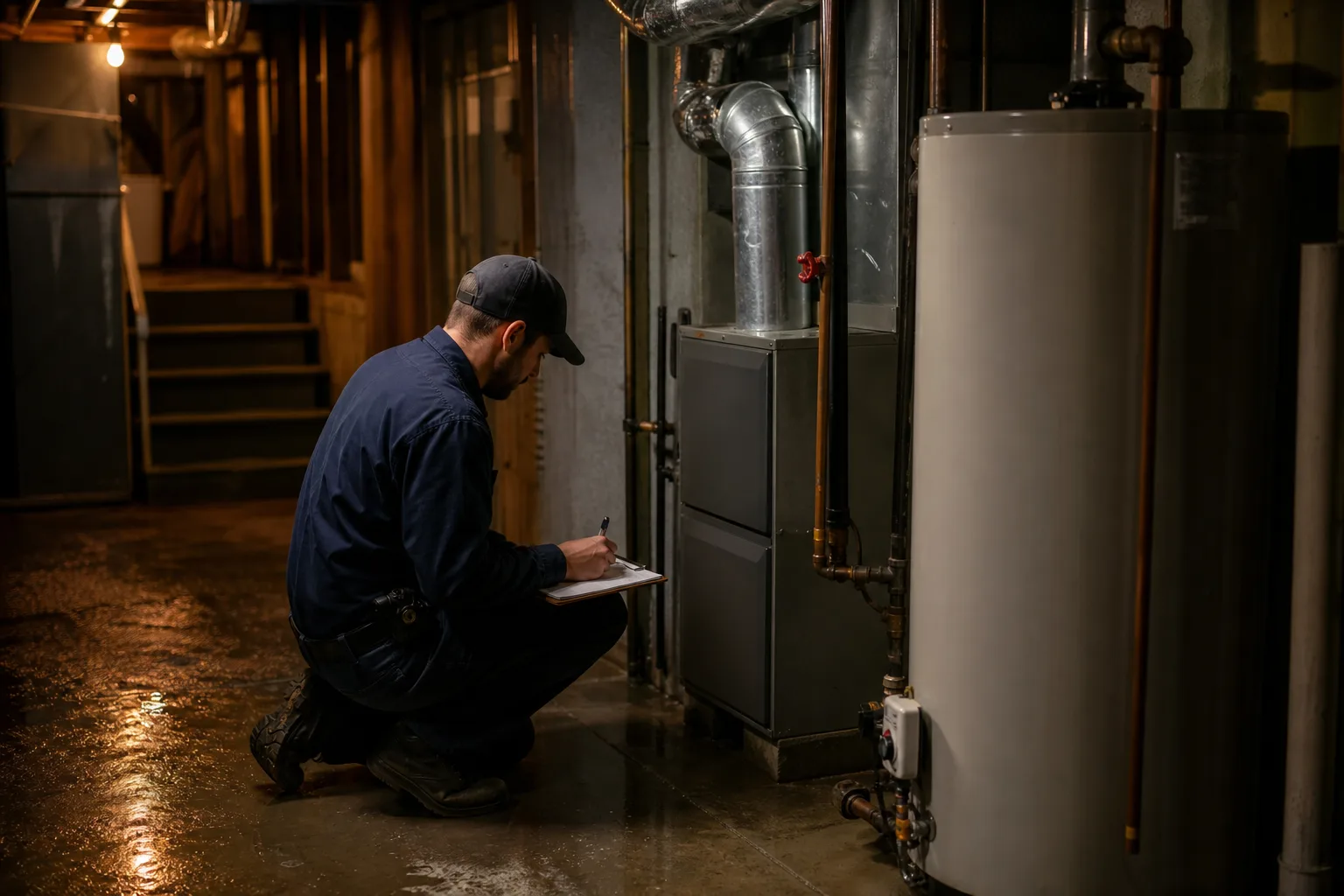
The third option is a maintenance plan sold by the company that installed the equipment, typically an annual fee covering one or two scheduled visits, priority scheduling and a discount on parts. What you are buying is not primarily labor. You are buying a vendor with a commercial reason to call you, which solves the exact failure the paper checklist has. The fourth option, a broader home service contract covering multiple systems, buys the same scheduling function plus a transfer of repair risk, and it is priced accordingly, with deductibles, coverage caps and exclusions that reward careful reading before signing.
Judge both on cash flow rather than on whether the arithmetic beats paying as you go. A plan converts irregular, unpredictable outlays into a known monthly or annual number, and for a household without a funded repair reserve that conversion is worth real money, because the alternative is not paying cash later, it is borrowing later. Households with a reserve usually come out ahead paying per visit and keeping the premium. The question is which household you are this year, not which one you intend to be.
What skipping it costs when the bill finally lands
The financial argument for upkeep is almost always made as avoided repair cost, which understates it. A deferred task does not produce a repair bill at a convenient moment; it produces one at the moment the system fails, which is the moment you have the least leverage. Emergency rates apply, the comparison quote you would normally get is skipped, and the payment method shifts from a checking account to a card, a store-branded installment plan or a contractor's financing partner. The spread between the planned-work price and the same job bought under pressure, financed, is where the genuine money goes.
Run the comparison on that basis and the week-to-week version wins on cost, not on virtue. Fifteen minutes on a fixed weeknight, covering one visible item and one paperwork item, keeps more of the list than a Saturday block that gets rescheduled twice and then abandoned. It also produces something the checklist never did, which is a record: dates, what you found, what you deferred and why. That record is what a warranty claim, an insurance adjuster and your own next decision all end up asking for.
Pick the system that matches who in the house will actually run it, fund the reserve before you fund the plan, and let the list earn its lines back one at a time.