Five Things to Check in a Maintenance Schedule You Will Still Be Keeping in March
The upkeep schedules that survive past February are the ones where each task is tied to a document, a record format and a dollar figure someone else will check.
- Home & Property
- Farah Siddiqui
- 1,156 words, 5 min
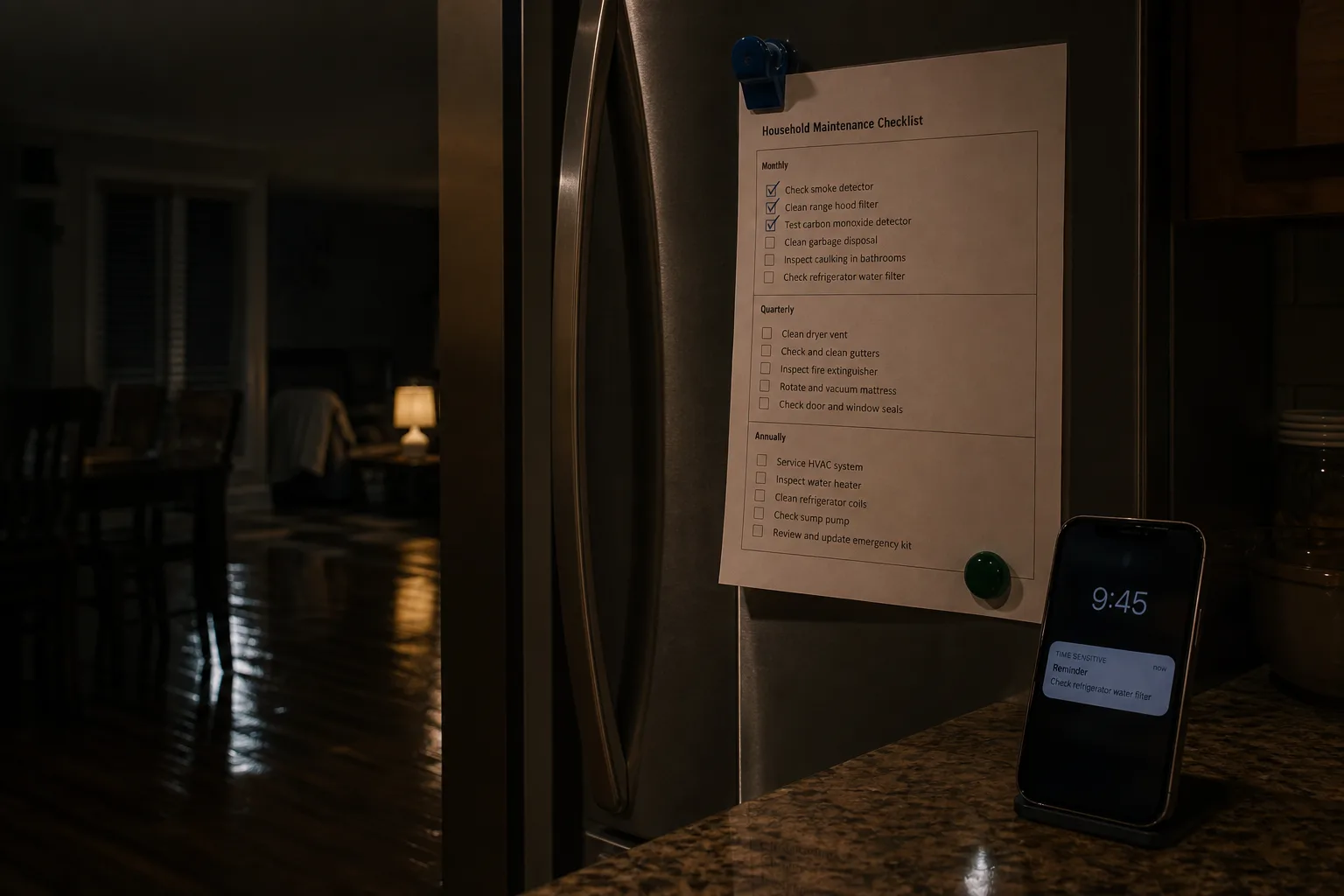
The advice everyone repeats is that the maintenance schedule people actually keep is the simple one, a single sheet on the refrigerator with twelve lines and a pen hanging next to it. That was true when the only consequence of skipping a task was the task itself, and for a while it held up well. What has changed is that several of those lines now carry paperwork attached to money: a warranty condition, a rebate file, an insurer's question at renewal, a claim adjuster asking when the unit was last serviced. The sheet still works. It works far better when each line names the document it protects.
Whether the task is tied to a condition somebody else will enforce
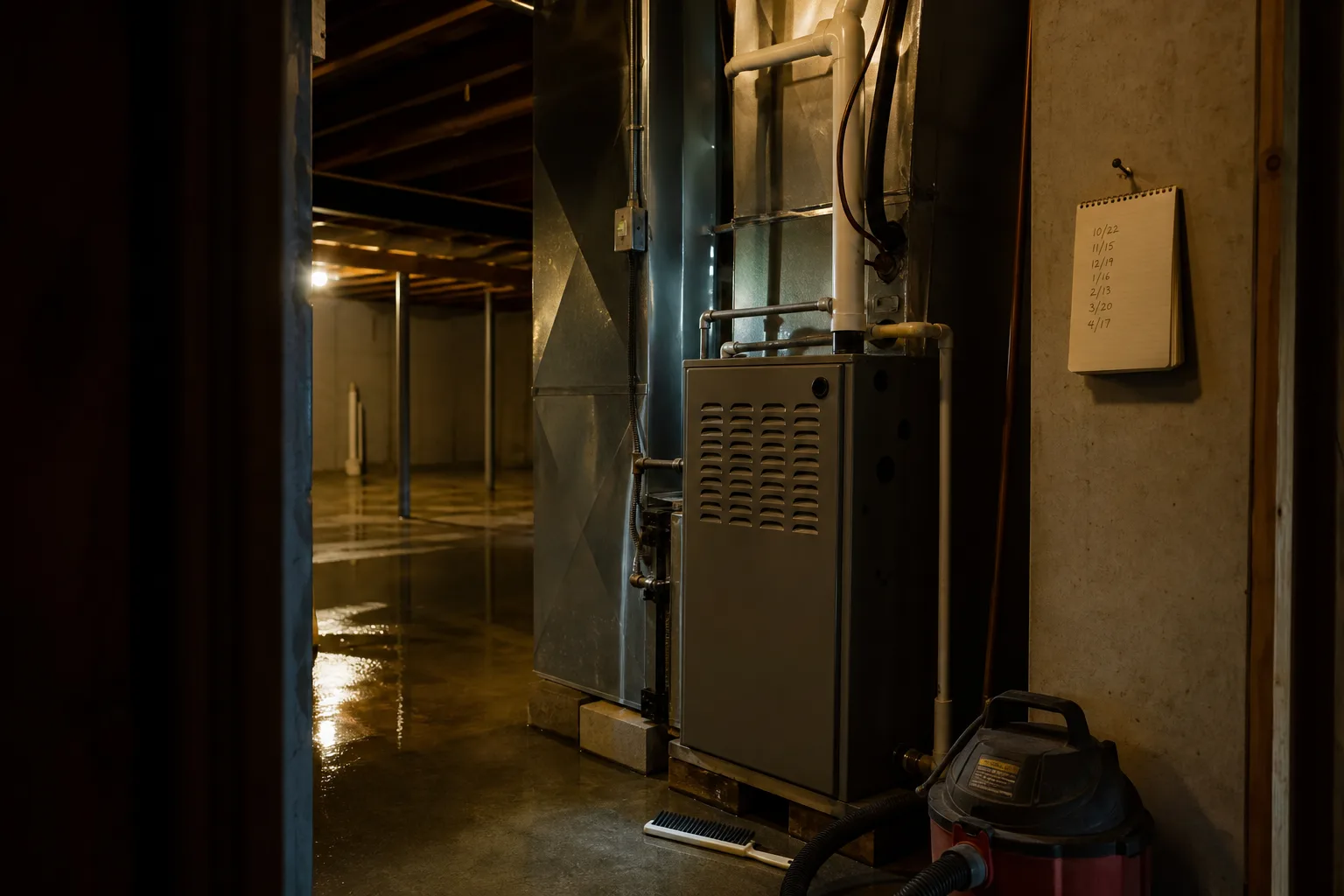
Start by sorting the list into tasks that only affect the house and tasks that affect a contract. Cleaning the range hood filter belongs in the first group. Annual service on a high-efficiency furnace or heat pump frequently belongs in the second, because extended parts coverage on newer equipment is often written to require documented professional maintenance, and manufacturers do ask. The Federal Trade Commission oversees how consumer product warranties are written and disclosed, which is the reason those conditions have to appear in plain language somewhere in the paperwork you were handed at installation. Read that page once. It converts three or four vague chores into obligations with a payoff.
The same sorting exercise catches the quieter conditions. Roof warranties can be voided by unapproved mounting or by debris left in valleys, water heater coverage sometimes assumes an anode inspection interval, and some homeowners policies now ask directly about maintenance on the systems that generate the most water claims. None of that changes what you do in the yard on a Saturday. It changes which Saturdays are optional, and it tells you which receipts are worth more than the paper they are printed on.
The record format, because the date has become part of the evidence
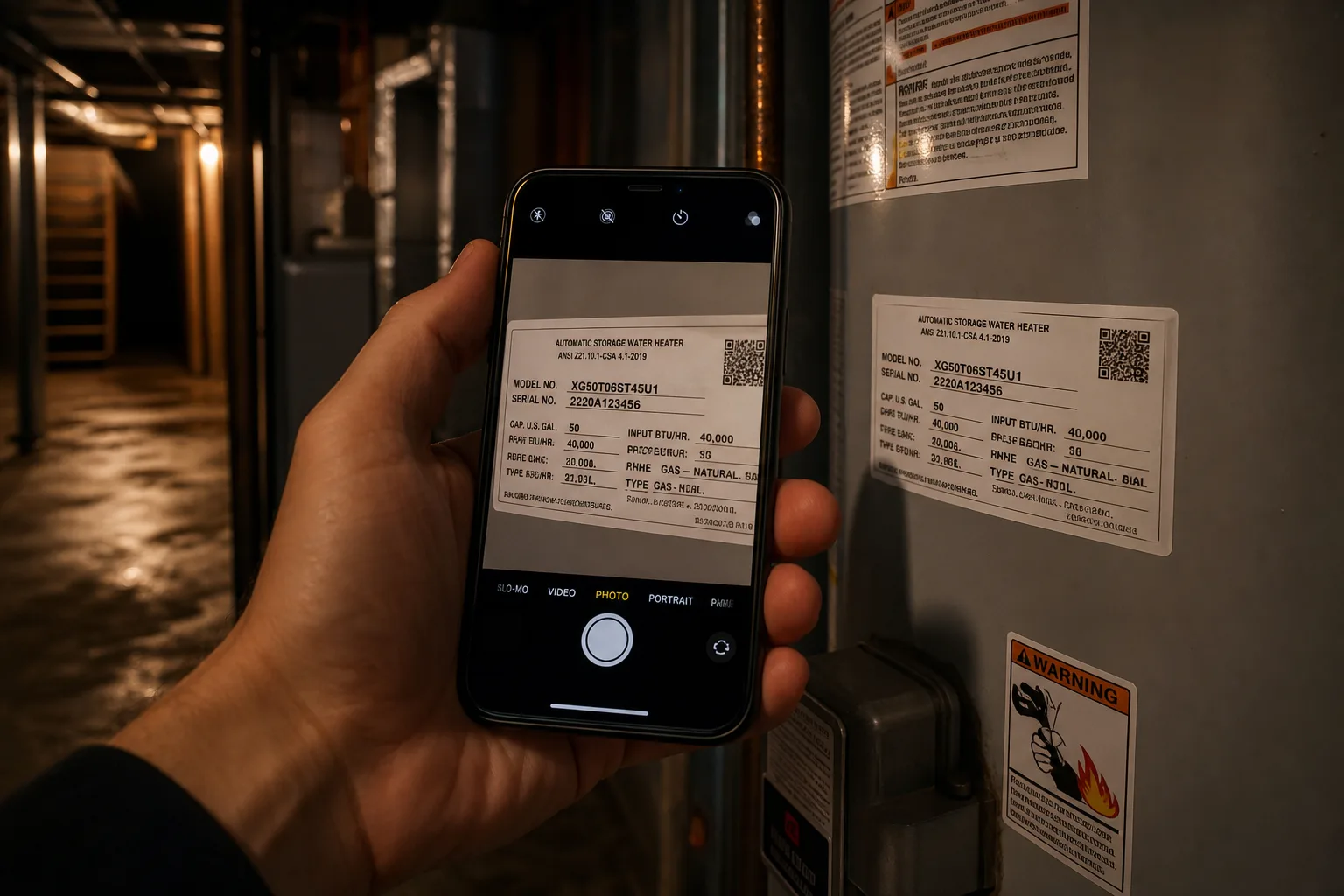
A schedule that records only completion, a checkmark in a box, was fine when nobody audited it. What holds up now is a record that answers three questions without you present: what was done, to which piece of equipment, and on what date. That means invoices carrying the model and serial number rather than "serviced HVAC," and photographs whose file metadata gives the date automatically. Phone cameras solved this quietly and completely. A picture of a clean condenser coil taken in April is a dated document you did not have to fill out.
Keep the storage boring. One folder per system, whether that folder lives in a cloud drive or a filing cabinet, with the manual, the installation invoice, the warranty registration confirmation, and every service record since. Scanned paper is fine. What fails is the shoebox and the email inbox, because both require you to search under pressure, usually while a technician stands in the basement waiting to know whether the compressor is still covered. Ten minutes of filing on the day of the work is the cheapest labor in the whole arrangement.
Who is holding the reminder, and what that convenience costs
The recent shift here is that reminders stopped being your job. Equipment apps push filter alerts, retailers email consumable subscriptions, and contractors sell annual service agreements that schedule themselves and bill monthly. Each of those genuinely raises the odds the task happens, which is the whole point. Each also has a price, and the prices are not comparable until you write them down side by side. A service plan at a fixed monthly rate may be less than two separate visits bought retail, or it may be more once you notice it includes a visit you would never have booked.
Read the plan for two things specifically: whether the included visits satisfy the manufacturer's documentation requirement, and whether the discount on repairs applies to parts, labor or both. A plan that produces a dated, itemized invoice each year is doing double duty, holding your reminder and building your evidence file. A plan that sends a technician who leaves nothing behind but a door hanger is only holding the reminder, and a calendar alert does that for nothing.
The reserve line, because deferral is a borrowing decision in disguise
Every honest schedule has a column the printable versions leave out: the dollars set aside against the item's eventual replacement. Water heaters, roofs, compressors and sewer laterals all have a known service life and a known replacement cost in your zip code, which a contractor will quote you today for free. Divide the quote by the years you expect to have left and you get a monthly reserve. That number is the schedule's financing plan, and it decides what happens when the equipment fails, because the household that has been setting money aside pays cash and the household that has not signs whatever paper is on the tailgate.
This is where deferred maintenance turns expensive in a way that has nothing to do with the repair. Emergency replacement is bought at retail, on the vendor's timetable, often through a promotional financing offer whose deferred interest terms punish a single late payment or an unpaid balance at the end of the window. The same equipment planned in October, bid by three companies, and paid from reserves costs materially less for identical hardware. Utility and manufacturer rebates also require applications filed within a window, and rebate paperwork is nearly impossible to assemble in a crisis.
Whether the file transfers when the house does
The last check is the one people appreciate only at closing. A complete, dated maintenance file is an asset in a sale, because it answers the buyer's inspector before the inspector has to guess, and it supports the transfer of any remaining coverage. Several categories of warranty are transferable, sometimes for a fee and usually only within a short window after the deed changes hands, so the transfer instructions belong in the folder next to the registration. Buyers who see a serviced-and-documented system negotiate differently than buyers who see a fifteen-year-old label and no history.
It matters just as much in the other direction. When you buy, ask for the file, and treat its absence as a reason to price the systems as undocumented rather than assume the previous owner was diligent. Sellers who kept the records will hand them over readily, which tells you something useful about the house before an inspector sets a ladder against it.
Run these five checks against whatever list you already have and most of it will survive unchanged, because the tasks were never the problem. What changes is the shape of the page: a document named beside each item, a place the dated proof goes, one owner for each reminder, a reserve figure per system, and a folder that can be handed to somebody else. That version gets kept, because by March each line is defending money you can see.