Four Upkeep Jobs Worth Hiring Out, and How the Rules Change Across State Lines
Gutters, mold, chimneys and septic tanks are four jobs most households eventually pay for, and the licensing, insurance and permit rules behind each one differ sharply by state and county.
- Home & Property
- Clement Boateng
- 1,055 words, 4 min
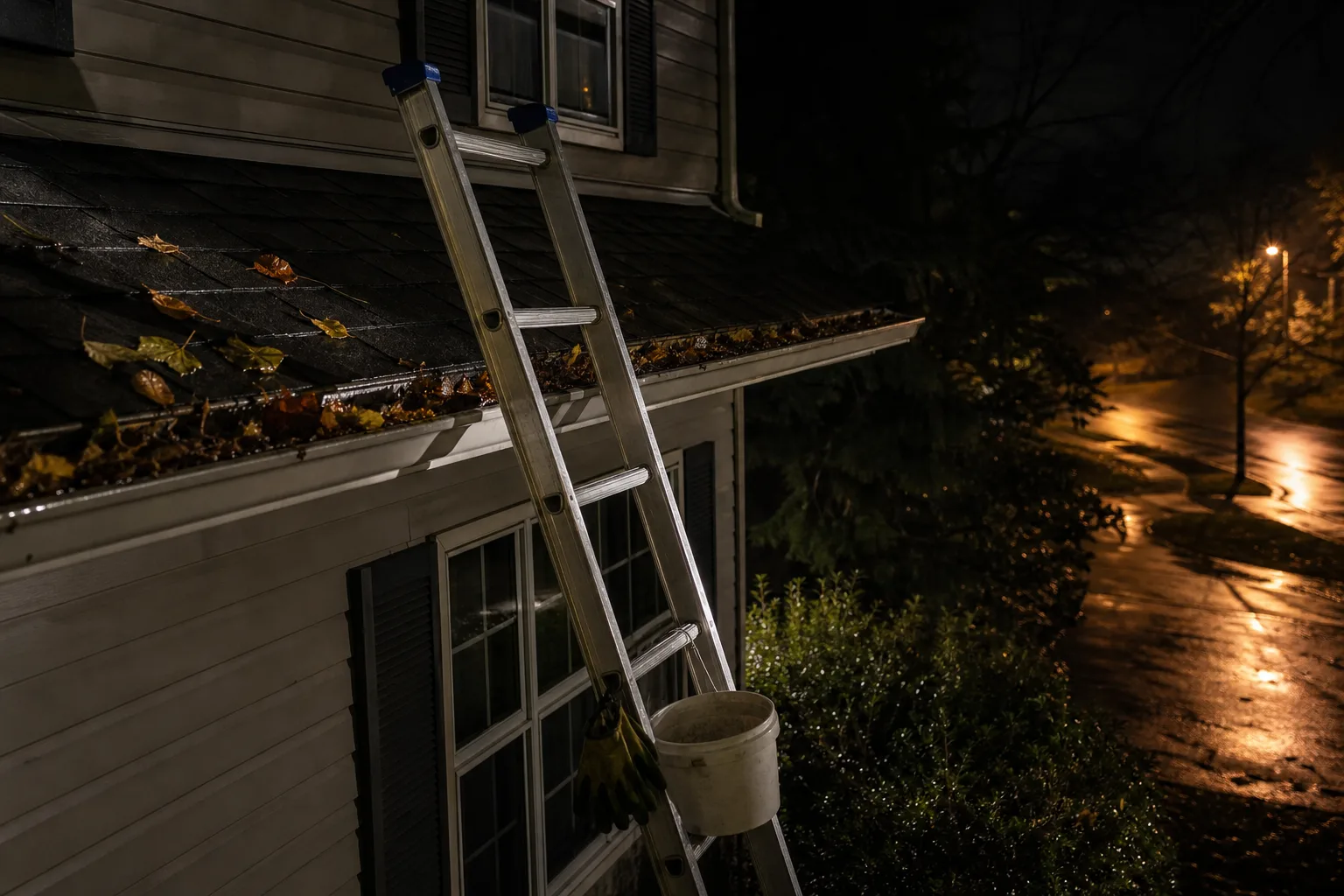
The season for most upkeep work is short, and the moment it slips, the decision changes shape. A gutter that needed clearing in October needs clearing in January with ice on the roof edge, and the person you hire in January is whoever answers. That is the point at which it helps to know which of these jobs is licensed in your state, which is licensed only in the next state over, which is governed by a county health department nobody thinks to call, and which is not regulated at all. The rules are uneven, and the unevenness is the useful part.
Height work: the injuries are real, and the insurance question is settled by your state
Falls from ladders are what actually fill emergency rooms in gutter and window season, and they are overwhelmingly falls from the middle of the ladder rather than dramatic slides off a roof. That is the honest case for paying someone to do the second-story work: not that the task is difficult, but that the consequence of one bad rung is a hip or a wrist and six weeks of not driving. The rules that matter here are not licensing rules, because almost no state licenses gutter cleaning, but workers' compensation rules, and those are written state by state.
The practical difference is who absorbs the cost if the person on your ladder is hurt. Some states require coverage from the first employee, others set a threshold of three or four, and several treat sole proprietors as exempt unless they elect in. A one-person operation that is legally exempt is still a one-person operation standing twenty feet up on your property, and homeowners policies vary in how they treat that. Ask for a certificate of insurance naming both general liability and workers' compensation, and ask what the state requires rather than assuming.
Mold and lead: the same work, four different licensing answers
Mold remediation is where regional variation is starkest. A handful of states, Florida, Texas, New York and Louisiana among them, run licensing programs with separate credentials for assessment and for remediation, and in some of those states the same company may not legally do both on one job. Most other states license nothing, which means the word remediation on an invoice carries no defined meaning and the scope is whatever the contract says. Where no license exists, the protection you have is the written scope: containment, what gets removed, what gets tested afterward, and by whom.
Lead paint runs the other way, because the baseline is federal. The Environmental Protection Agency oversees the lead-safe renovation rules that apply when work disturbs painted surfaces in housing built before 1978, and firms doing that work need certification and a trained renovator on site. What differs by region is administration: a number of states have been authorized to run the program themselves, and those states often add their own certification, fee structure and recordkeeping on top. If your house predates 1978 and the job involves scraping, sanding or washing down old paint, the certification question is not optional and the answer depends on which agency runs the program where you live.
Chimneys and dryer vents: nobody licenses it, so the paperwork is different
Chimney sweeping and dryer vent cleaning are close to unregulated everywhere as trades. There is no state license to check in most of the country, and the credential people cite is a private certification from an industry body, which is worth something as evidence of training and nothing as a legal protection. The hazard behind both jobs is genuine and specific: blocked flues push carbon monoxide back into the house, and lint packed in a vent run is one of the more common ignition points in a laundry room. Neither risk announces itself.
Because licensing is absent, the leverage sits elsewhere. What you want is a written report tied to the inspection levels the fire codes describe, with photographs, a stated condition of the liner or the vent run, and a clear line between what was cleaned and what needs repair. Where local fire codes or an insurance carrier require an annual inspection, that document is the thing that satisfies them. It also gives you a baseline, which is what makes next year's report meaningful instead of decorative.
Septic pumping and drains: the county writes this rule, not the state
Septic work is the one job in this group where the governing authority is usually local. Pumpers are typically licensed or permitted by a county or district health department, and the same department often sets the pumping interval, keeps the records, and requires a manifest showing where the waste went. Two adjacent counties can hold different intervals and different reporting duties for identical systems, which is why a neighbor's schedule is not evidence for yours. Call the health department, ask what interval applies to your tank size and household, and ask whether they hold your system's records.
This matters most when a deadline has already slipped, because a backed-up system on a holiday weekend is priced as an emergency and inspected as an afterthought. A pumper who files the manifest keeps your system in the county's record, which is the file a buyer's inspector or a lender will eventually ask about. The routine visit costs a fraction of the emergency one and produces the paperwork as a byproduct. Booking it in a slow month is the whole trick.
What to verify before you sign, and in what order
The order that saves the most money is jurisdiction first, then credential, then insurance, then scope. Find out which body governs the work where you live, whether that is a state licensing board, a state agency running a federally authorized program, or a county health department. Ask the contractor to name the same body and produce the license or certification number it issued. Then get the certificate of insurance, and only then argue about scope and price, because scope written after you know the rules is scope you can actually enforce.
Hiring out gutters, mold work, flue cleaning and septic pumping is a defensible use of money in almost every household, and it becomes a better one when you know which agency stands behind each job. That knowledge takes a phone call per trade and holds good for years.