Insured for Less Than the Rebuild? Four Ways to Close the Gap and What Each Adds
Four ways to fix a dwelling limit that is short of the rebuild cost, what each one adds to the premium, and which cost drivers move the number most.
- Finance
- Clement Boateng
- 899 words, 4 min
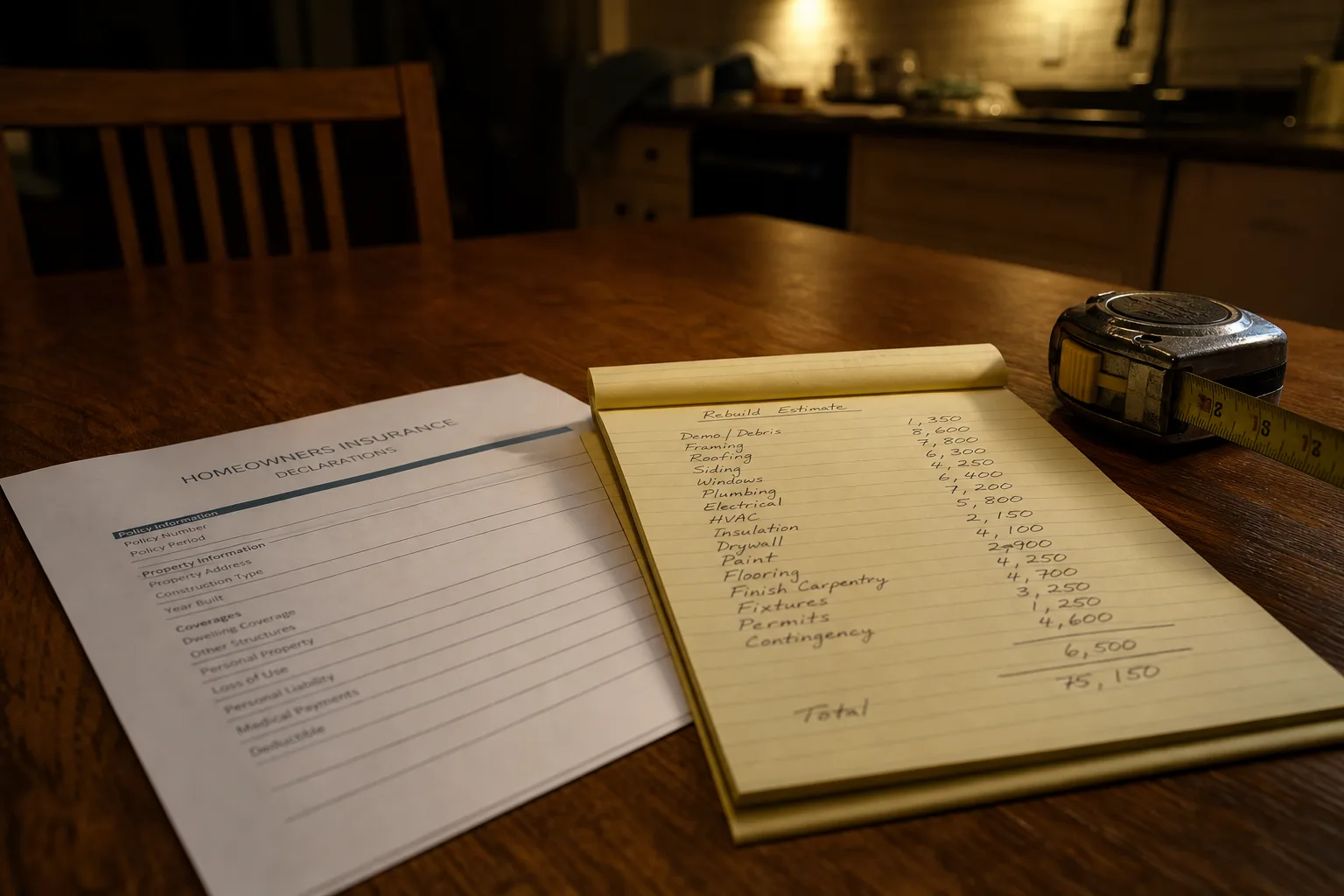
The number that decides most homeowners claims is not the deductible and not the premium. It is Coverage A, the dwelling limit, and on a great many policies it was set once, years ago, by a software estimate nobody in the household ever saw. If that figure is meaningfully below what a builder would charge to put the house back, the shortfall does not wait for a total loss to show up. It arrives on partial claims too, through the coinsurance condition, which is the American name for what older policies called averaging.
How the gap gets built in, quietly
A replacement cost policy typically promises full repair only if the dwelling limit is at least eighty percent of the cost to rebuild at the time of the loss. Fall below that line and the insurer pays a proportion, so a kitchen fire that costs forty thousand to repair can settle for thirty-two or less, with the difference landing on the household. The gap rarely comes from anything dramatic. It comes from labor and materials rising faster than the annual bump on the declarations page, from a finished basement nobody reported, from a two-hundred-square-foot addition, from custom windows that a generic estimator prices as standard ones.
Four ways to close it, and what each one costs
The first and cheapest is simply raising Coverage A to a defensible rebuild figure. You pay the marginal rate on the added coverage, which on most policies is a modest number per thousand dollars of limit, and the increase compounds through the endorsements that key off Coverage A. The second is an inflation guard, which lifts the limit automatically each year by a set percentage. Most carriers include some version at no separate charge or for very little, and it keeps a correct limit correct, but it cannot repair a limit that started wrong.
The third is extended replacement cost, an endorsement that pays a stated percentage above the dwelling limit, commonly twenty-five or fifty percent, when the actual rebuild runs over. This is the option that does the most work for the least money on a typical suburban house, because it absorbs the exact scenario that hurts households, which is a regional spike in construction pricing after a storm that damaged four thousand roofs at once. The fourth is guaranteed replacement cost, which removes the ceiling entirely. It is underwritten more carefully, is often restricted to newer or well-documented homes, and carries the highest surcharge of the four.
What actually drives the number on the quote
Rebuild cost is not market value, and confusing the two is the single most common way households end up short in either direction. Land is not insured. A house worth six hundred thousand on a lot in a desirable school district may rebuild for three hundred and fifty, while a modest house in a rural county with a two-hour drive for framing crews may rebuild for more than it would sell for. What moves the rebuild estimate is square footage, the number of corners in the footprint, roof pitch and material, the finish level of kitchens and baths, and whether the structure is a plain rectangle or something a builder has to think about.
Then there is the code question, which drives more short settlements than most people expect. A house built in 1968 will not be rebuilt to 1968 standards. Current code will require updated wiring, insulation, egress windows, and in some jurisdictions a sprinkler or a different roof deck. Standard policies exclude that added cost unless you buy ordinance or law coverage, usually sold as ten, twenty-five or fifty percent of Coverage A. On an older home this is frequently the highest-value endorsement per dollar on the whole policy.
The pieces that ride along, and the one that does not
Contents, other structures, and loss of use are usually set as percentages of the dwelling limit, so an understated Coverage A quietly understates all three. Detached garages and fences sit in other structures, typically at ten percent, which will not go far if a detached garage burns. Loss of use pays the rent and the extra costs while you are out of the house, and rebuilds run longer than people plan for. Flood is the piece that does not ride along at all. It is separate, and the National Flood Insurance Program, overseen by FEMA, caps residential building coverage well below what many houses cost to replace, which is why excess flood coverage exists.
The half hour that settles it
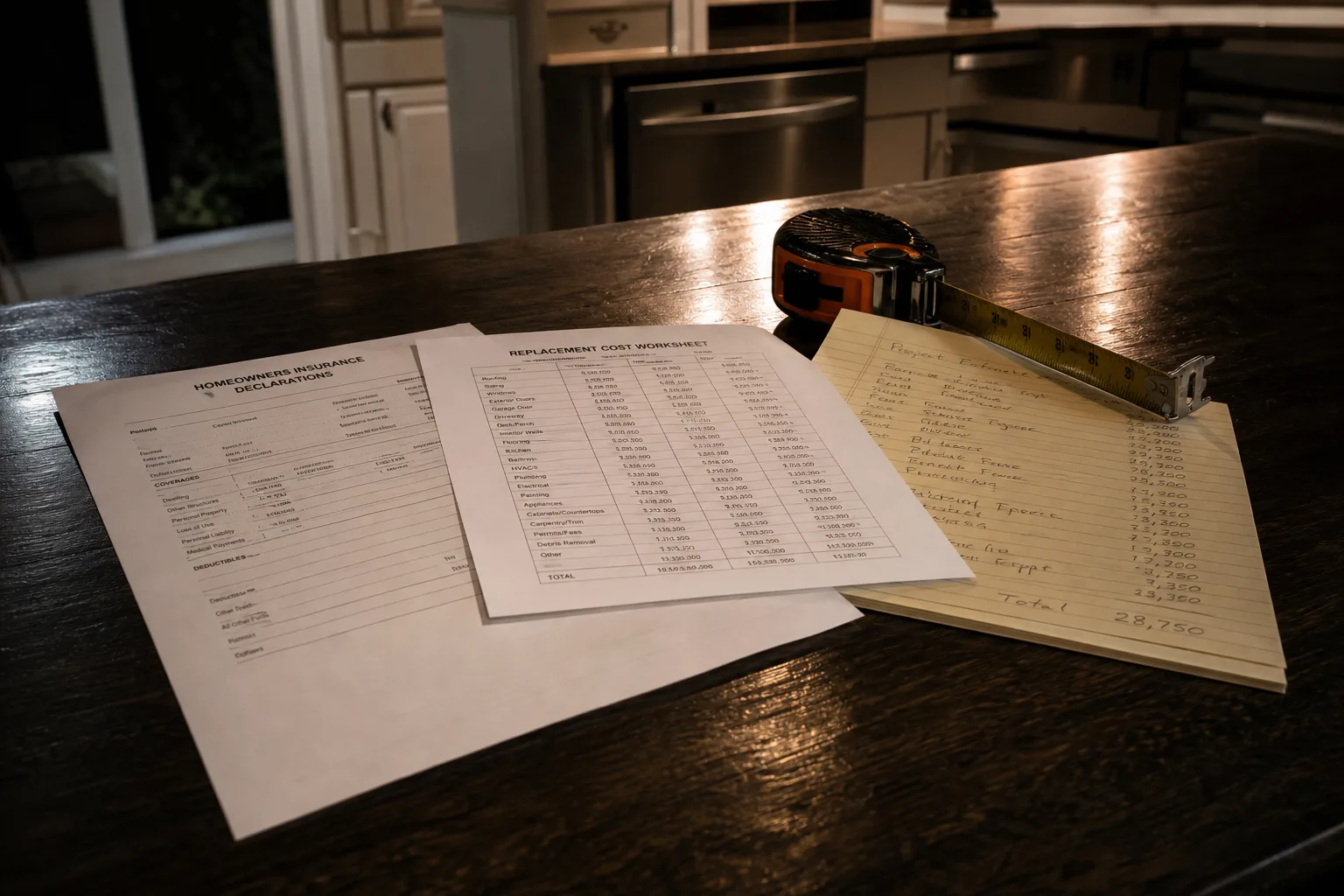
Get a rebuild figure you can point to: a local builder's per-square-foot number for your construction type, or the insurer's own reconstruction estimate with the inputs printed out so you can check the square footage, the roof, and the finishes. Compare that against Coverage A. If the gap is under ten percent, an inflation guard and a corrected limit handle it. If it is larger, or the house is older, extended replacement cost plus ordinance coverage does the heavy lifting for a small share of the annual premium.
Ask your agent to quote the same policy three ways, at the current limit, at the corrected limit, and at the corrected limit with the two endorsements. The spread between those three numbers is almost always smaller than households expect, and it is the clearest picture you will get of what a full settlement actually costs.