Paid Your Premiums and Got Sixty Cents on the Dollar? The Clause That Set That Number
A property claims consultant on the coinsurance clause, why it bites hardest on small losses, and the household repairs people end up doing themselves once the check lands short.
- Finance
- Clement Boateng
- 1,051 words, 4 min

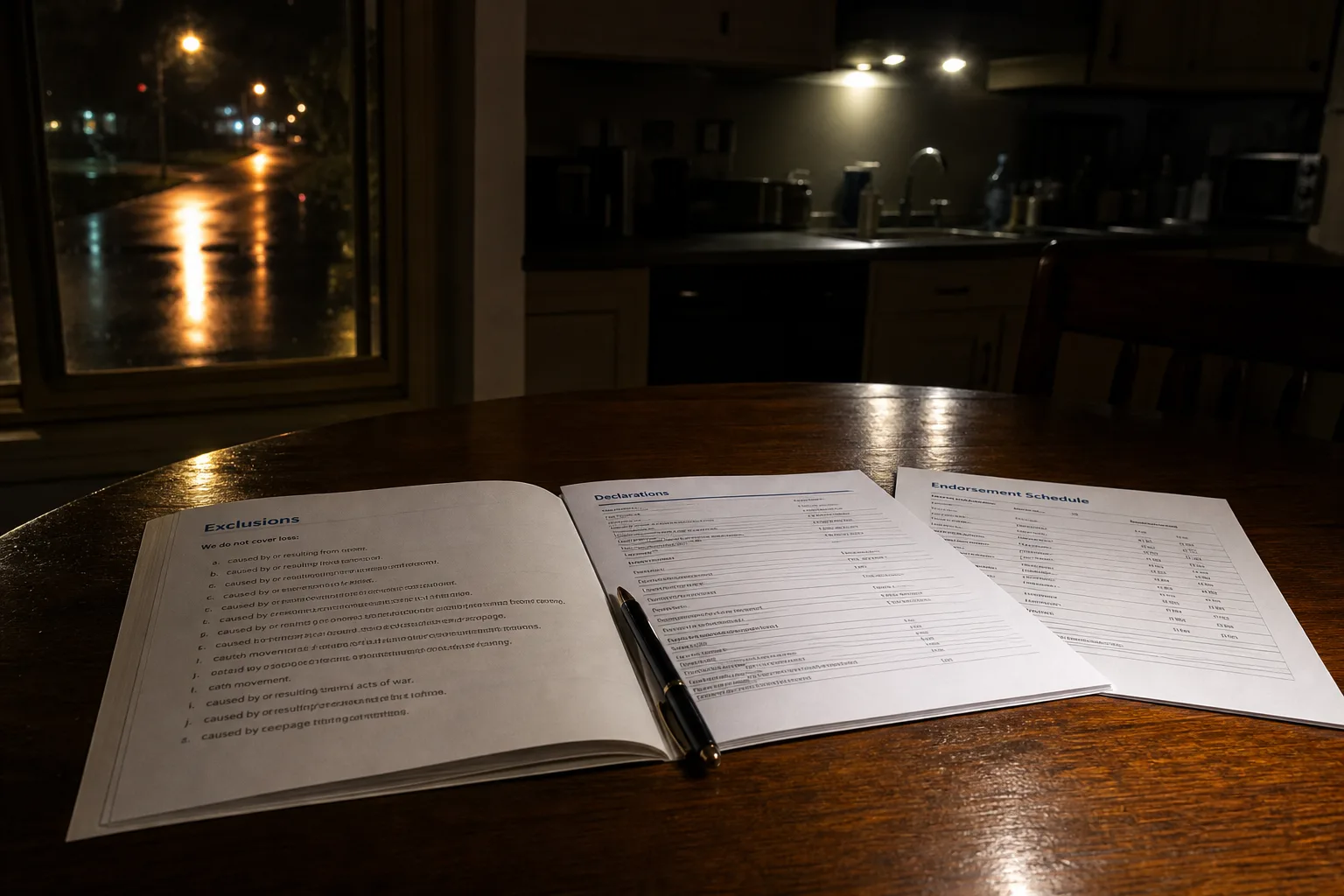
The policy limit on the declarations page is not a promise to pay that amount. It is one of two numbers the insurer uses, and the second one, buried in a paragraph most people have never read, decides what share of a loss the company accepts. Ray Villanueva reviews building and contents valuations for small landlords and owner-occupants, usually after a claim has already come in low. I asked him where under-insurance actually surfaces, which is almost never in the total loss people imagine when they think about it.
The clause that sets the check, not the limit
Start with the mechanics. What is the coinsurance clause doing?
It is a condition, not a coverage. The policy says you agree to carry a limit equal to some percentage of the replacement cost of the structure, commonly eighty percent, sometimes ninety, occasionally a hundred on newer commercial forms. If you carry less than that at the moment of the loss, the insurer pays the same proportion of the damage that your limit bears to the amount you were required to carry. Older policies called it an average clause, which is a clearer name, because the shortfall gets averaged across every claim you ever file rather than only the big one.
So the penalty is not a denial.
It is worse than a denial in one specific way: nobody warns you. A denial arrives with a letter and a reason and a right to appeal. A coinsurance reduction arrives as a check that is simply smaller than the estimate, with a line on the worksheet that reads like an accounting note. If your building would cost five hundred thousand to rebuild and you carry three hundred thousand against an eighty percent requirement, you are carrying seventy five percent of what the policy asked for. A forty thousand dollar fire pays about thirty thousand before the deductible comes off.
Where the shortfall shows up in an ordinary week
You said it rarely shows up as a total loss. Where does it show up?
In the middle-sized, unglamorous claims that make up most of what I see. A supply line behind a dishwasher that runs for a weekend. A grease fire that takes out the range hood, the cabinets above it and the drywall to the ceiling. A wind event that strips one slope of shingles. These are twenty to sixty thousand dollar repairs, and the household treats them as recoverable. Then the check covers roughly two thirds, the deductible eats part of that, and suddenly there is a gap the family has to close out of savings or out of their own weekends.
And that gap is where the everyday consequences start.
That is the part people never trace back to an insurance clause. When the money runs short, the scope shrinks and the labor gets substituted. The licensed contractor does the framing and the plumbing, and the homeowner takes on the demolition, the painting and the roof edge. I have seen the same three injuries come out of that decision often enough to name them. Falls from ladders and from a low roof pitch, which is the one that puts people in the hospital rather than the urgent care. Hand and eye injuries from a circular saw or a grinder used for the first time in fifteen years. And carbon monoxide exposure from a generator or a kerosene heater run indoors while the furnace is out and the repair is waiting on cash.
What about the risks people worry about that do not really materialize?
Homeowners spend a lot of anxiety on mold spore counts and on whether a smoke smell is toxic, and comparatively none on the ladder in the driveway. The mold question matters for the remediation invoice and for anyone with asthma in the house, and it is worth resolving properly. It is not the thing that sends someone to the emergency room in week three of an underfunded repair. Deferred heating work and improvised heat are. So is a partially rebuilt stair with no handrail, which tends to stay that way for months because it is nobody's emergency.
The changes nobody thinks to report
How do people end up under-insured without doing anything wrong?
Almost always by improving the property. The limit was set when the house was bought and it tracked an inflation guard endorsement that moves a couple of points a year. Meanwhile the basement got finished, the kitchen went from laminate to stone, the detached garage became a workshop with three thousand dollars of tools in it, and the back bedroom became a rental unit. Rebuild cost moved on a different curve than the endorsement did. Nobody filed anything. The declarations page arrived every twelve months and went into a drawer, which is exactly what I did with mine for years.
Does this apply to contents and other coverages too?
Contents usually sit as a percentage of the dwelling limit, so an understated structure quietly understates the personal property line under it. Business income on a landlord policy has its own coinsurance test tied to projected revenue. Flood is a separate conversation entirely, because the National Flood Insurance Program is run under the Federal Emergency Management Agency and carries its own limits and its own valuation rules that do not follow your homeowners form. The fix is the same in every case: know the replacement cost, then set the limit above the required percentage of it.
What a check-up looks like at renewal
What should someone actually do this month?
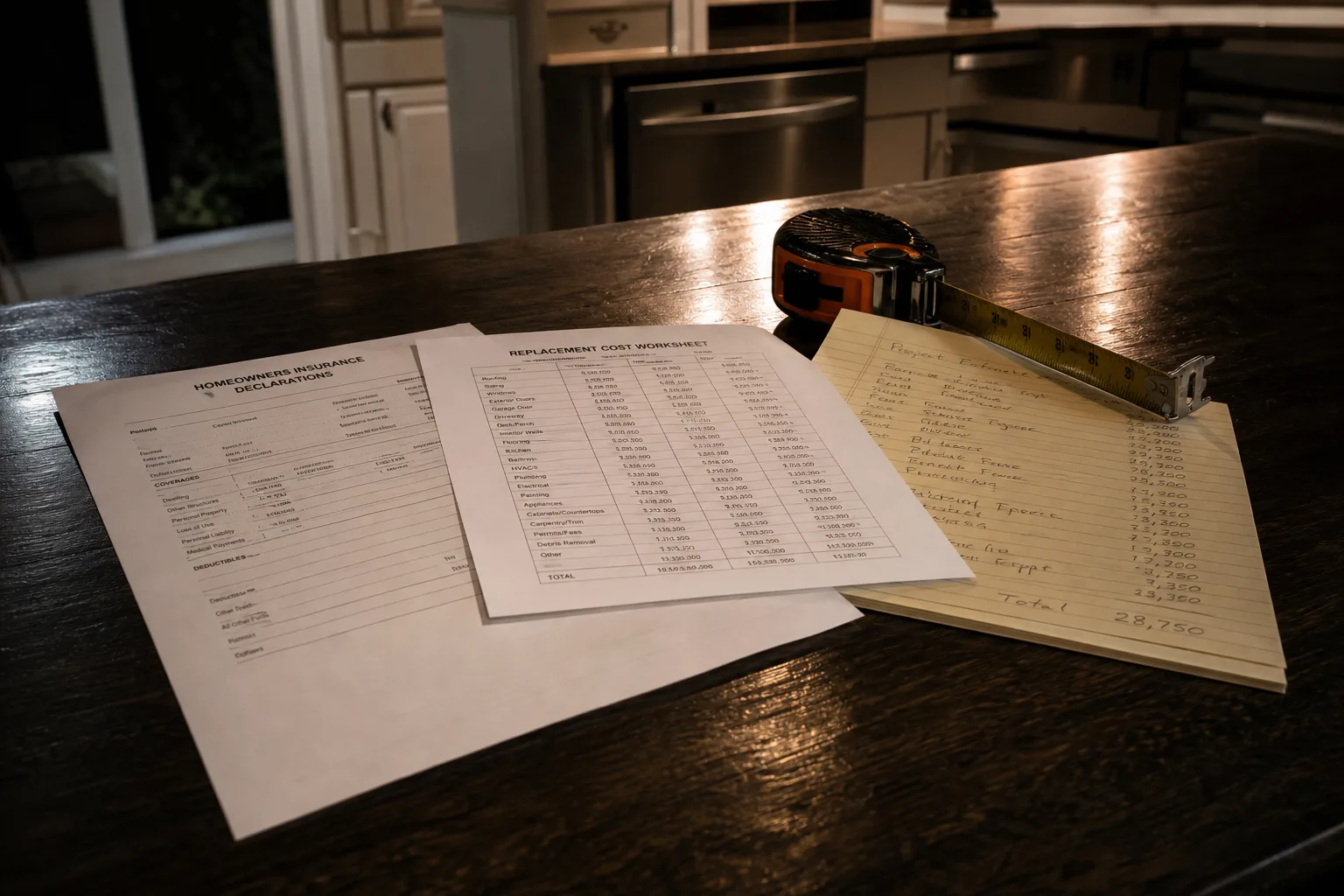
Pull the declarations page and find the coinsurance percentage, which is on the property form rather than the summary. Get a replacement cost estimate that is not the insurer's algorithm: a contractor's square foot number for your area, or a paid appraisal if the building is unusual. Compare, then close the gap and ask about an agreed value or replacement cost endorsement that waives the coinsurance test. Write down the renovations of the last five years and send that list to the agent in writing, because a documented notice is what makes the higher limit stick.
The number to raise is not the premium you are willing to pay. It is the rebuild figure the clause measures you against, and it is knowable in an afternoon.