Rental Pumps, a Preferred Vendor, or Waiting for the Adjuster. Which Route Fits Day One
Three ways to handle the first two days after water gets into a house, compared on the standards the work is judged by, the paperwork each one asks you to sign, and the hazards that matter.
- Home & Property
- Clement Boateng
- 1,028 words, 4 min
The received wisdom is that you have a narrow window, often quoted as twenty-four to forty-eight hours, before a wet house becomes a mold problem, and that the only sane response is to get a truck in the driveway tonight. That urgency is broadly real, but it is not the reason most first-time claims go badly. What decides the outcome is which of three routes you take in the first two days, what each one asks you to sign, and whether the drying work is documented well enough that an adjuster reviewing it in three weeks can see what was wet and why it was removed.
Three routes, and the clause that applies to all of them
The first route is doing it yourself: a rented extractor, box fans, a dehumidifier, and a weekend. The second is calling a restoration contractor directly, which is what most people do at two in the morning. The third is calling the insurer first and taking whoever the carrier's managed-repair program dispatches. Every homeowners policy imposes a duty on you to protect the property from further damage, and that duty starts before anyone from the insurance company arrives. Waiting passively for an adjuster is not a fourth option; it is the one choice the policy language does not really allow.
Where the routes diverge is not speed. All three can begin on day one. They diverge on who carries the documentation burden, who is on the hook if the drying is incomplete, and how much of the invoice becomes an argument later. A homeowner with a small clean-water leak in a tiled bathroom can reasonably handle it alone. A homeowner with saturated carpet pad across two rooms and water tracking into wall cavities is buying professional equipment and, more importantly, professional moisture readings.
The standard the crew should be working to
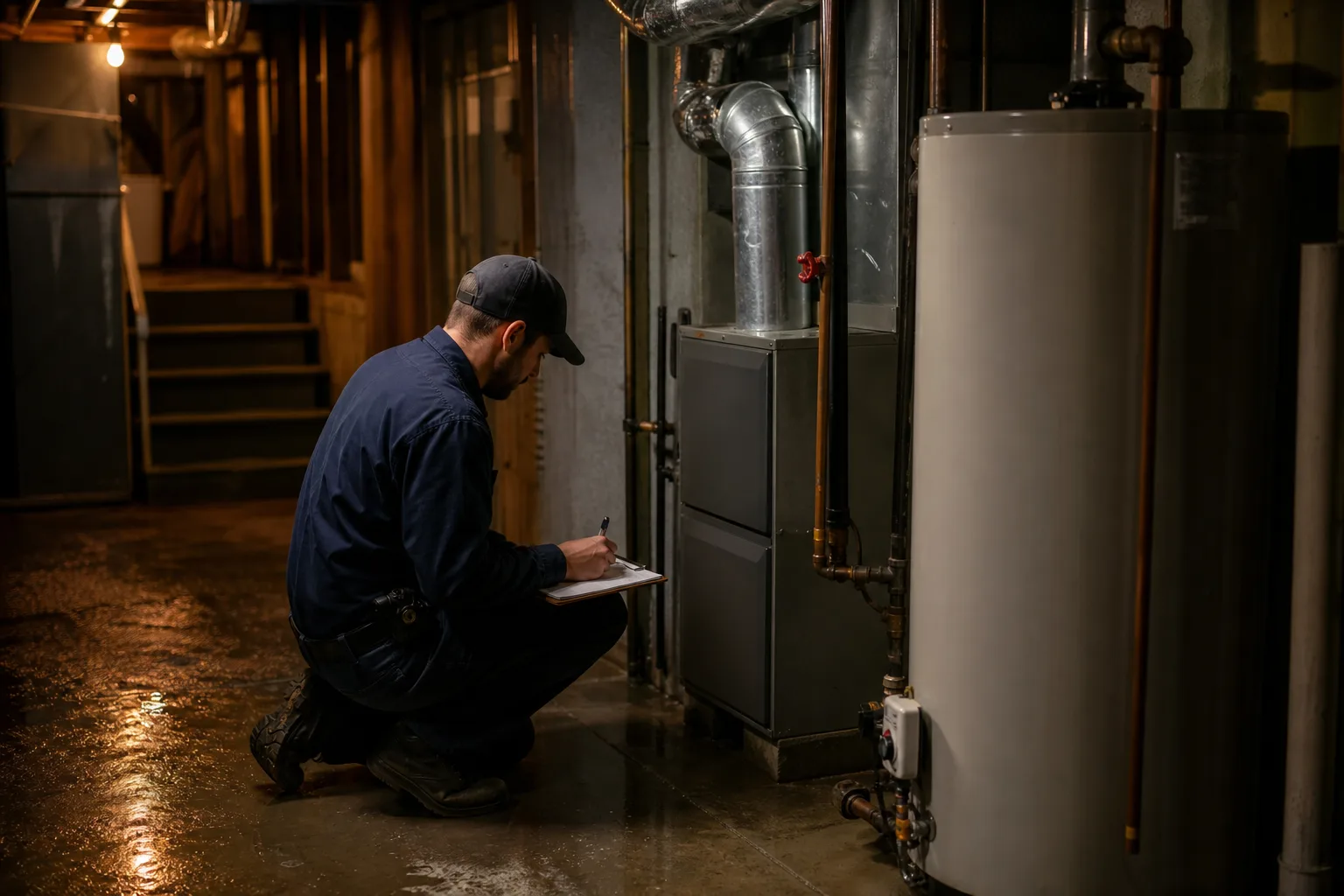
Restoration is not an unregulated trade, whatever the parking-lot business cards suggest. The industry works to a consensus standard for professional water damage restoration published by the IICRC, and the vocabulary in it will show up on your paperwork. Water is sorted into categories by how contaminated it is, from a broken supply line at one end to sewage at the other, and losses are sorted into classes by how much material is wet and how hard it will be to dry. A crew following the standard takes moisture readings on arrival, sets equipment based on the volume of wet air, and logs readings daily until materials hit a dry standard.
Ask on the first visit whether you will receive daily moisture logs and a psychrometric record. That question does more work than any credential check, because a company that produces logs is a company whose invoice survives review, and one that cannot is asking you to fund a decision nobody can reconstruct. The Environmental Protection Agency is the federal body responsible for guidance on indoor moisture and mold, and its basic position is unglamorous: fix the water source, dry the materials quickly, and discard porous items that stayed wet. Nothing in the first forty-eight hours needs to be more exotic than that.
What you are signing, and what it hands over
Route two, calling a contractor directly, usually arrives with a work authorization. Read it in the hallway, wet socks and all. The document you are looking for is an assignment of benefits, which transfers your right to collect from the policy to the contractor, and in some states its use is restricted or requires specific disclosures and cancellation windows. Assigning benefits is not automatically a bad trade, since it can mean you never front the money, but it does mean the negotiation over scope happens between two parties, and you are not one of them.
Route three, the carrier's program vendor, generally comes with pricing already agreed and a warranty on the work that the insurer stands behind. The cost of that convenience is scope. Program vendors work to the estimating software line items the carrier accepts, which is efficient on a straightforward loss and constraining when your floor is a discontinued engineered plank that no line item contemplates. First-time claimants tend to fare well on this route with clean-water losses and less well when the house has anything unusual in it.
The hazards that actually send people to the emergency room
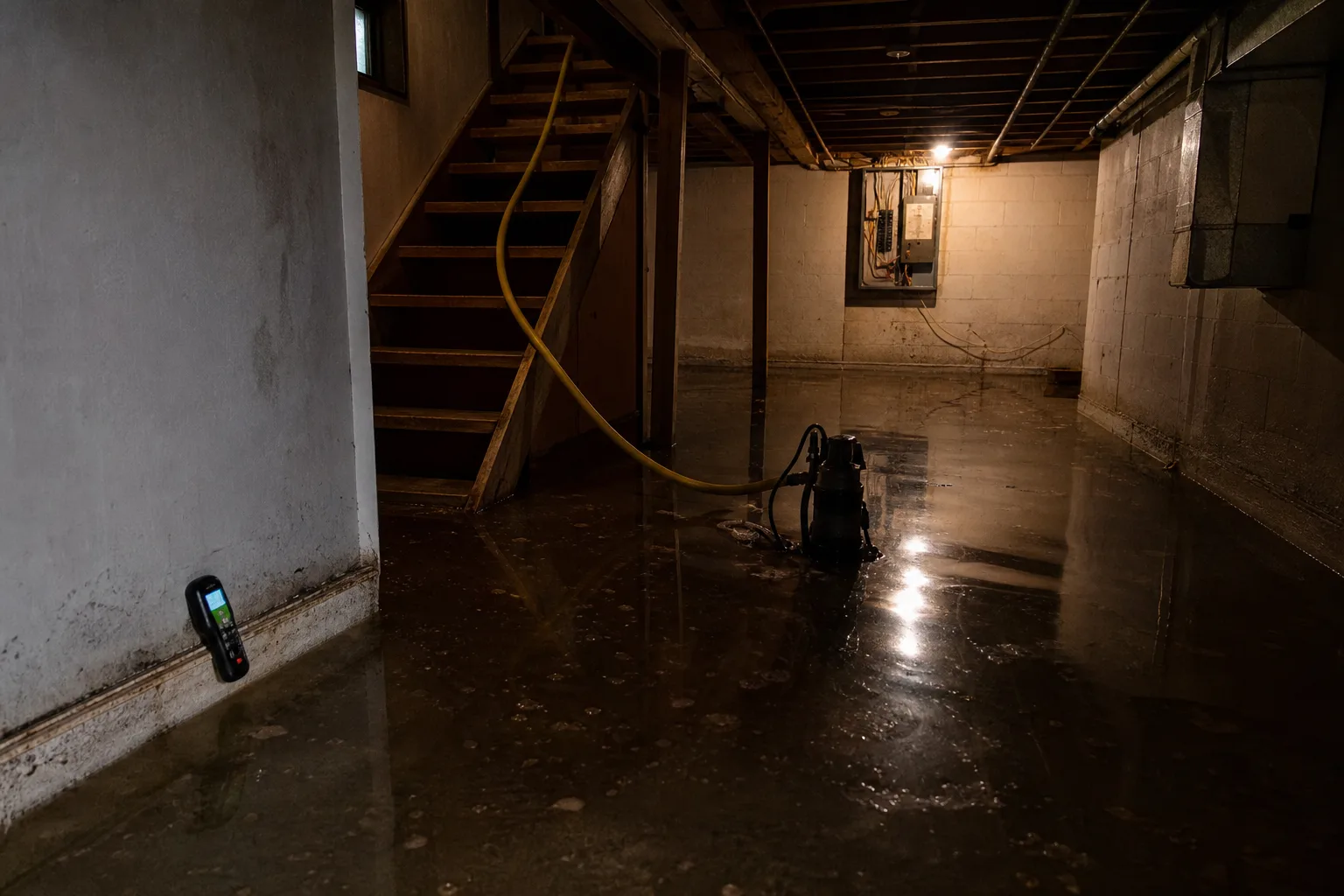
Standing water in a finished basement with live outlets at the waterline is the genuine one. If water has reached receptacles, the panel, or a submerged appliance, the power to those circuits comes off before anyone wades in, and if the panel itself is wet, that is a call to the utility or an electrician rather than a flashlight-and-hope decision. The second real hazard is carbon monoxide from gasoline pumps, generators, or pressure washers run inside a garage or basement, which kills people every storm season and is entirely avoidable by keeping combustion engines outdoors and well away from openings.
The third is sewage contact, which is a gloves-and-boots problem and a reason to let a crew handle category three water rather than a heroism opportunity. Ceiling drywall holding water overhead is worth respecting too, since a saturated sheet comes down as a unit. What does not warrant panic is the phrase black mold, which gets used to sell testing that changes no decision you are about to make. Growth that has been wet for a day or two is dried or removed on the same logic either way.
How to choose in the first two hours
Photograph everything before you move a single box, note the time the water started if you know it, and keep receipts for fans, pumps, hotel nights, and a plumber's after-hours call, because mitigation costs are reimbursable in a way that later cosmetic choices are not. Then pick by contamination and volume. Clean water, small footprint, hard surfaces: your own equipment is defensible. Anything into wall cavities, subfloor, or from a drain line: a documented crew, on a route whose paperwork you have actually read.
The forty-eight hours are less a deadline than a filing window. What you record while the house is still wet is what you get paid for.