Surface Dry in Three Days? The Readings That Decide Whether the Drying Is Actually Finished
Drying a wet house well and drying it fast look identical from the hallway. What separates them is measurement, placement and knowing which materials cannot be saved.
- Home & Property
- Clement Boateng
- 822 words, 3 min
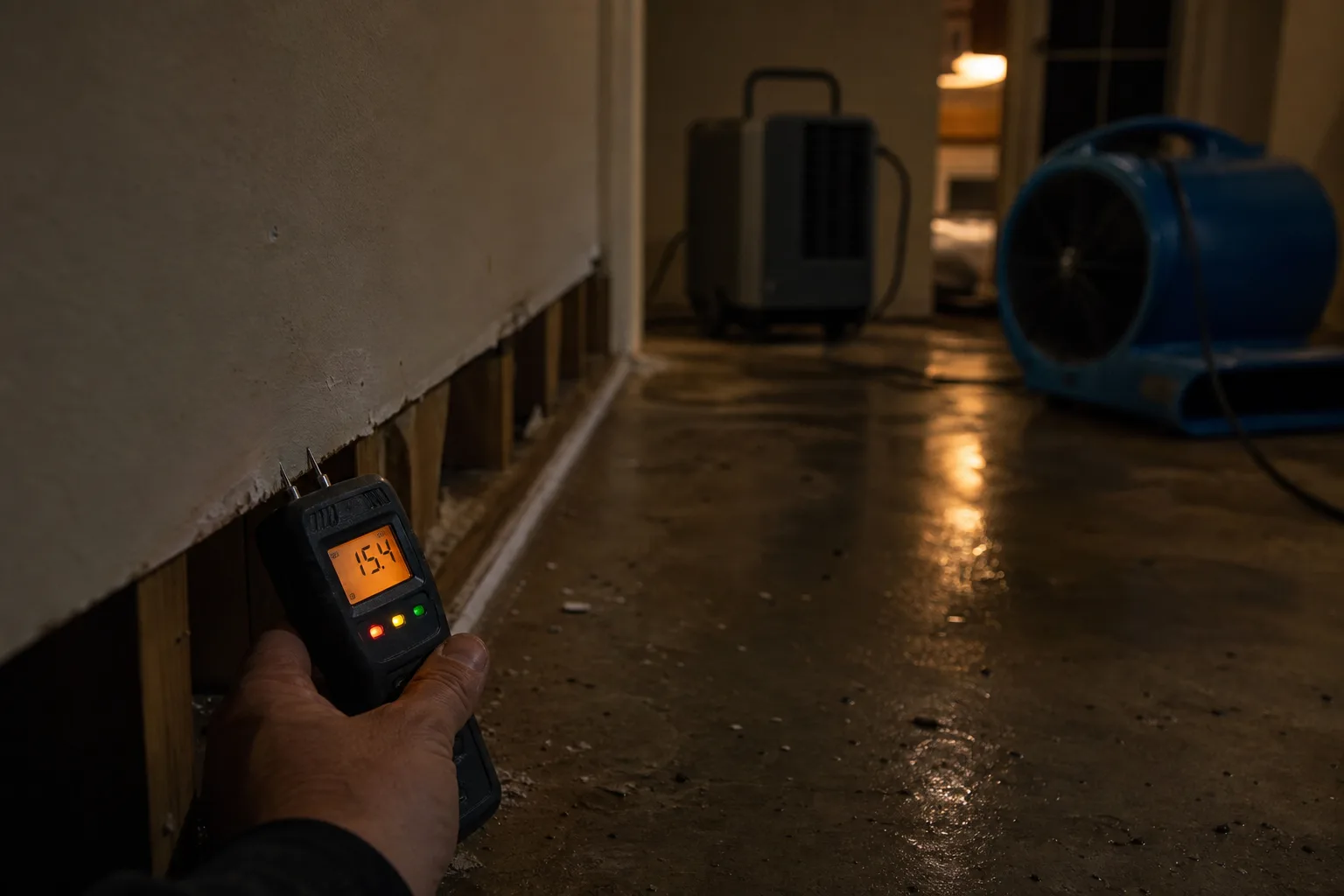
The first time you deal with a wet house, the most misleading moment arrives around day three. The carpet feels cool but not soaked, the baseboards look normal, the smell has faded, and someone suggests the fans can come out and the furniture can go back. That impression is generated almost entirely by surfaces, which give up their moisture first and fastest. The framing behind the drywall, the subfloor under the pad, and the bottom plate sitting on the slab are all working on a much slower schedule, and they are the parts that decide whether you are finished or merely comfortable.
Dry is a number, not a feeling
A competent drying job has a target written down before the equipment goes in. The technician takes readings from material that never got wet, usually the same species of wood or the same drywall on the far side of the house, and that becomes the goal for the affected area. Everything after that is a comparison against a known baseline rather than a judgment call about how a wall feels under a palm. If nobody has shown you a moisture meter, told you what the unaffected reference reads, or written a target on a sheet, you do not yet have a drying plan. You have fans.
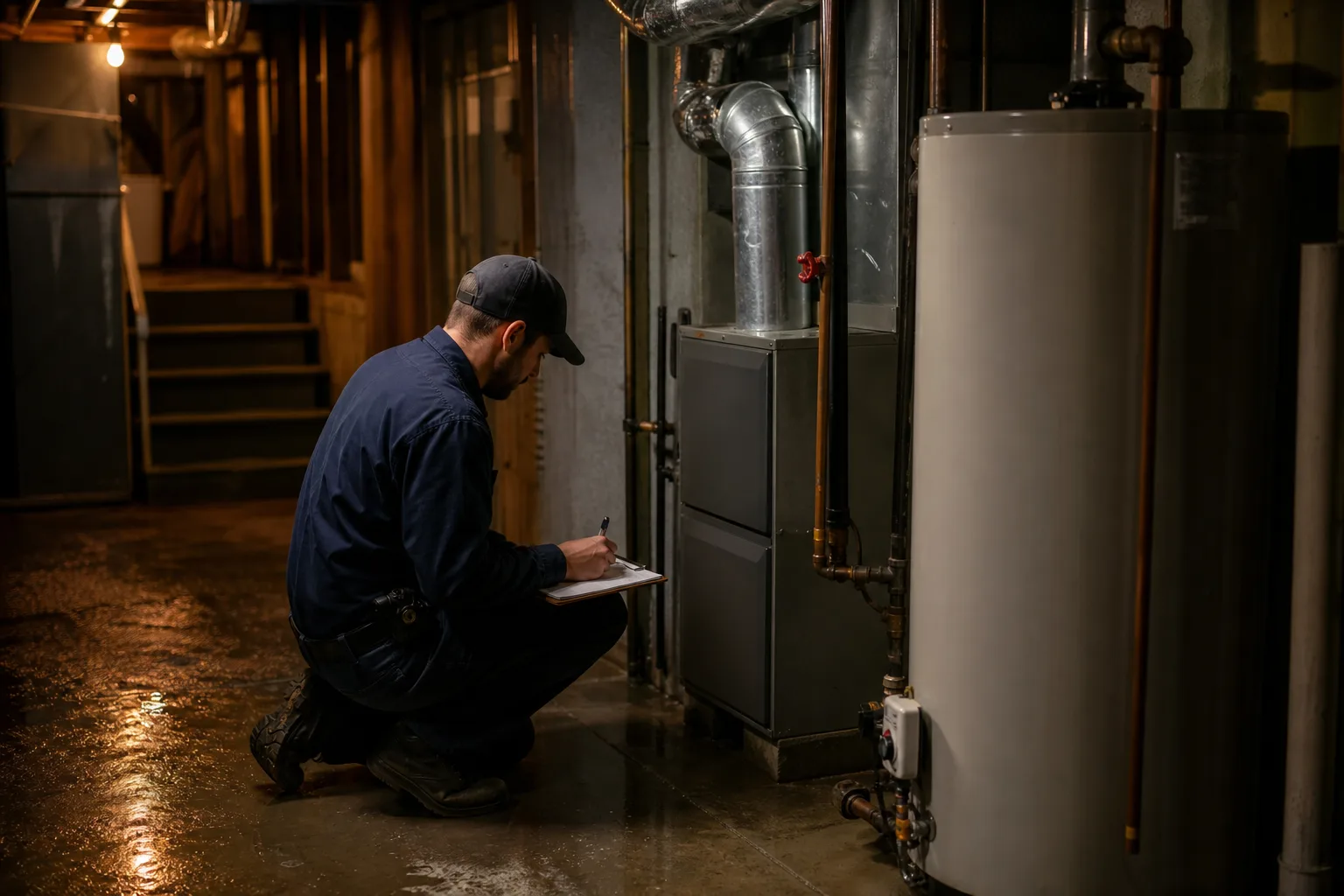
Ask on the first visit where the readings are being taken and how often. The honest answer involves the same points revisited daily, marked on a sketch or with tape on the wall, so the trend is visible. Readings that fall steadily for two days and then flatten out well above the reference mean something is holding water: wet insulation in a cavity, a saturated bottom plate, or water that traveled farther than anyone mapped. Catching that on day four costs a few hundred dollars in extra equipment. Catching it in month three costs a wall.
Air movement and dehumidification are two different jobs
People new to this tend to think of drying as blowing air at wet things, and air movers do matter, because they strip the saturated boundary layer off a surface and push that moisture into the room. But moving water into the room air accomplishes nothing unless something is pulling it back out, which is what the dehumidifier does. A room with six fans and no dehumidifier gets humid, warm and slow, and the moisture simply redeposits somewhere cooler, often inside a closet or an exterior wall. The ratio and the placement are the craft. Open windows help on a dry, cool day and actively hurt on a humid one.
Heat is the third variable, and the one most likely to be misused by someone renting equipment for the first time. Warmer materials release moisture faster, so controlled heat shortens the job. Uncontrolled heat, especially from unvented propane or kerosene salamanders run inside a closed house, is how carbon monoxide poisoning happens during a restoration. Gasoline generators belong outside, well away from windows, always. That single rule prevents the accident that actually puts homeowners in the hospital during this work, and it costs nothing to follow.
The hazards worth respecting, and the ones that only sound bad
Standing water and electricity are the other genuine risk, and the sequence is unglamorous: kill the affected circuits at the panel before anything with a cord goes into a wet area, and keep extension cords and connections up off the floor once equipment is running. Wet basements with submerged outlets deserve an electrician, not a flashlight and optimism. Ladders leaned against wet drywall to check a ceiling account for more injuries than anyone expects. Mold, by contrast, frightens first-timers more than it should in the first week; it needs time as well as moisture, and drying quickly and thoroughly is the prevention. The Environmental Protection Agency oversees federal guidance on indoor mold and moisture control, and the whole thrust of that guidance is the same: fix the water, dry the materials, and the biology takes care of itself.
Knowing what cannot be dried in place
A barely adequate job tries to dry everything, because removal looks like damage and drying looks like care. Wet fiberglass insulation inside a wall cavity holds water against framing for weeks and should come out. Carpet pad that sat in dirty water is disposable. Laminate flooring that has swelled at the seams is finished, whatever the fans do. The good crew opens a small inspection hole, shows you what is behind it, and removes the minimum required, often drilling the bottom of the wall behind the baseboard and pushing dry air into the cavity rather than gutting four feet of drywall on principle.
Ask for the daily log at the end, with readings, equipment placement and the final comparison against the unaffected reference. That single document is what tells your insurer the job was completed, and what tells you in two years that the stain on the ceiling is something new.