Which Upkeep Jobs Are Worth a Service Plan, and Which Are Cheaper Per Visit
Route density, minimum charges and point-of-sale financing decided what a gutter clean or a duct service costs today, and which of them a household should buy on contract.
- Home & Property
- Farah Siddiqui
- 954 words, 4 min

The received wisdom on household upkeep is that you pay someone when the job is dangerous or disgusting, and do the rest yourself. That was a reasonable rule when most of these jobs were bought from a general handyman at an hourly rate, and it survives because the logic still sounds right. What it misses is that the pricing changed underneath it. Very few upkeep trades now sell hours. They sell a visit, a route slot, or a year, and the difference between those three is where a household either saves a few hundred dollars annually or quietly gives it away.
How the hourly rate disappeared from small jobs
Anyone who has hired the same handful of services across two or three houses has watched this happen in slow motion. The general handyman who cleaned gutters in October and serviced the furnace in November got squeezed out of both by specialists, because a crew doing one task all day gets faster at it and buys better equipment against it. Specialization made route density the governing economics. A gutter crew wants six houses in one subdivision, not one house across town, and the price on your invoice reflects how efficiently your address fits that day's map more than it reflects the labor your roofline actually took.
Minimum charges followed directly. Once a company's real cost is drive time and scheduling, a thirty minute job and a ninety minute job cost close to the same to deliver, so the quote stops scaling with duration and starts clustering around a floor. That floor is why bundling works. Asking the same visit to cover the gutters, the downspout extensions and the dryer exhaust run is usually cheaper than three separate trips, and any technician who has been doing this for a decade will tell you so before you ask, because a fuller truck-hour is worth more to them than a second trip.
What an annual plan actually buys
The service plan is the second thing the industry invented, and it exists to solve the provider's problem, not yours. Seasonal trades starve in the shoulder months, and a plan converts lumpy demand into predictable monthly revenue. That is not a criticism. It means the plan is genuinely discounted, because smoothed cash flow has real value to the seller, and part of that value comes back to you as a lower per-visit rate, priority dispatch when a system fails in a heat wave, and a stated discount on parts and repairs made during the contract year.
Where plans earn their keep is on equipment with a manufacturer warranty that requires documented annual service, and on systems where an unattended failure damages something else. Heating and cooling is the clearest case, because the paperwork matters and the emergency premium for a no-heat call in January is steep. Where plans usually lose is on cosmetic and access work. Gutters, window washing, pressure washing and lawn treatments are sold as annual agreements because the sales motion is easy, not because a contract protects anything. Those you should buy per visit, and negotiate the visit.
The financing table at the end of the estimate
The third change is the one that matters most to a household budget, and it arrived last. Point-of-sale financing is now standard equipment for home services, embedded in the same tablet that produces the estimate, offering approval in a few minutes and a monthly figure rather than a total. The offer is frequently a promotional structure: no payments or no interest for a set window, with the important condition being what happens at the end of it. Some promotions forgive interest that accrued. Others are deferred interest, where the entire accrued balance from day one lands on the account if any part of the principal is still outstanding when the window closes.
The Consumer Financial Protection Bureau oversees consumer credit disclosure, including how promotional financing terms are presented at the point of sale, and the practical instruction is simple. Find the phrase that says whether interest accrues during the promotional period, and find the rate that applies afterward, before you sign anything. For a genuine capital repair, a compressor, a roof, a sewer line, financing at a disclosed rate is a rational way to move a large cost into the years you will use the asset. For a four hundred dollar cleaning job, it is a very expensive way to reschedule a payment you could have made in a season.
Which jobs repay hiring out, seen from the fourth or fifth time
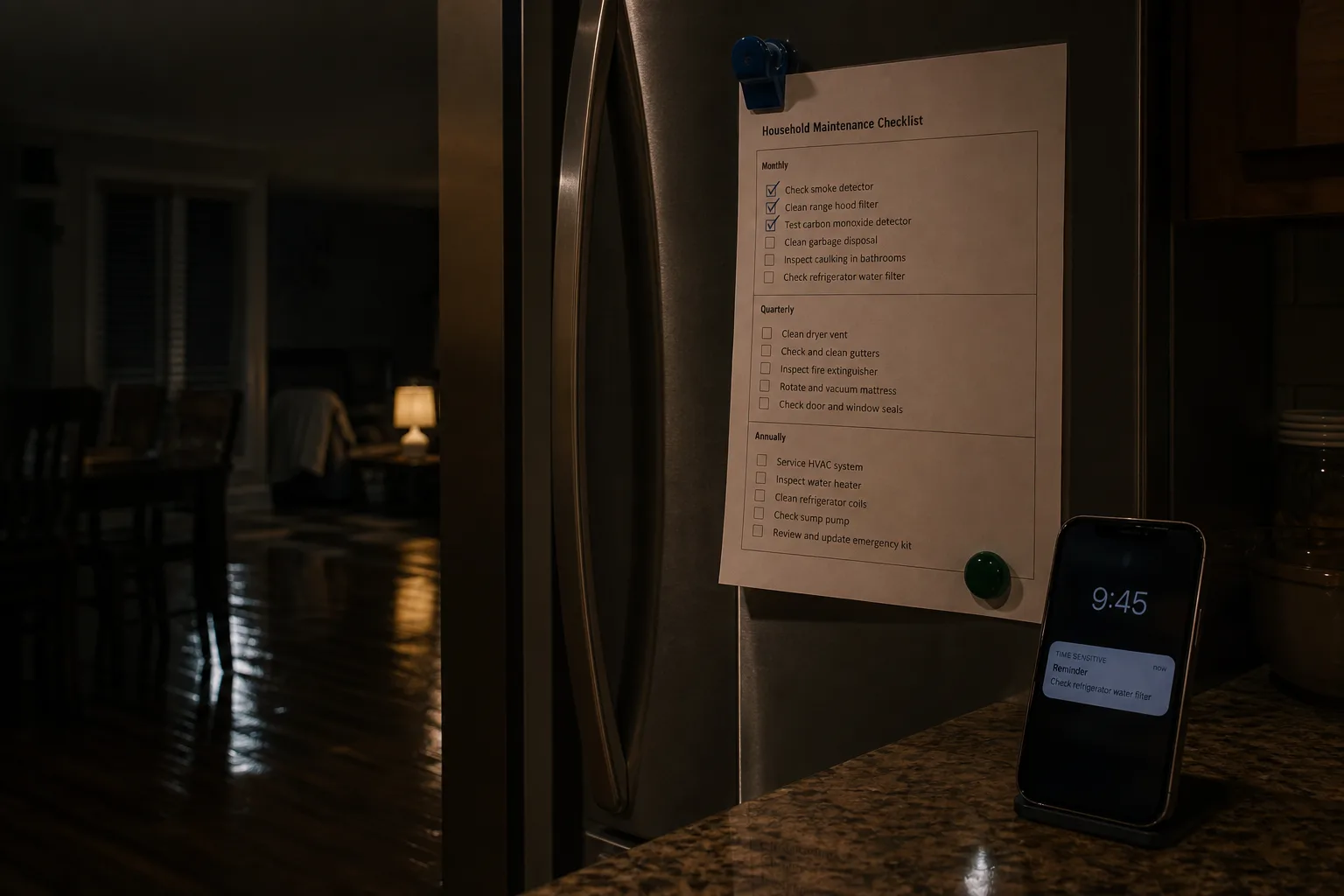
After enough repetitions the pattern gets specific. Hire out anything where the equipment costs more to rent twice than the crew charges once, anything requiring legal disposal, anything above single-story roof height, and anything where a manufacturer or an insurer will later want a dated invoice from a licensed company. Keep the tasks whose only input is your Saturday: interior filters, drain screens, weatherstripping, the visual inspections that catch a small problem before it becomes a claim.
The financing rule maps onto the same split. Recurring upkeep belongs in a sinking fund, a small amount set aside monthly against jobs you already know are coming, because they arrive on a calendar and not by surprise. Capital replacement belongs on credit if the terms are disclosed and fixed. Households that get this backwards, financing the annual cleaning and paying cash for the furnace, end up carrying revolving balances against work that already delivered its value.
The cleanest test on any upkeep quote is to ask what you are buying: an hour, a visit, or a year. The answer usually tells you where to push, and whether the payment plan on the last page belongs in the conversation at all.