Water in the House at Eleven at Night? Who Pays the Emergency Crew Before the Adjuster Calls
Emergency water mitigation starts before anyone approves a dollar. Here is what you sign at the door, what the invoice is built from, and who is actually out of pocket.
- Home & Property
- Farah Siddiqui
- 1,428 words, 6 min

The standard advice is to call the insurance company first and let them tell you what to do. It is decent advice, it comes from a real place, and it stops being useful somewhere around the second hour, because a claims line at eleven at night will take your details, open a file, and tell you to prevent further damage. That last instruction is the one with money attached. Preventing further damage means hiring somebody, tonight, before anyone has approved a dollar or looked at a photograph, and the arrangement you agree to in that state settles more of the final cost than any conversation with an adjuster later.
The duty to mitigate is a term in your policy, not a courtesy
Nearly every homeowners policy sold in the United States contains a condition requiring the insured to protect the property from further loss after a covered event, and to keep records of what that protection cost. It is written as an obligation on you, which is why the claims representative says it out loud, and it cuts in your favor as often as against you. Reasonable emergency expenses incurred to stop damage spreading are generally payable, in many policies without regard to whether you have met the deductible yet. That is the protection sitting underneath the whole first night. The corollary is the part people miss: water left standing for three days because you were waiting for permission tends to produce secondary damage the carrier can argue you caused.
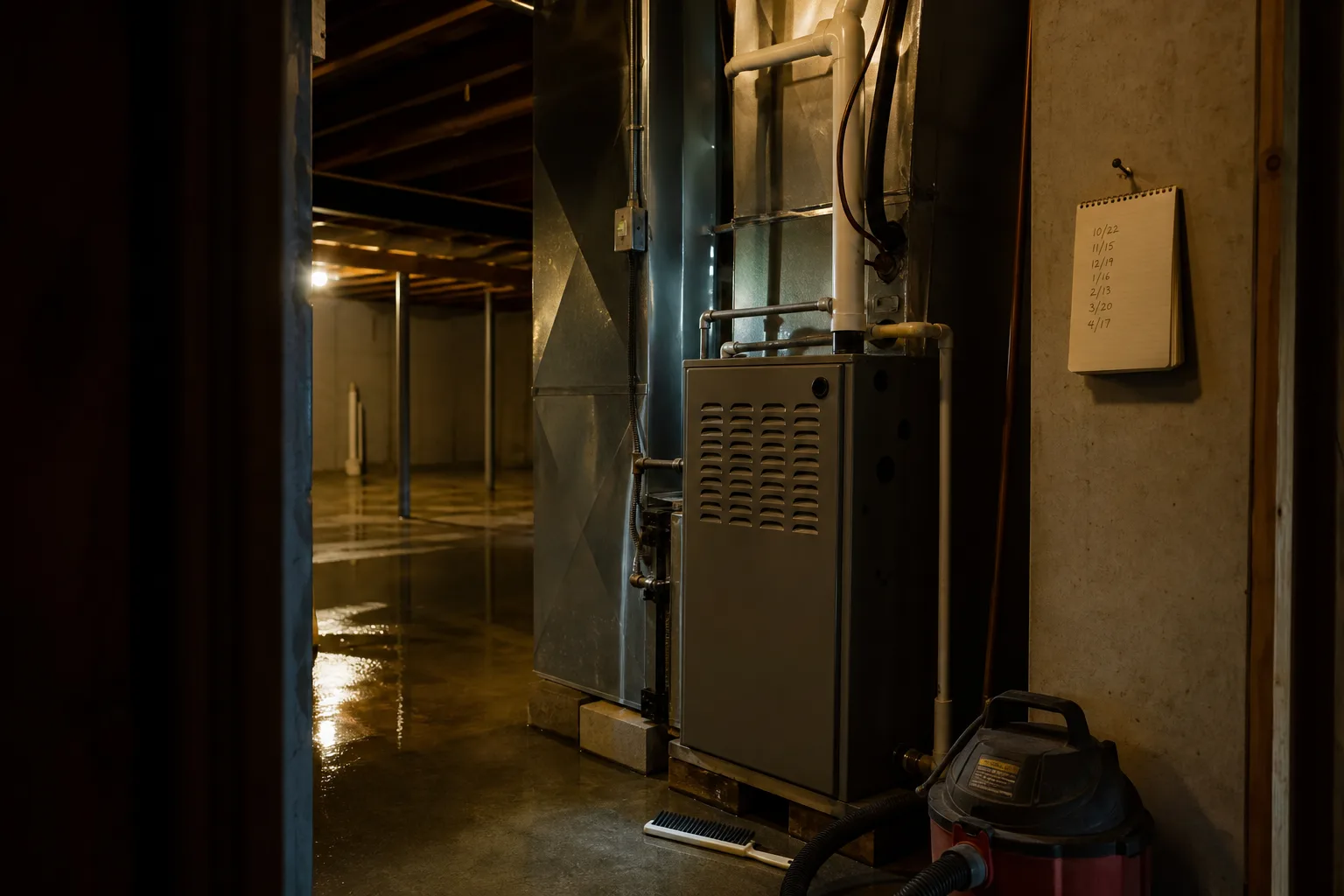
So the sequence is not call, wait, act. It is act, document, and call in whatever order the water permits. Shut off the supply. Get the standing water out. Photograph the room before anything moves, then photograph it again after, because the before shot is what proves the mitigation was necessary and the after shot is what proves it happened. Keep every invoice, including the wet vacuum you bought at ten at night and the hotel receipt if the house is unlivable. Those receipts are not a favor you are asking for later. They are the evidence the policy already told you to collect.
What the mitigation invoice is actually built from
Water mitigation is priced differently from almost anything else you buy for a house, and understanding the structure removes most of the shock when the bill lands. Reputable restoration firms work to the industry drying standard published by the IICRC, generally referred to as S500, which classifies the water by contamination category and the affected materials by how much they have absorbed. Those classifications drive equipment counts. A given square footage of wet drywall and subfloor implies a number of air movers and a dehumidifier size, and the invoice bills those per unit per day, plus labor, plus antimicrobial application where the category calls for it.
Most carriers price these line items through the same estimating software the contractor uses, which is why an itemized mitigation bill from a firm that works claims daily usually clears without much argument, and why a flat-rate figure scrawled on a work order often does not. Ask, at the door, whether the estimate will be produced in that format. Ask how many days of drying the technician expects and what moisture readings will end it. The answer that should reassure you is a target reading compared against an unaffected part of the same house, not a fixed number of days, because equipment that stays after the material is dry is equipment you are renting for no reason.
The three documents you sign at the door, and what each one commits
A crew arriving at midnight will hand you a clipboard, and there are usually three separate things on it, bundled to look like one. The work authorization is the contract: it says the firm may enter, may remove materials, and may bill you for what it does. The direction to pay tells your insurer to send the mitigation portion of the claim payment straight to the contractor rather than to you, which is convenient and generally harmless. The third document, an assignment of benefits, is the different animal, because it transfers your rights under the policy to the contractor, who may then deal with the carrier directly, including disputing the amount, in your name and without needing you.
Assignments are legal in most states and heavily regulated in a few, notably Florida, after a run of litigation that reshaped the market there. They are not automatically bad. They are simply a transfer of control, and you should know you are making it. Read the top of each page for the word assignment, ask whether the work can proceed without it, and note that a firm willing to say yes is telling you something useful about how it operates. Many states also give you a right to cancel a home solicitation contract within three business days, and that window survives the fact that you signed it in a hallway with wet socks on.
Who is out of pocket in week one, and what the gap costs to carry
Here is the part the claims call does not cover. Even on a clean covered loss, cash moves slower than the work. The mitigation invoice comes due within a normal payment cycle. Your deductible comes off the first payment, so on a fifteen thousand dollar loss with a two thousand five hundred dollar deductible, you are funding that first. If your policy pays on a replacement cost basis, the carrier issues actual cash value up front and holds back the depreciation until the repairs are finished and documented, which means the money for the rebuild arrives in two pieces with a delay between them. And if you carry a mortgage, a check above the servicer's threshold will name the servicer as a payee, and it will sit in an escrow account released against inspections.
That gap is real, and it is financeable, which is where the decisions get expensive quietly. A restoration firm that offers to wait for the insurance payment is extending you credit, and the terms are worth reading, because some of those arrangements carry interest or a fee once a stated number of days passes. Putting eight thousand dollars on a credit card at revolving rates for a claim that pays in six weeks is an ordinary and defensible use of a card. Putting the same amount on the same card for a rebuild that will not finish for five months is a different transaction entirely. A home equity line, if you already have one open, costs a fraction of that, and the Consumer Financial Protection Bureau oversees the disclosure rules that make the two comparable on paper if you take the time to look. The one option that reliably costs the most is deferral: waiting on drying to protect cash, then paying for mold remediation that the Environmental Protection Agency's guidance on moisture and indoor air is entirely clear could have been avoided by getting the material dry inside a couple of days.
The forty-eight hours that make the claim easy to pay
What separates a claim that settles quietly from one that takes four months is almost always the record made in the first two days, and you can build that record with a phone. Photograph the source of the water and the visible extent before anyone touches it. Get the technician's initial moisture readings in writing, along with the daily drying log, and ask for a copy at the end rather than assuming one arrives. Keep the removed materials, or at least a photographed sample, until the adjuster has seen the room. Note the date and time of every call, the name of every person, and the claim number they give you.
Adjusters are working from a file, and a file that already contains dated photographs, an itemized mitigation estimate in the format they read every day, and moisture readings showing why the drywall came out is a file that gets approved. The homeowner who can produce all of that in the first week is not being difficult. They are handing over the evidence the policy asked for in the paragraph nobody reads until the night the supply line splits.
Water gets into a house on its own schedule, and the decisions it forces are made tired, in the dark, by someone who did not plan to spend money that week. Knowing in advance which signature transfers control, which invoice format clears fastest, and which money is yours to front makes those decisions ordinary rather than costly.